Beef Wellington with Mushroom Duxelles and Puff Pastry
Beef Wellington is a centrepiece of seared beef tenderloin wrapped in a finely chopped mushroom and shallot filling, optional prosciutto and golden puff pastry. The mushroom mixture, known as duxelles, must be cooked until nearly dry and cooled before wrapping so the pastry has a chance to crisp. This recipe serves six and includes optional creamy mashed potatoes. Allow roughly three hours for preparation, cooking, chilling and resting; use a thermometer rather than pastry colour alone to judge the beef.
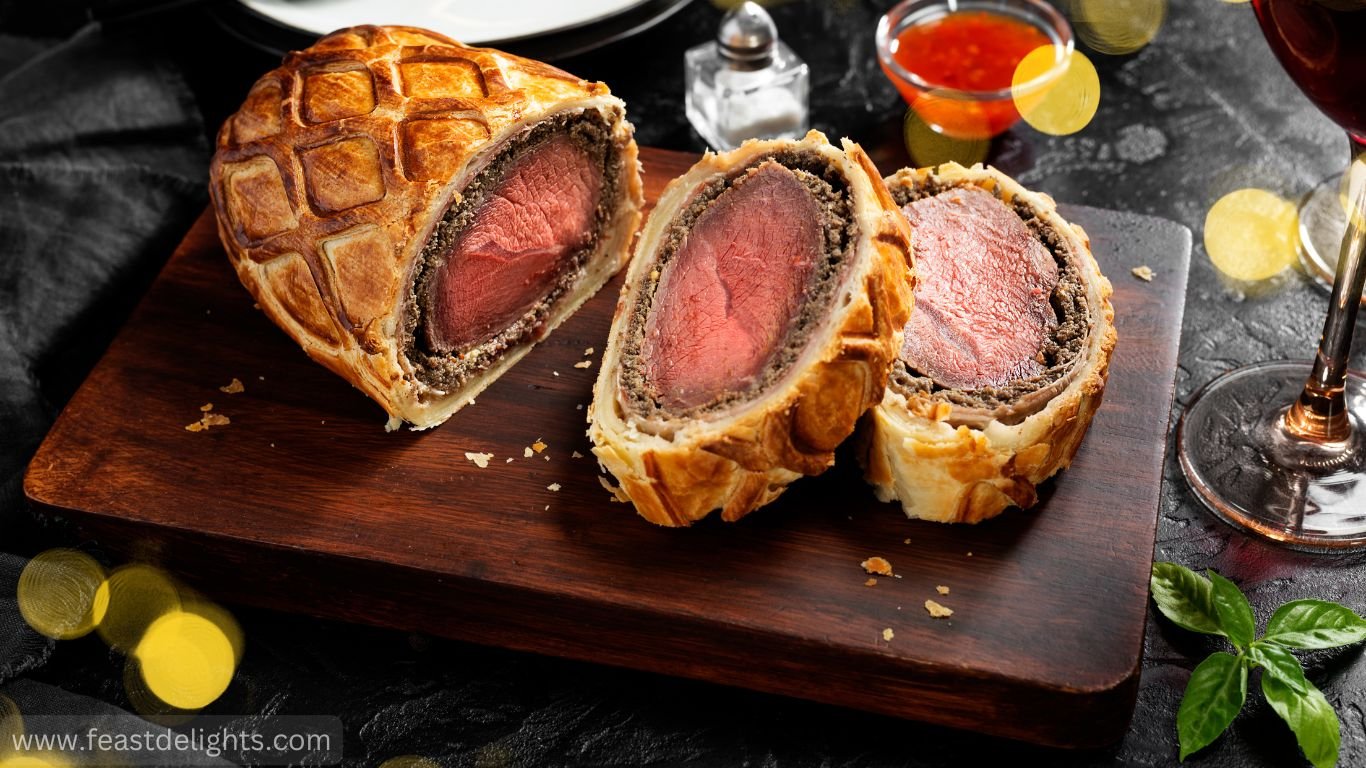
Beef Wellington with mushroom duxelles combines a centre-cut beef tenderloin, savoury mushroom and shallot filling, optional prosciutto and a golden puff pastry shell. This British-inspired version serves six and includes an optional potato mash. It is a project for a special meal rather than a quick dinner: allow about three hours for preparation, cooking, short chilling stages and resting. The goal is tender beef surrounded by a thin, flavourful filling and fully baked, flaky pastry.
Choosing the beef
Buy an intact centre-cut tenderloin, also called a centre-cut fillet. Its fairly uniform diameter helps the centre cook at a similar rate along the length of the roll. A very thin tail and thick centre will be difficult to cook evenly. Tenderloin has little connective tissue and suits roasting, unlike tougher cuts that require slow braising. If you have brisket or chuck instead, consider our slow cooker beef pot roast.
Remove any tough silverskin or ask your butcher to trim it. Keep the meat refrigerated until you are ready to cook. A quick surface sear gives savoury browned flavours; it does not cook the whole piece or seal in all the juices. The meat finishes in the oven. Use a whole intact cut for the temperature guidance here, and follow any package-specific directions for mechanically tenderised beef.
What is mushroom duxelles?
Duxelles is a finely chopped mushroom mixture cooked down with shallot and butter. Chopping the mushrooms finely gives an even layer around the meat. A food processor is convenient, but pulse rather than running it until the mushrooms turn into a wet purée. The most important point is moisture: a 400 g batch of fresh mushrooms releases considerable water. Cook in a broad pan and give the steam time to escape. When the mixture becomes concentrated, stir more frequently so the solids do not catch.
Spread the cooked duxelles thinly on a clean tray so it cools promptly. Prepare this component first, so that the beef can be seared and wrapped without a long pause. A warm filling softens butter in puff pastry; a wet one can make the underside gummy. Optional prosciutto forms another thin layer between pastry and meat. It contributes salt, so adjust the final seasoning rather than adding salt automatically.
How to wrap beef Wellington
Use a rectangle of overlapping prosciutto slices on food-safe film, or spread the cold mushroom mixture directly on the film when omitting the ham. The film is only a shaping tool; it must be completely removed before baking. Aim for an even mushroom layer from end to end. Roll snugly without squeezing filling out at the sides. The short refrigerator chill helps the roll hold its shape while you prepare the pastry.
Unroll the pastry when the beef roll is ready. If the pastry is frozen, thaw it in the refrigerator according to its package. The dough should be flexible but still cool. Check the fit before placing the meat on it. If you need to roll it slightly larger, use light pressure and a dusting of flour rather than stretching the sheet by hand. Leave enough pastry to seal the seam and cover the ends without several thick folds. Keep the seam underneath on the tray.
Good Food’s beef Wellington method illustrates the same general use of cooled mushrooms, chilled pastry and a light surface pattern. Its beef cooking preference and ingredient proportions differ; use the thermometer target and measured ingredients on this page.
Recipe card
Beef Wellington with Mushroom Duxelles and Puff Pastry
Allow up to 70 minutes for searing, cooking the mushroom filling and baking. Waiting allows about 20 minutes to cool components, two 20-minute assembly chills and a 10-minute rest. Some tasks overlap. The optional mash cooks while the Wellington bakes. Thickness of beef and starting temperature affect oven time.
Equipment: Heavy skillet, food processor or chef's knife, separate board for raw beef, shallow cooling tray, food-safe wrapping film, rolling pin, pastry brush, baking parchment, rimmed baking tray, oven gloves, thin-probe thermometer and serrated knife. For optional mash: large saucepan, colander and potato masher.
Ingredients
Beef
Mushroom duxelles
Wrapping and glaze
Optional mashed potatoes
Instructions
Cook and cool the duxelles
Melt the tablespoon of butter in a wide skillet, add finely chopped mushrooms and shallot and cook over medium-high heat for 10–15 minutes, stirring regularly, until liquid has evaporated. The filling should be spreadable but not wet; a spatula drawn across the pan should leave no puddle. Spread thinly on a clean tray to cool promptly. Chill until cool before assembling.
Sear and season the beef
Use an intact centre-cut tenderloin of even thickness. Pat dry and season with salt and pepper. Heat the oil in a heavy skillet over medium-high heat. Sear the beef briefly on every side, including the ends, for about 6–8 minutes in total, to brown the surface. Transfer to a clean tray, brush with Dijon and let the surface steam dissipate briefly. Proceed with wrapping in the same cooking session; do not hold partially cooked beef for later meals.
Wrap the mushroom layer
Lay a large sheet of food-safe wrapping film on a work surface. If using prosciutto, arrange eight slices with slight overlaps to form a rectangle. Spread the cold duxelles evenly over it. If omitting prosciutto, spread the duxelles directly over the film. Place the mustard-coated beef along one edge and use the film to roll the mushroom layer snugly around it. Twist the film ends and chill for about 20 minutes to firm the shape, then proceed directly.
Enclose in puff pastry
Unroll cold puff pastry on a lightly floured surface and check that it will enclose the entire beef roll with a small overlap. Remove all wrapping film. Place the beef on the pastry, fold the pastry around it and trim thick excess at the ends. Seal the seam with a little beaten egg and place seam-side down on a parchment-lined tray. Chill about 20 minutes while preheating the oven; continue immediately to baking.
Glaze and bake
Preheat a conventional oven to 200°C (400°F). Brush the pastry lightly with beaten egg, keeping the glaze out of exposed cut edges. Score the top shallowly without cutting through. Bake for about 35–45 minutes, or longer if needed, until pastry is deeply golden and crisp. Insert a thin thermometer through an end into the centre of the beef; for intact whole-cut beef it must reach at least 63°C (145°F) before removing from the oven. Shield the pastry loosely with foil if it colours too early.
Rest, make the optional mash and serve
While the Wellington bakes, if making the optional mash, peel and cut the potatoes into equal pieces. Cover with water, bring to a boil and simmer 15–20 minutes until tender. Drain thoroughly and mash with the warmed milk and 40 g butter. Season to taste. After baking, rest the Wellington for 10 minutes (including the minimum 3-minute beef rest), then cut into six thick slices using a sharp serrated knife and a gentle sawing motion. Serve with mash if desired.
How to bake and check the centre
Preheat the oven fully before the wrapped beef goes in. Brush with a thin coat of beaten egg to encourage an even golden finish. If decorating the top, score only the surface; a cut through the pastry can let moisture escape and weaken the shell. Place the Wellington on a sturdy rimmed tray so any leaked juices remain contained.
Pastry colour and beef doneness are separate checks. An evenly golden crust may appear before the beef reaches the required centre temperature, particularly with a thick, cold piece. Insert a thin thermometer through an end into the centre of the tenderloin, not just into the mushroom layer. The FoodSafety.gov temperature chart recommends 63°C (145°F) with at least a three-minute rest for whole beef cuts. This version follows that guidance. Use loose foil to protect the crust if it browns before the centre is ready. Oven timing is an estimate, not a substitute for measurement.
Planning the timing
Prepare the duxelles first and cool it promptly. Measure the remaining ingredients and ready the tray before searing the beef. Work through the two brief assembly chills and baking in one session, without storing partially cooked beef to finish another day. If serving mash, peel the potatoes before baking or while the pastry chills. Simmer them during the oven stage, drain well and mash with warm milk and butter. This keeps the side dish from adding a full additional cooking period.
Troubleshooting pastry and filling
Soggy base: Excess moisture from mushrooms or warm filling is a common reason. Cook until the duxelles leaves the pan nearly dry, spread it out to cool and keep pastry cold. A fully preheated oven helps the dough begin baking promptly. The optional prosciutto also reduces direct contact between damp filling and pastry. The underside may be less crisp than the top even with careful assembly.
Pastry tears while wrapping: It may be too cold to bend or too thin. Let it become just pliable, then wrap without stretching. Patch a small tear with a little trimmed pastry and beaten egg, keeping the patch thin.
Pastry is greasy rather than flaky: Warm pastry can lose its laminated structure before baking. Keep the sheet cold, minimise handling and do not leave it near the hot skillet. Avoid pouring egg wash into exposed cut edges.
Beef is drier than intended: Check the diameter, oven temperature and the thermometer reading. The meat should reach the safe target, but extended baking beyond that point can dry it. If necessary, shield the pastry so you can finish cooking without further browning.
Filling pulls out when slicing: Rest the baked Wellington for ten minutes. Use a sharp serrated knife and saw gently rather than pressing down hard. Thick slices are easier to move onto plates intact.
Serving suggestions and variations
The rich pastry and mushroom layer pair well with the optional creamy mash. Our green beans with garlic butter or vegetable tian can add colour and freshness. A light gravy served separately lets guests choose how much to use without softening the entire pastry. For a variation, use cremini mushrooms or a little thyme. Leave out prosciutto if pork is not suitable; the filling must then be particularly well dried.
Make ahead, leftovers and allergens
The duxelles can be prepared in advance and stored covered in the refrigerator. Keep raw beef chilled separately and complete the sear, assembly and bake in one cooking session. Do not partially cook the meat and store it overnight for finishing later. After serving, cut leftover portions and refrigerate promptly in shallow containers. Reheat individual slices thoroughly in the oven; the beef may become firmer and the crust less crisp. The recipe contains wheat, milk, egg and mustard. Prosciutto contains pork, and ready-made puff pastry may contain additional ingredients. Check all labels, especially for dietary requirements and allergies.
Frequently asked questions
What is mushroom duxelles?
It is a finely chopped mushroom and shallot mixture cooked until most moisture has evaporated. It gives the beef a savoury coating and reduces excess liquid inside the pastry.
Can I skip the prosciutto?
Yes. It adds flavour and acts as a moisture barrier, so if omitting it, make the duxelles particularly dry and roll it firmly around the beef.
Which beef cut should I buy?
Use an intact centre-cut tenderloin with an even diameter. A tapered piece cooks unevenly. Ask the butcher to trim silverskin and confirm whether the meat has been mechanically tenderised.
How can I prevent a soggy pastry base?
Cook the mushrooms until almost dry, cool the filling, keep the pastry cold and seal neatly without thick folds. Bake in a fully preheated oven.
Can I prepare it a day ahead?
Prepare the mushroom filling in advance and refrigerate promptly. Keep the beef raw and chilled separately. Sear, wrap and bake in one cooking session; do not refrigerate partially cooked meat for finishing the next day.
Why is the pastry brown before the meat is ready?
The pastry and beef cook at different rates. Cover the pastry loosely with foil and continue until the beef reaches the required safe internal temperature.
How do I check doneness without cutting it open?
Insert a clean thin-probe thermometer through one end to the centre of the meat. Colour is not a reliable safety indicator. For intact whole-cut beef use at least 63°C (145°F) and rest at least three minutes.
Can I use a different mushroom?
Chestnut or cremini mushrooms are a reasonable substitution at the same weight. Cook until their released liquid has evaporated.
Why does the Wellington split at the seam?
Too little overlap, a wet filling, stretching the pastry too thin or a thick uneven seam can cause splitting. Trim excess pastry and seal it without pulling tightly.
More recipes to try






Spotted a detail that needs correcting? Contact the FeastDelights editors.