Oven-Baked BBQ Spare Ribs with Honey Apricot Glaze
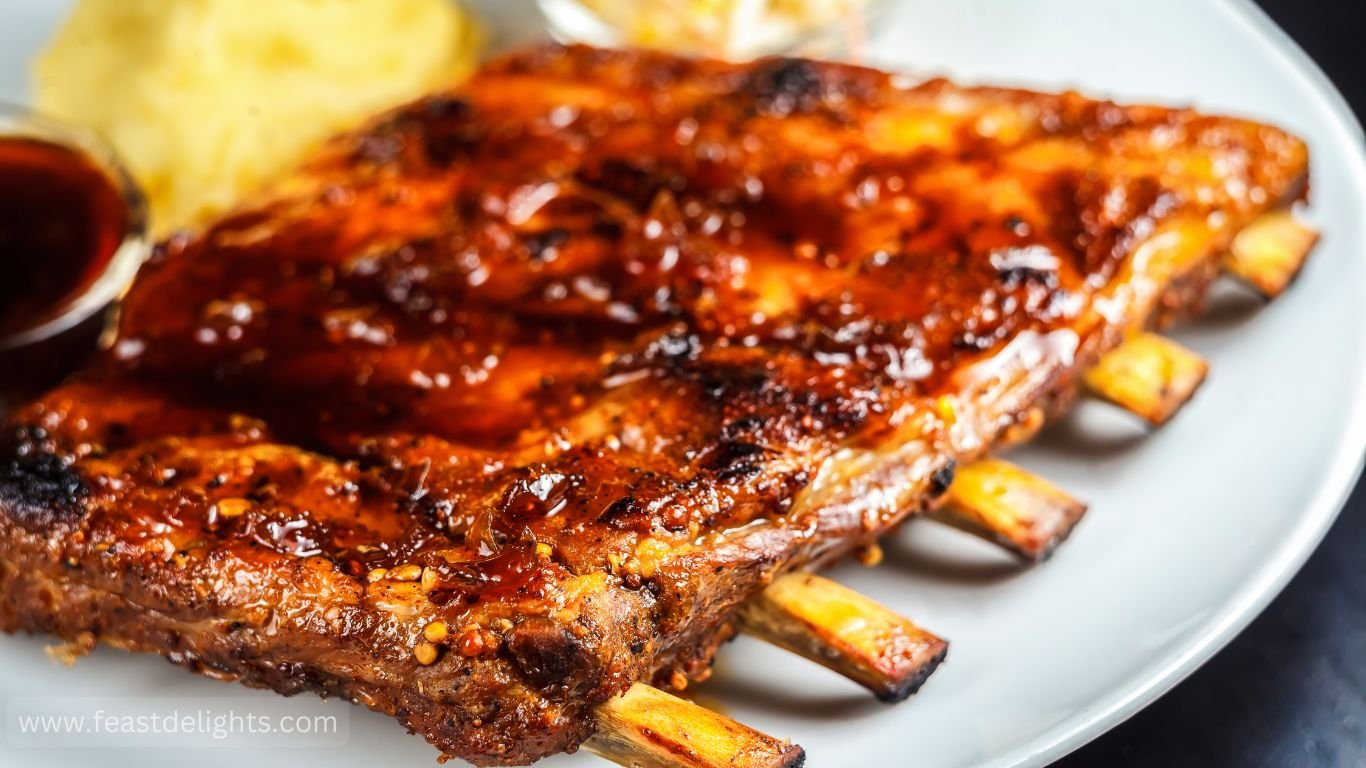
These oven-baked barbecue pork spare ribs become tender under a foil cover at low heat before a honey, apricot jam and ketchup glaze caramelises in a hotter oven. Soy sauce, lemon, smoked paprika and grated onion balance the sweetness with savoury and tangy notes. Two kilograms of ribs serve six to eight people. Allow roughly three hours and 45 minutes for preparation, slow baking, glazing and resting, with extra time if the racks are thick. Reserve a clean portion of sauce for serving before brushing the ribs.
Oven barbecue spare ribs with a fruit glaze
This recipe uses pork spare ribs and a sweet-savoury apricot glaze, rather than a grill or a ready-made barbecue sauce. Covering the racks in a moderately low oven helps prevent the surface from drying while the connective tissue softens. The hot finishing stage is deliberately brief because the sauce contains honey, jam and ketchup. The original ingredients and quantities are retained; the estimated timing now includes the full baking range and rest.
Choose the right rack and prepare it
Spare ribs are generally larger and fattier than baby back ribs. Look for an evenly thick rack with meat covering the bones rather than exposed patches. Fit the racks in a roasting pan without stacking them. Cut a rack into two sections if necessary. Blot moisture with paper towels. Do not wash raw pork, and clean utensils and surfaces after handling it. A thin membrane on the bone side can become chewy; lift an edge and peel it away if present. Some butchers remove it already.
What makes the glaze distinctive?
Tomato ketchup provides body, honey helps create a glossy coating and apricot jam gives a fruity note. Soy sauce supplies considerable salt, so start with less of the separate seasoning if your soy sauce is particularly salty. Lemon juice adds brightness, smoked paprika contributes smoky aroma without a grill and finely grated onion distributes flavour through the sauce. A small amount of oil helps combine the ingredients. Simmer the reserved serving portion separately to soften the onion. The glaze quantity is generous; apply it as needed rather than forcing all of it onto the meat.
Recipe card
Oven-Baked BBQ Spare Ribs with Honey Apricot Glaze
Includes up to 180 minutes covered baking, 15 minutes glazing and 10 minutes resting. Begin checking earlier; large racks may take longer.
Equipment: Large rimmed roasting pan, heavy foil, paper towels, blunt butter knife, mixing bowl, whisk, separate sauce bowls, pastry brush, tongs, thermometer and sharp carving knife
Ingredients
Ribs
Honey apricot glaze
Instructions
Prepare and season the spare ribs
Preheat a conventional oven to 150°C (300°F). Pat ribs dry without rinsing. If a tough membrane covers the bone side, lift an edge with a blunt knife and pull it away with a paper towel. Season both sides with pepper and salt to taste.
Mix and divide the barbecue glaze
Whisk ketchup, soy sauce, honey, jam, lemon juice, paprika, grated onion and oil. Transfer about 120 ml to a clean saucepan for serving before handling meat; simmer it gently until the onion softens, then keep hot for service or refrigerate promptly. Put the remaining glaze in a separate bowl; use only as much as needed.
Bake covered until tender
Arrange racks in a single layer on foil in a rimmed roasting pan, meat side up. Cover tightly and bake 150–180 minutes, checking at 150 minutes. A skewer should slide easily into meat between the bones. Check that pork reaches at least 63°C (145°F) with a 3-minute rest; ribs require substantially longer cooking for tenderness.
Apply glaze and finish hot
Carefully remove foil, opening it away from your face. Increase the oven to 220°C (425°F). Brush the tender ribs lightly with glaze and bake uncovered for 10–15 minutes until sticky and browned. Check frequently; sugars burn quickly. Discard glaze left in the brushing bowl if contaminated.
Rest, slice and serve
Rest 10 minutes, then cut between bones. Serve with the separately reserved cooked sauce, using a clean spoon.
How to judge tenderness and doneness
At the low-temperature stage, carefully open the foil and insert a skewer into a thick section between bones. If there is strong resistance, re-cover and continue baking. Check several places with a food thermometer without touching bone. The minimum safe temperature for whole pork cuts is 63°C (145°F) with a three-minute rest, but this is not the same as tender ribs: connective tissue needs additional time and heat. Follow official temperature guidance. A rack that bends and separates readily between bones is a better tenderness cue than colour alone.
Glazing without burning
Once the ribs are tender, remove the cover and increase the oven temperature. Brush on a thin layer of glaze. Watch the surface during the last few minutes, especially near a heating element. It should turn glossy and lightly caramelised, not black. If the glaze browns too quickly, reduce heat or move the pan to a lower rack. Do not leave a hot oven unattended during this finishing stage. Always reserve sauce before using a brush near meat, and avoid returning a used brush to the serving bowl.
Troubleshooting and substitutions
If the ribs are dry, check whether they were tightly covered and whether the oven was hotter than indicated. Smaller baby back racks need earlier checks. If the glaze is too salty, use less per rack and serve with plain vegetables; next time use reduced-salt soy sauce. If the sauce separates, whisk again before brushing. Marmalade is a useful apricot-jam alternative, although the flavour changes. A pinch of chilli gives heat without affecting the slow-bake method.
What to serve with ribs
Choose fresh sides to balance the sweet, rich glaze. Try foil-roasted corn on the cob or a cabbage and cucumber salad. For smaller racks and a different sauce, see oven-baked baby back ribs. That recipe has a separate cut and cooking approach.
Make ahead, storage and allergens
Prepare the glaze ahead and refrigerate it separately. If cooking ribs in advance, finish the covered cooking completely rather than partially cooking pork to store for later. Portion and chill leftovers promptly. Follow USDA storage guidance, including thorough reheating. The recipe contains soy, and ordinary soy sauce commonly contains wheat. Check ketchup, jam and other packaged seasonings for additional allergens. Honey is not suitable for infants under 12 months.
Frequently asked questions
Can I use baby back ribs?
Yes, but smaller racks often cook faster. Begin checking tenderness earlier rather than relying on spare-rib timing.
Why are my ribs tough?
They likely need more covered cooking at low heat. Continue until a skewer enters easily before applying glaze.
Do I have to remove the membrane?
It is optional, but removing a tough bone-side membrane can improve the eating texture. Some racks are sold already trimmed.
Can I use the whole glaze?
No need. Apply thin coats to avoid a sticky pool or overly salty finish. Keep the clean serving portion separate.
Why does the barbecue glaze burn?
Honey and jam darken quickly at high heat. Add glaze only near the end and check the ribs frequently.
Can I make ribs ahead?
Cook the ribs fully, cool and refrigerate promptly. Reheat to 74°C (165°F) before serving, then finish the glaze as needed without overbrowning.
Can I substitute the apricot jam?
Orange marmalade works as a variation, with a more citrusy and possibly bitter finish.
More recipes to try





Spotted a detail that needs correcting? Contact the FeastDelights editors.