Baked Halibut with Lemon, Garlic and Fresh Herbs
These oven-baked halibut fillets are topped with olive oil, lemon juice, minced garlic, parsley and dill for a fresh, lightly tangy flavour. Halibut is a lean white fish with firm flakes, so the main challenge is cooking it through without drying it out. Four fillets make four main-course portions in about 30 minutes. Choose pieces of similar thickness, check them early with a thermometer and serve with the lemon slices and a little of the pan juices.
Why bake halibut with lemon and herbs?
Halibut is a firm, mild-tasting white fish that works well with simple seasoning. Lemon adds acidity, garlic lends savoury depth and parsley and dill complement the fish without a heavy sauce. The olive oil helps coat the lean flesh. This recipe keeps the existing ingredient quantities and oven temperature, with clearer doneness cues and a slightly longer estimated cooking allowance.
Choosing the fish and topping
Look for fillets of similar thickness rather than relying on weight alone. A narrow, thick portion can take longer than a broad, thin fillet of the same weight. Use fresh or properly thawed fish from a reputable supplier. If frozen, follow the package directions for thawing, including removing vacuum packaging when instructed. Blot excess moisture before applying the topping.
Fresh lemon juice gives a clean acidity. The two tablespoons of chopped parsley and dill are the combined amount, not two tablespoons of each. Reserve a little for the finished dish, and mince garlic finely so it distributes evenly. A strong garlic flavour can dominate mild fish, so avoid adding large extra amounts before tasting.
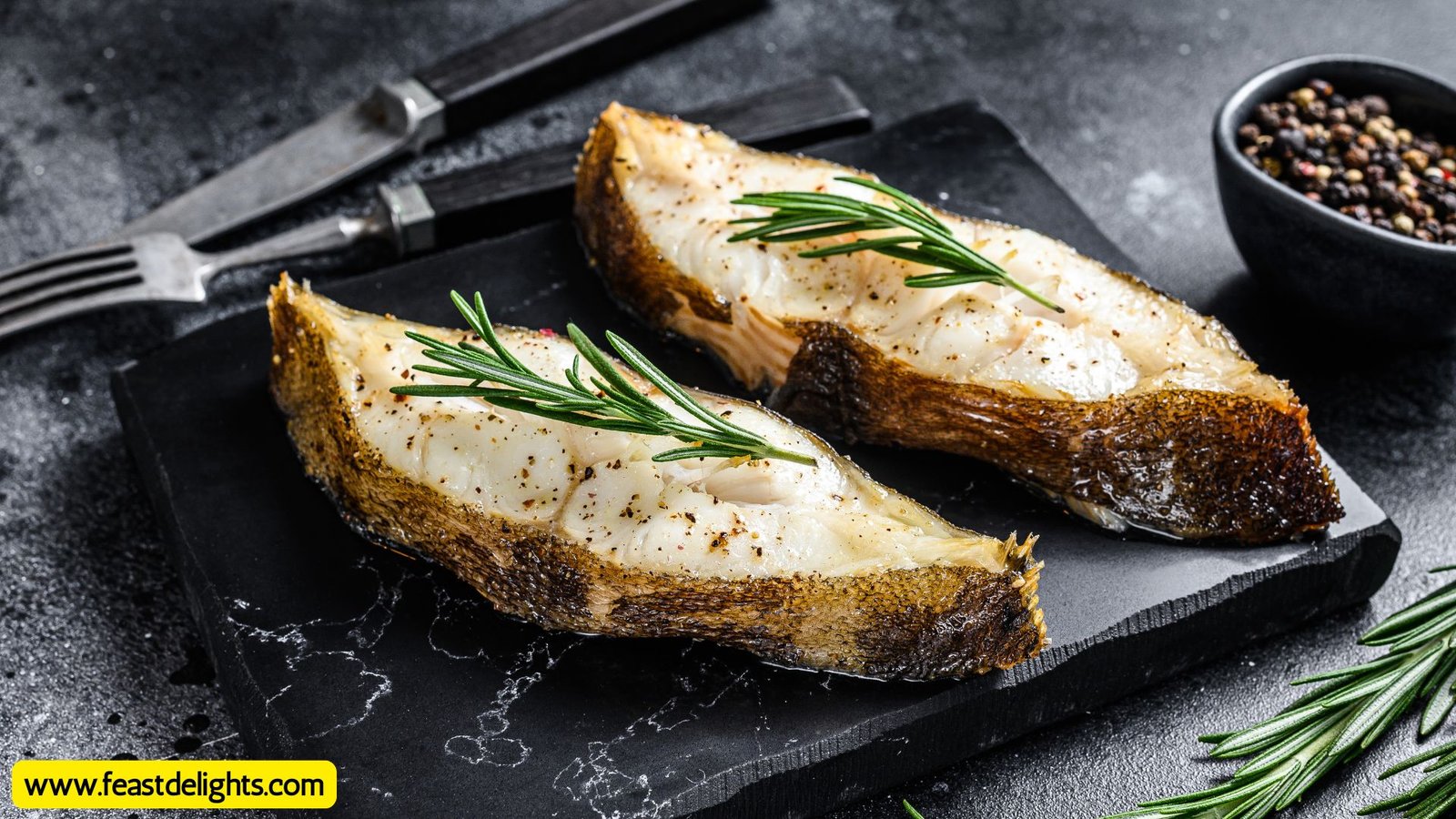
Recipe card
Baked Halibut with Lemon, Garlic and Fresh Herbs
Bake for about 15–20 minutes depending on thickness, starting checks early. Extra time may be needed for thicker pieces; thaw frozen fillets before following this method.
Equipment: Oven-safe shallow baking dish, small mixing bowl, measuring spoons, knife, separate fish cutting board, paper towels, fish spatula and instant-read thermometer
Ingredients
Fish
Lemon herb topping
Instructions
Prepare the halibut and baking dish
Preheat a conventional oven to 180°C (350°F). Pat thawed halibut fillets dry and check for bones. Lightly grease a shallow oven-safe dish with a little of the measured olive oil and arrange the fish in one layer.
Mix the lemon herb topping
Mix remaining olive oil, lemon juice, minced garlic, most of the chopped parsley and dill, salt and black pepper. Spoon evenly over the fillets. Keep the remaining clean herbs aside for serving.
Bake and check the centre
Bake on the middle rack for 15–20 minutes, depending on thickness. Start checking thinner fillets earlier. The flesh should become opaque and separate into flakes under gentle pressure; the thickest part must reach 63°C (145°F) on a food thermometer. Remove individual pieces as they finish.
Garnish and serve
Transfer carefully to warm plates. Garnish with lemon slices and reserved herbs, and spoon over a little of the pan juices. Serve immediately.
How to tell when halibut is cooked
Check thin fillets before the estimated baking time ends. The flesh should lose its translucent appearance and separate into moist flakes when pressed gently with a fork. A thermometer is more reliable than colour alone: insert it into the thickest part from the side and check for 63°C (145°F), as recommended in the official fish and shellfish guidance. Remove pieces individually if they cook at different rates. Do not keep them in the hot dish unnecessarily after cooking.
Common problems and fixes
Dry fish is usually a sign of excessive baking time. Next time begin checking earlier and use the thermometer rather than waiting for the surface to brown. If the pan becomes watery, pat thawed fish dry and choose a dish large enough for a single layer. If the garlic darkens too early, loosely cover the dish and continue cooking until the centre is ready. Lemon added after cooking can brighten a mild-tasting fillet without extending oven time.
Substitutions and serving ideas
Cod or haddock can replace halibut, with timing adjusted for the thickness of the pieces. Chives or a little fresh thyme offer a different herbal flavour. Serve alongside roasted vegetables, a lemon-dressed cauliflower and cucumber salad or garlic and rosemary roasted potatoes. Start any longer-cooking sides before the fish.
Make ahead, leftovers and allergens
Prepare the herbs and lemon shortly ahead and refrigerate separately from raw fish. Cook just before serving to preserve moisture. Cool leftovers promptly and follow the storage instructions in the recipe card. The dish contains fish, a major allergen; keep utensils and surfaces separate from other meals and check any added seasonings. Wash hands and equipment after handling raw fish.
Frequently asked questions
Can I use frozen halibut?
Yes. Thaw in the refrigerator following package instructions, remove any excess moisture and bake as directed.
How do I keep halibut from drying out?
Choose evenly thick fillets, coat lightly with oil and start checking early. Remove the fish as soon as it reaches the safe temperature.
Can I use cod instead?
Yes. Cod or haddock is a suitable firm white fish alternative, but thickness and cooking time may differ.
Can I use dried herbs?
Yes. Use a smaller quantity because dried herbs are concentrated; fresh herbs give a brighter finish.
Should I cover the baking dish?
The recipe uses an uncovered dish. Cover loosely if the surface dries or browns before the fish reaches temperature.
Can I prepare the topping in advance?
Yes. Mix it shortly ahead and refrigerate, keeping it separate from the raw fish until baking.
More recipes to try






Spotted a detail that needs correcting? Contact the FeastDelights editors.