Apple Strudel with Puff Pastry and Cinnamon
This apple strudel uses ready-rolled puff pastry for a crisp, golden shell around tender cinnamon apples, raisins and chopped walnuts or almonds. Cooking the filling first reduces excess moisture, and a strip of fine breadcrumbs catches the remaining juices. The recipe makes eight slices from 500 g of pastry. Allow approximately 25 minutes to prepare, 42 minutes to cook and bake, and 45 minutes for cooling the filling and resting the baked strudel. Serve warm with a dusting of icing sugar or vanilla ice cream.
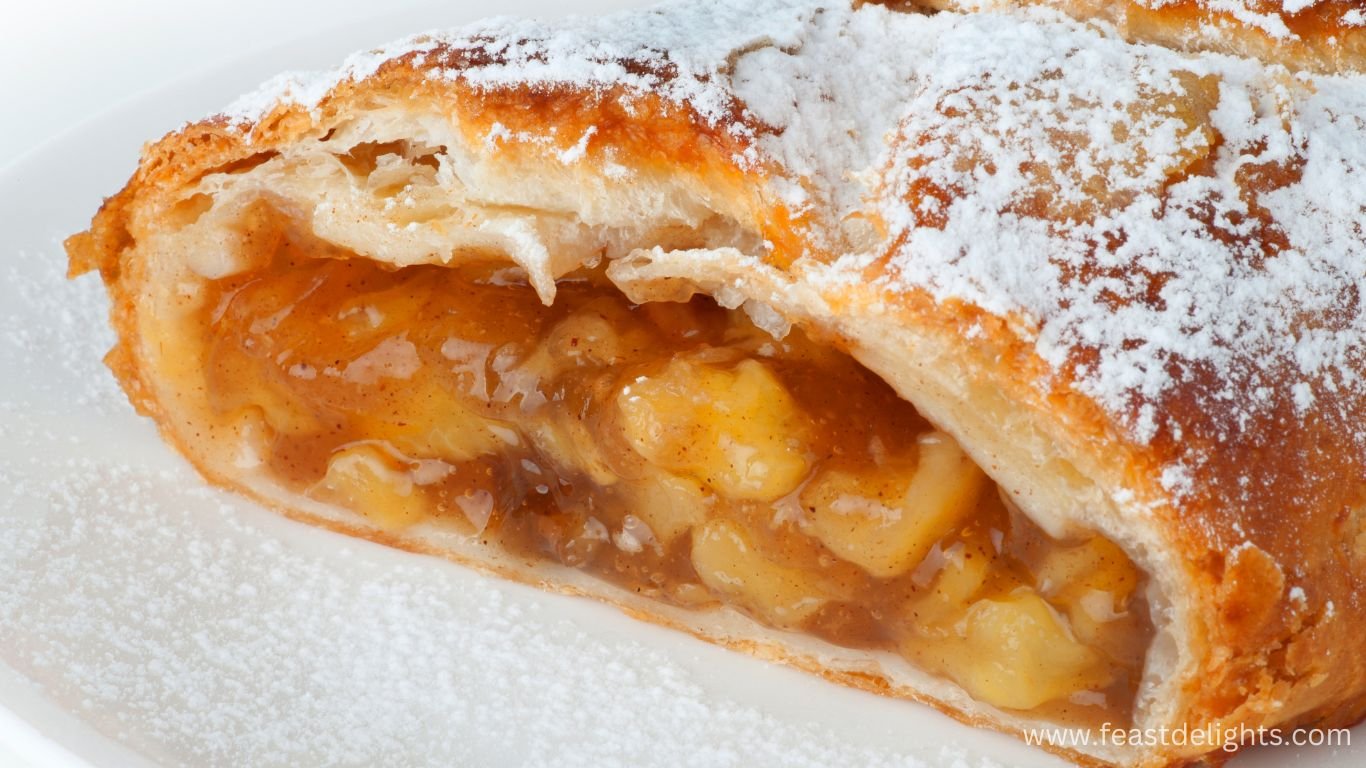
Apple strudel with puff pastry is a baked fruit roll with a golden layered crust and tender cinnamon apples, raisins and nuts inside. Unlike strudel made with stretched dough, this version uses ready-rolled pastry. It yields eight slices in approximately one hour and 52 minutes, including cooling the cooked filling and resting the baked roll.
Recipe card
Apple Strudel with Puff Pastry and Cinnamon
Cook filling for up to seven minutes and bake for up to 35 minutes. Allow approximately 30 minutes for filling cooling and 15 minutes after baking; actual cooling may take longer.
Equipment: Wide skillet, knife, peeler, chopping board, kitchen scale, rolling pin, rimmed baking tray, parchment, pastry brush, serrated knife
Ingredients
Pastry and base
Apple filling
Pastry and base
Finishing
Instructions
Cook and cool the apple filling
Melt 30 g butter in a wide skillet over medium heat. Add thinly sliced apples, sugar, raisins and cinnamon. Cook for 5–7 minutes, stirring until apples bend easily but retain their shape and excess liquid evaporates. Stir in the chopped nuts. Spread on a clean shallow plate and cool completely, about 30 minutes; refrigerate briefly if needed.
Prepare the chilled puff pastry
Preheat the oven to 180°C (350°F). Line a rimmed tray with baking parchment. Unroll the thawed but chilled pastry and gently roll to an even rectangle if needed. If supplied as two sheets, join them with a small overlap and press the seam. Sprinkle breadcrumbs in a strip along the long side where the filling will sit.
Fill, fold and seal the roll
Spoon the cooled apples over the breadcrumbs, leaving a 3 cm (1¼-inch) border. Fold the short ends over the filling and roll from the long edge, keeping the pastry snug but not stretched. Press the seam closed and position seam-side down.
Bake until the pastry is crisp
Brush with the measured melted butter and cut three small vents through the top pastry. Bake for 30–35 minutes, checking that the top and visible base are golden and the pastry near the vents is cooked, not doughy. Extend the bake if needed, shielding dark edges loosely with foil.
Rest, dust and slice
Rest on the tray or a rack for 15 minutes to let the juices settle. Dust with icing sugar and cut into eight slices using a serrated knife.
Choose apples and pastry
Firm baking apples are useful because they soften without collapsing into a watery purée. Slice them thinly and evenly so they cook at the same rate. The sugar balances tart fruit, while cinnamon, raisins and walnuts or almonds add aroma and contrasting texture. The original quantity of apples is measured by count, so the amount of filling varies with fruit size.
Use 500 g of ready-rolled puff pastry, thawed according to its package instructions but still chilled. An all-butter pastry tastes rich; other puff pastry works as well. If two sheets are supplied, overlap and press the seam so it does not open during baking. Avoid stretching or compressing the laminated dough.
Cook the filling before rolling
Soften the apples in butter with sugar, raisins and cinnamon. Stir over medium heat until the slices bend easily but retain their shape. Allow visible excess moisture to evaporate, then stir in the nuts. Spread the mixture over a shallow plate so it cools faster. Hot filling melts the pastry fat, preventing the layers from puffing properly. Fine breadcrumbs under the filling help catch remaining juice.
Shape and bake without leaks
Leave a clear border around the filling. Fold the ends inward before rolling, then press the seam and place it underneath the strudel. Do not force all the filling into the dough if unusually large apples have produced too much. Bake any extra apples separately rather than stretching the pastry until it splits.
Brush with melted butter and cut three vents to release steam. Bake in a fully preheated oven until the pastry has developed a golden colour and the base looks cooked. If the outside browns before the inner pastry is done, cover loosely with foil and continue baking. Allow the roll to rest for fifteen minutes so the filling settles; slice gently with a serrated knife.
Troubleshooting and substitutions
A soggy base usually indicates wet filling, warm dough or insufficient baking. Cool and drain the apples before assembly, keep the dough chilled and use the specified crumbs. If the filling leaks, check the end folds and seam before baking. Small leaks need not ruin the dessert, but a rimmed tray makes cleanup easier.
Almonds or walnuts can be used interchangeably by weight. Lemon zest or a small pinch of cardamom can complement cinnamon. The recipe contains wheat, milk and tree nuts; check pastry labels for additional allergens such as egg. The nut-free variation should omit the nuts and use ingredients free of relevant cross-contact.
Serving and related apple desserts
Serve slightly warm with vanilla ice cream. For a different pastry technique, try cinnamon apple and walnut filo strudel or individual apple turnovers. These are separate preparations with different folding methods.
Make ahead and storage
Cook the filling ahead and refrigerate it promptly. Assemble the chilled pastry shortly before baking. Refrigerate baked leftovers within two hours and use within three days. To recover crispness, reheat in an oven until heated through. Freeze individually wrapped slices if necessary and thaw in the refrigerator.
Editorial note: the ingredient quantities remain unchanged. The time estimate now accounts for cooking the filling, cooling it and resting the baked pastry; final pastry size and timing require kitchen review.
Frequently asked questions
Which apples suit strudel?
Firm, tart or sweet-tart baking apples such as Granny Smith or Braeburn hold their shape. Very soft apples may cook into a purée.
Can I use filo instead of puff pastry?
Filo requires several lightly buttered sheets and a different wrapping technique. Use a separate filo strudel recipe rather than a direct substitution.
Why is the bottom soggy?
Warm or watery filling can soften pastry before it bakes. Reduce excess juices, cool completely and use the measured breadcrumbs.
Can I omit the nuts?
Yes. Leave them out rather than adding extra wet filling. Check the pastry and other ingredients for nut cross-contact if needed.
Can I assemble it ahead?
Prepare and refrigerate the filling separately, then assemble shortly before baking. A filled raw pastry softens as it stands.
Can I freeze baked strudel?
Yes. Cool, wrap portions and freeze for up to two months for quality. Thaw in the refrigerator and re-crisp in the oven.
More recipes to try






Spotted a detail that needs correcting? Contact the FeastDelights editors.