Milk Cornmeal Porridge Recipe with Butter and Honey
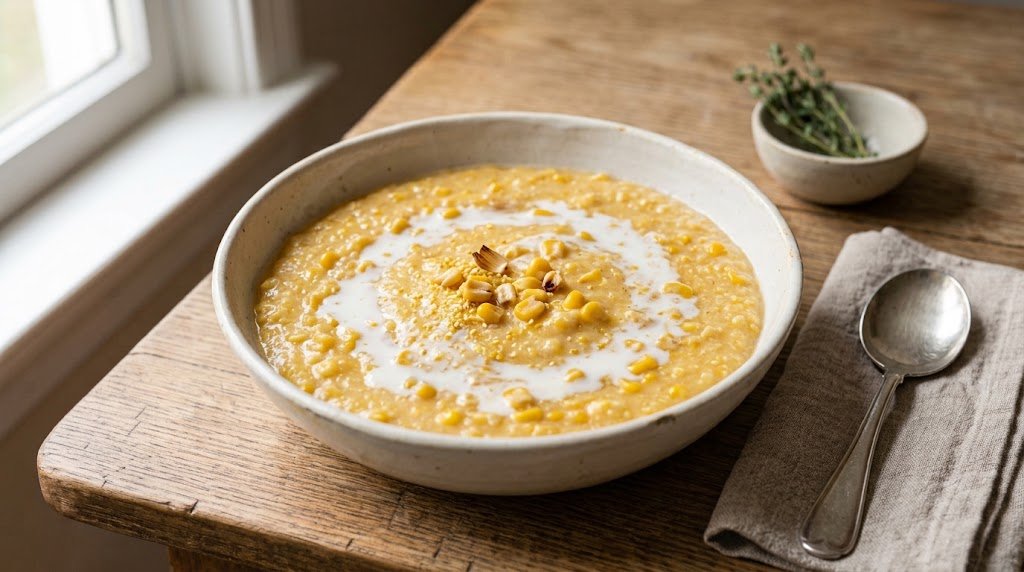
Milk cornmeal porridge is a warm breakfast made by gently simmering fine cornmeal in milk, then finishing with butter and honey. The grains soften into a thick, creamy spoonable mixture. This recipe makes four small bowls in around 30 minutes. A heavy saucepan and steady whisking prevent lumps and scorching. Use fine cornmeal rather than cornstarch, and allow extra cooking time if the grains remain firm. Serve immediately while the porridge is soft, with the butter melting into each bowl.
Milk cornmeal porridge uses a simple one-to-three ratio of fine cornmeal to milk by volume. The texture is thicker than oatmeal made with rolled oats, and it becomes firmer as it cools. Gentle heat lets the grains absorb the milk without burning the base of the pan.
Choosing the right cornmeal
Fine cornmeal hydrates more quickly than coarse polenta. Cornstarch is a different ingredient and cannot replace the meal. If you use a product labelled instant, follow its shorter cooking guidance and adjust the liquid to the desired texture.
Avoiding lumps and a scorched base
Add the grains in a steady thin stream rather than tipping the cup into the pan. Whisk during the first minute, then switch to a spatula once the mixture becomes thick. Milk can scorch on high heat; scraping the corners helps keep the base clean.
Recipe card
Milk Cornmeal Porridge Recipe with Butter and Honey
Cooking time depends on grind and brand; follow texture cues.
Equipment: US cup measure, heavy 2 L saucepan, whisk, heatproof spatula
Ingredients
Main ingredients
Instructions
Warm the milk
Bring 3 US cups (710 ml) milk and a pinch of salt to a gentle simmer over medium-low heat in a heavy saucepan. Do not let the milk boil over.
Whisk in the cornmeal
Pour 1 US cup fine cornmeal in a thin stream, whisking continuously. Reduce heat as the mixture thickens.
Simmer gently
Cook over low heat for 15–25 minutes, stirring frequently and scraping the bottom and corners. If the porridge becomes too stiff before the grains soften, add a splash of milk.
Check the texture
Taste a small cooled spoonful. The grains should be tender with no hard centres, and the porridge should fall from a spoon in a thick ribbon. Continue cooking gently if gritty.
Finish and serve
Divide into four bowls. Distribute 1 tbsp butter and 2 tsp honey between the portions. Serve warm.
Getting the texture right
The porridge should be creamy rather than a stiff paste. Different grinds absorb different amounts of liquid, so add only a small splash of milk at a time when needed. Remember that it continues to thicken after cooking.
Serving ideas
Butter and honey give a lightly sweet finish. Add berries, banana or a little cinnamon if desired. For another simple breakfast, try egg-free water pancakes. This porridge contains milk. Do not serve honey to infants under 12 months.
Storage and make-ahead
Refrigerate in shallow covered containers at 4°C/40°F or below within 2 hours (1 hour above 32°C/90°F). Use within 3 days. Reheat with a little milk to 74°C/165°F throughout, stirring frequently.
Frequently asked questions
Can I use coarse cornmeal?
Yes, but it will need longer cooking and may require extra liquid.
Why is my porridge lumpy?
Cornmeal added too quickly can form dry pockets. Whisk it in slowly.
Can I use plant milk?
Unsweetened plant milk may work, but flavour and thickening vary. Replace the butter too if avoiding dairy.
Can I make it savoury?
Omit honey and adjust the seasoning to taste.
Why does the porridge become firm when cold?
The starch continues to set. Stir in milk when reheating.
Can I double the batch?
Use a larger heavy saucepan and allow time for the milk to heat evenly.
More recipes to try






Spotted a detail that needs correcting? Contact the FeastDelights editors.