Ukrainian-Style Braised Pork with Vegetables
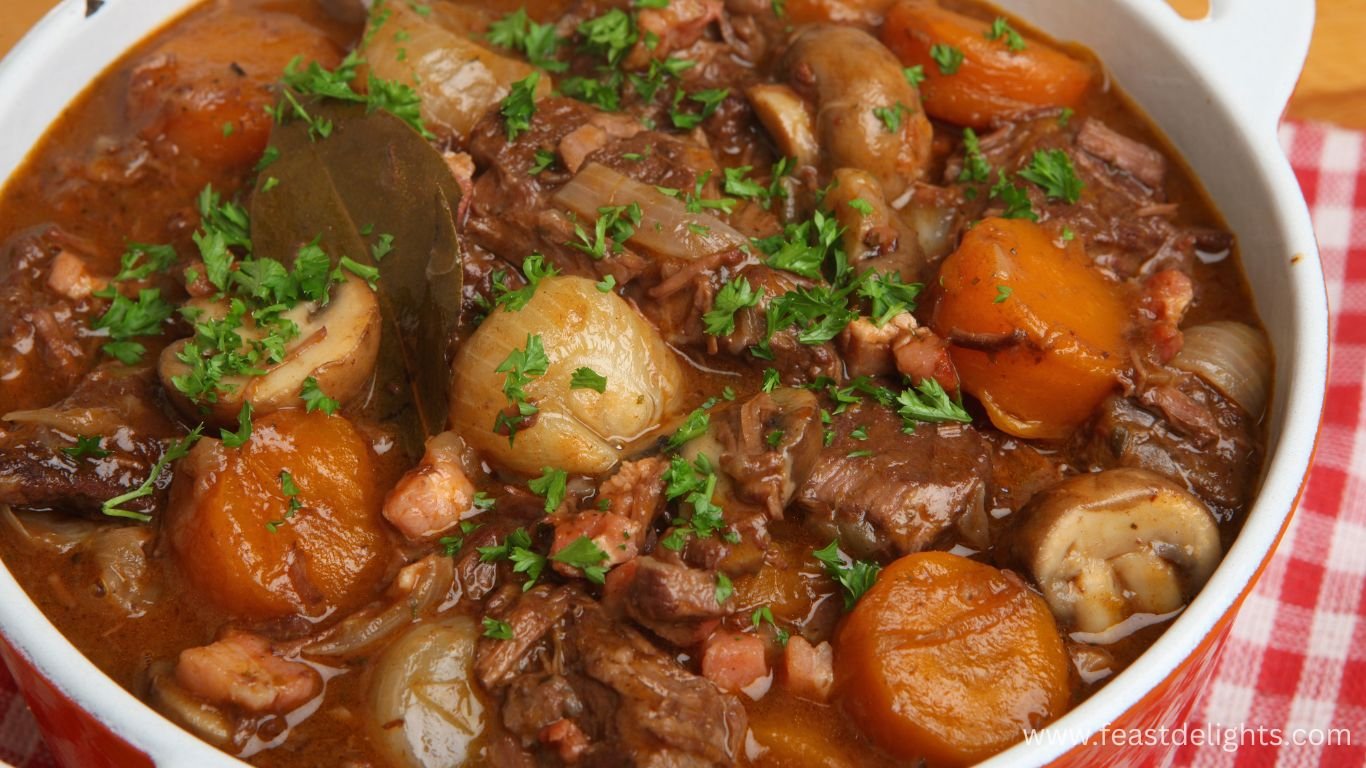
This Ukrainian-style braised pork combines browned shoulder pieces, onions and carrots in a light tomato broth scented with garlic and bay. A gentle covered simmer softens the meat while leaving enough savoury liquid to spoon over potatoes or buckwheat. The recipe makes six servings from 1 kg of boneless pork shoulder. Allow about 20 minutes to prepare the ingredients and roughly 2½ hours for browning, braising and finishing. The pork is ready when a fork turns easily in a piece; the clock is a guide rather than a guarantee.
Braised pork with vegetables is a practical way to turn pork shoulder into a tender main dish without a long ingredient list. Brown the meat first, soften the onions and carrots in the same pot, then add garlic, tomato paste, stock and bay leaves. The browned coating flavours the broth as the pork cooks gently under a lid. This version keeps the existing Ukrainian-inspired seasoning and six-serving yield, while allowing time for both browning and a full braise. Plan for about 2 hours 50 minutes overall, with most of that spent at a quiet simmer. Serve the pieces intact with their vegetables and cooking liquid, rather than reducing the dish to shredded pork or a thick tomato sauce.
Choose a cut that benefits from braising
Boneless pork shoulder is the specified cut. Trim away hard skin, thick external fat and tough silvery membrane, but leave the fine seams of fat running through the meat. Cut into roughly 4 cm/1½ inch pieces. Consistent size matters: small scraps can dry out while large chunks still resist a fork.
One kilogram is about 2 lb 3 oz. The finished dish serves six with a substantial side. Pork loin and tenderloin are lean quick-cooking cuts; they do not behave like shoulder during a two-hour simmer. Do not use the same timing for those cuts or for chicken breast.
Vegetables, stock and equipment
Two large onions form the savoury base, and three medium carrots add sweetness and texture. Slice the onions and cut the carrots into thick rounds so they can withstand the braise. Mince the three garlic cloves rather than leaving large pieces that may catch on the pan. The 2 tablespoons of tomato paste colour the broth without turning it into a tomato-heavy stew.
Use 500 ml stock, approximately 2 US cups plus 2 teaspoons, preferably unsalted or low in salt. Start with only part of the measured teaspoon of salt if your stock is already seasoned; adjust after reducing. Check stock labels for celery, wheat, milk or other allergens. The recipe has no listed flour thickener, but that does not make every stock gluten-free.
A heavy 4–5 litre covered pot or Dutch oven with a broad base gives room to brown in batches. A wooden spoon, tongs and a heatproof plate are useful. Keep a little water available for topping up: evaporation varies with lid fit, burner strength and pot width.
Recipe card
Ukrainian-Style Braised Pork with Vegetables
Includes browning, vegetables, about 1½–2 hours covered braising and finishing. Pork shoulder may need longer; fork tenderness decides.
Equipment: Heavy 4–5 litre lidded pot or Dutch oven, tongs, wooden spoon, chopping board, knife, measuring jug and spoons, heatproof plate, food thermometer
Ingredients
Pork
Vegetables and braising liquid
Instructions
Dry and brown the pork in batches
Pat the 1 kg of 4 cm pork shoulder pieces dry. Heat 2 tablespoons oil in a heavy 4–5 litre covered pot over medium-high heat. Brown in 3–4 loose batches, turning to colour several sides, about 12–18 minutes altogether. Transfer to a plate; the centres will still be raw.
Soften the vegetables
Lower the heat to medium. Add 2 sliced large onions and 3 carrots in thick rounds to the pot. Cook for about 6–8 minutes, stirring and loosening browned bits. Add 3 minced garlic cloves and 2 tablespoons tomato paste; stir for about 1 minute without scorching.
Add the stock and season
Pour in 500 ml pork or chicken stock and scrape the base with a wooden spoon. Return the pork and its juices. Add 2 bay leaves, up to 1 teaspoon fine salt depending on the stock, and ½ teaspoon black pepper. Bring to a gentle simmer.
Braise until a fork turns easily
Cover and reduce the heat to low. Simmer gently for about 1½–2 hours, checking and stirring occasionally. Add a little hot water if the pot is getting dry. Begin checking after 90 minutes; a fork should enter and turn easily in a piece. Continue in 15-minute intervals if still firm.
Adjust the broth
Remove and discard the bay leaves. If the broth is too thin, lift the pork and carrots into a bowl and simmer the liquid uncovered for 5–10 minutes. Return the meat. If too thick, add a little hot water. Skim excess surface fat and adjust salt and pepper.
Serve with the vegetables and juices
Spoon into warm bowls or over a prepared side. Keep the pork in pieces and include some carrot, onion and broth in each serving. Refrigerate leftovers promptly in shallow containers.
Build flavour before adding the stock
Dry the surface of the pork with kitchen paper before browning. Heat the oil until it shimmers, then arrange one loose layer of meat with space between pieces. Leave the first side alone until it releases reasonably easily. Turning constantly or filling the pot with the entire kilogram encourages steaming.
Brown means golden to deep brown patches, not a burnt black coating. If the pan base darkens too quickly, reduce the heat between batches. The pork is not cooked through at this stage. Keep the plate and utensils that touched partly cooked pork away from ready-to-eat food.
Soften the vegetables over medium heat after removing the pork. Stir the tomato paste and garlic only briefly so the garlic does not scorch. When the stock goes in, scrape the brown residue from the base; leave behind any truly burnt bits rather than dissolving bitterness into the sauce.
How to judge a gentle braise
The liquid should bubble softly in a few places, not churn across the pot. Cover and turn the heat down as far as needed to maintain that simmer. Check after about 30 minutes and occasionally thereafter. Stir from the bottom gently and add a small splash of hot water if the meat is catching or the liquid is reducing too quickly.
Start checking tenderness after 90 minutes of covered simmering. A fork should slide into a piece with little resistance and turn easily without a rubbery spring. Some shoulders need closer to 2 hours or longer. If the liquid is present and the simmer is gentle, firm meat usually needs more time. Increasing the heat is more likely to toughen the exterior and dry the pot.
Timing correction: the total now allows for browning, cooking the vegetables, a covered braise and a short finish. About 150 minutes of cooking plus 20 minutes preparation is an estimate, not a promise that every cut will finish at precisely that point.
Fixing the broth and seasoning
Too thin: once the pork is tender, lift it and the carrots into a warm bowl. Simmer the liquid uncovered for a few minutes, then return the meat. This reduces the broth without breaking up the vegetables through extra stirring.
Too thick or nearly dry: stir in hot water a little at a time. If the base has burnt, transfer the unburnt food to a clean pot without scraping the scorched layer. Adding more tomato paste will not correct a burnt taste.
Greasy surface: skim with a spoon after the braise. For a make-ahead meal, chill correctly and remove the firm surface fat before reheating. A little fat contributes flavour; the dish need not be completely fat-free.
Too salty: avoid further reduction. Add a small amount of water and serve with unsalted potatoes or grain. Seasoning at the end is easier than correcting heavily salted stock after a long simmer.
Substitutions and serving ideas
Beef chuck can make a similar braise, but it may require a longer simmer and should be checked independently. A mushroom-only dish would need different liquid and timing, so it is not offered as a direct one-for-one meat replacement. For another shoulder recipe with a different flavour profile, see oven-braised pork with peppers.
Optional mushrooms should be browned separately and added near the end if you want them to keep some texture. A teaspoon of sweet paprika can be stirred into the softened vegetables before adding stock; keep the heat moderate so it does not burn. Neither addition is part of the measured base recipe.
Serve with mashed potatoes, plain boiled buckwheat or rice. Buckwheat with browned mushrooms makes a more substantial accompaniment. Balance the rich broth with cucumber salad with dill and vinegar or a small portion of pickled vegetables. Add chopped dill at the table if desired.
Make ahead, storage and reheating
The complete braise can be made ahead. Divide leftovers and their broth into shallow containers and refrigerate promptly, within 2 hours, or within 1 hour if the room is above 32°C/90°F. Keep at 4°C/40°F or below and use within 3 days. Do not leave a large covered pot on the cooker overnight.
Freeze individual portions with enough liquid to cover the meat for up to 2 months for best quality. Leave space for expansion and label the container. Thaw in the refrigerator, not on the worktop. A thawed portion is easier to heat evenly than a solid block.
Reheat only the amount needed in a saucepan with a splash of water, stirring gently. Heat until the pork and broth reach 74°C/165°F throughout; bring the sauce to a boil while keeping the meat from catching. If microwaving, cover, stir and check several pieces for cold centres. The USDA leftover reheating guidance explains the temperature check.
Keep the simmer gentle and give the shoulder time to soften. Once the pork yields easily to a fork, finish the broth to your liking and serve with a side that catches the juices.
Frequently asked questions
Can I cook this in the oven?
Yes, in a suitable covered ovenproof pot. After bringing the liquid to a simmer on the hob, transfer to a 160°C/325°F conventional oven. Check the liquid and fork tenderness regularly; timing can differ from the hob method.
Does the stock need to cover every piece?
No. This is a covered braise, so some meat may sit above the liquid. Turn pieces occasionally and keep enough broth in the pot to prevent scorching. Do not fill the pot with water just to submerge everything.
Can I use pork loin?
It is not a good direct substitution for this method. Loin is leaner and can dry out during the long cooking needed for shoulder. Use shoulder or choose a recipe designed for loin.
Why is the pork still tough after 90 minutes?
Cut size and the particular shoulder affect cooking time. If the pot is gently simmering and has enough liquid, continue covered in 15-minute intervals until a fork turns easily.
Can I add potatoes to the pot?
You can add large potato chunks for the last 25–35 minutes, checking tenderness. They absorb liquid and change the yield and texture, so this is an optional variation rather than part of the base recipe.
Can I use water instead of stock?
Yes, but the broth will be lighter. Keep the existing onion, garlic, tomato paste and bay, then adjust seasoning after cooking rather than adding a large amount of salt at the start.
Do I need flour to thicken the broth?
No. This version is intended to have a light broth. Reducing the liquid briefly after the meat is tender gives more body without adding a separate flour mixture.
Can I make a smaller batch?
Halve every ingredient for three servings and use a smaller covered pot. The pork pieces still need time to soften, so do not halve the braising time.
More recipes to try






Spotted a detail that needs correcting? Contact the FeastDelights editors.