Quick Pan-Fried Squid Tentacles with Garlic and Lemon
These pan-fried squid tentacles are seasoned with paprika, oregano, garlic and lemon for a quick savoury seafood dish. Pat the cleaned tentacles very dry and sear small portions in a hot wide skillet so they brown rather than stew in their own liquid. Add minced garlic near the end to prevent burning, then finish with lemon juice and parsley off the heat. The original recipe serves four in approximately fifteen minutes, though large tentacles or multiple batches may take longer. Cook through before serving immediately.
Pan-fried squid tentacles with garlic and lemon are a quick seafood dish seasoned with paprika and oregano. The recipe serves four and takes about 15 minutes for small tentacles; cooking in batches may take longer.
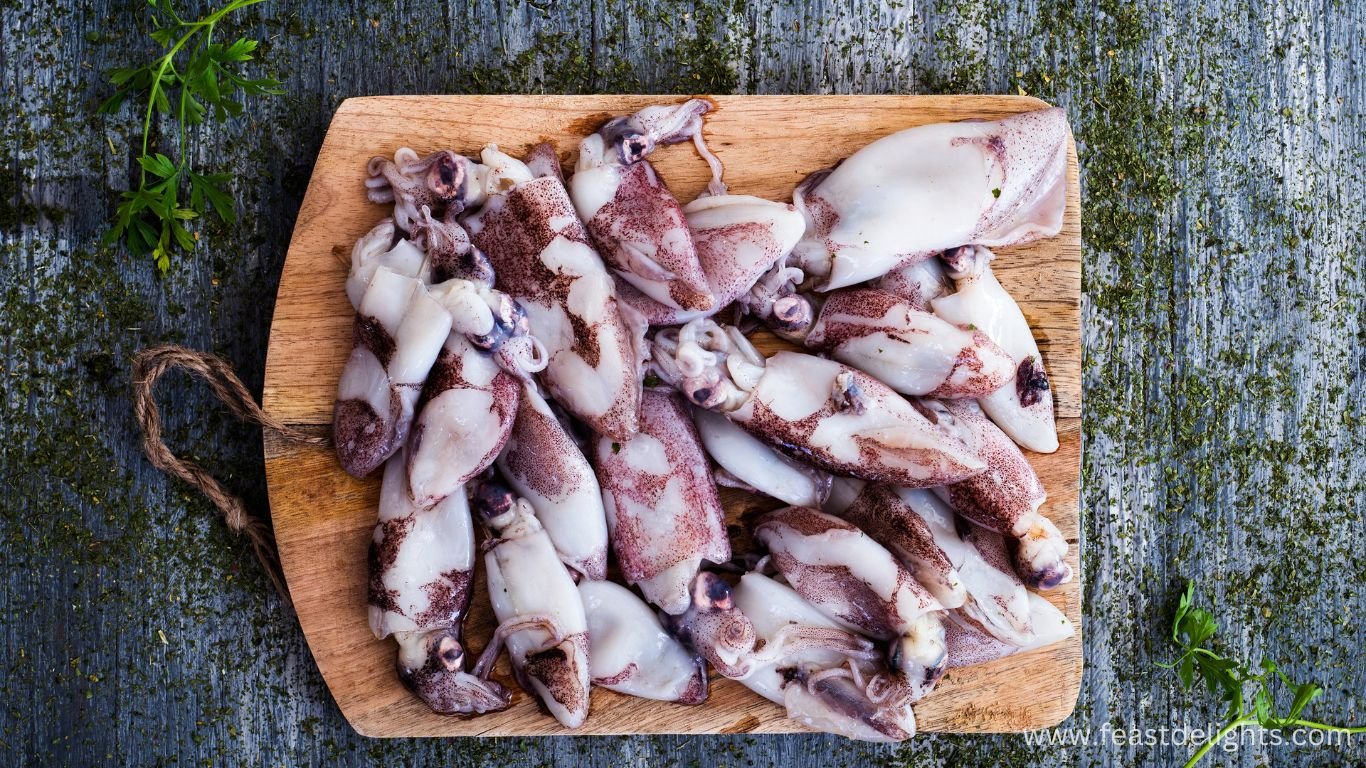
Recipe card
Quick Pan-Fried Squid Tentacles with Garlic and Lemon
Five minutes cooking is an estimate for small tentacles and a large skillet; cook in batches and verify doneness, allowing extra time if needed.
Equipment: Wide heavy skillet, paper towels, seafood cutting board, knife, tongs, mixing bowl and instant-read thermometer
Ingredients
Seafood
Searing
Seasoning
To finish
Instructions
Thaw and dry the squid
Thaw frozen cleaned squid in the refrigerator. Check for remaining hard beaks and remove if present. Pat very dry using disposable paper towels. Divide large clusters into smaller even portions.
Season just before cooking
Toss squid with paprika, oregano, salt and pepper. Keep garlic, lemon and parsley separate. Wash hands and clean surfaces that contacted raw seafood.
Preheat a wide skillet
Heat a heavy skillet over medium-high to high heat as appropriate for the cookware. Add olive oil and swirl until shimmering, not smoking.
Sear in a single layer
Add a small batch of squid in one layer. Turn after 1–2 minutes as needed, and cook until opaque and firm throughout. Add garlic for the final 30 seconds. Aim for 63°C (145°F) in the thickest pieces where measurable. Do not stop cooking merely because the timer ends; larger pieces may need longer.
Finish with lemon and parsley
Remove cooked squid to a clean plate. Add lemon juice and parsley off the heat. Repeat if needed, using clean utensils for cooked portions. Serve hot.
Buy and prepare the tentacles
Choose cleaned squid tentacles of similar size. Frozen seafood is convenient; thaw it in the refrigerator in a covered container and drain away released liquid. Check the centre of a cluster for any remaining hard beak. Divide large clusters so their thickest sections cook evenly. Pat thoroughly dry with paper towels. A wet surface cools the pan and produces steam rather than a sear.
Keep the pan hot, not overcrowded
Season just before cooking. A wide heavy skillet retains heat well, but avoid heating oil until it smokes. Add only enough squid to cover the base in one layer. If pieces release a lot of liquid, lift them with tongs onto a dedicated plate for partially cooked seafood to allow excess moisture to evaporate as needed, then return them and continue cooking until done. Cook later portions in smaller batches. The original five-minute estimate applies to small tentacles; batch size and thickness change the total.
Minced garlic can burn rapidly in a hot pan, so add it near the end. Paprika and oregano supply flavour without a wet marinade. The tentacles should turn opaque and firm throughout, with some lightly browned edges. FoodSafety.gov seafood guidance recommends cooking most seafood to 63°C (145°F). Check the thickest pieces with an appropriate thermometer where practical. Do not extend harsh searing after they are done simply to obtain more colour.
Troubleshooting and serving
If squid is tough, a separate gentle braising method may soften it, but that is not the same fifteen-minute dish. Avoid switching to a long sear. If garlic burns, remove it and lower heat for the next batch. Finish with lemon and parsley off the heat and serve with rice, rye and wheat bread or green beans with mushrooms. A little chilli is an optional variation.
Seafood safety and leftovers
Keep raw seafood cold until cooking, separate it from ready-to-eat foods, and wash hands and utensils after handling. Use a clean plate for cooked squid. Refrigerate leftovers within two hours, or one hour above 32°C (90°F); use within two days at 4°C (40°F) or below. Reheat to 74°C (165°F) if serving hot again, but expect a firmer texture. Contains molluscan shellfish; check shared cookware and seasonings for cross-contact.
Frequently asked questions
Why is my squid rubbery?
Prolonged hard searing can toughen it. Use small pieces and short, hot cooking, but ensure they are cooked through.
Can I cook frozen tentacles directly?
Thaw first in the refrigerator, drain and pat dry for this quick skillet method.
Why does the pan fill with water?
The squid may be wet or the pan overcrowded. Cook smaller batches and dry thoroughly.
Can I use calamari rings?
Yes, if cleaned and cut evenly. Cooking time may differ; check doneness.
When should I add lemon juice?
Add after cooking so the pan stays hot and acidity remains bright.
Can I reheat squid?
Yes, reheat leftovers to 74°C/165°F, although texture may become firmer.
More recipes to try






Spotted a detail that needs correcting? Contact the FeastDelights editors.