Apple-Walnut Yeast Pastries with Cinnamon
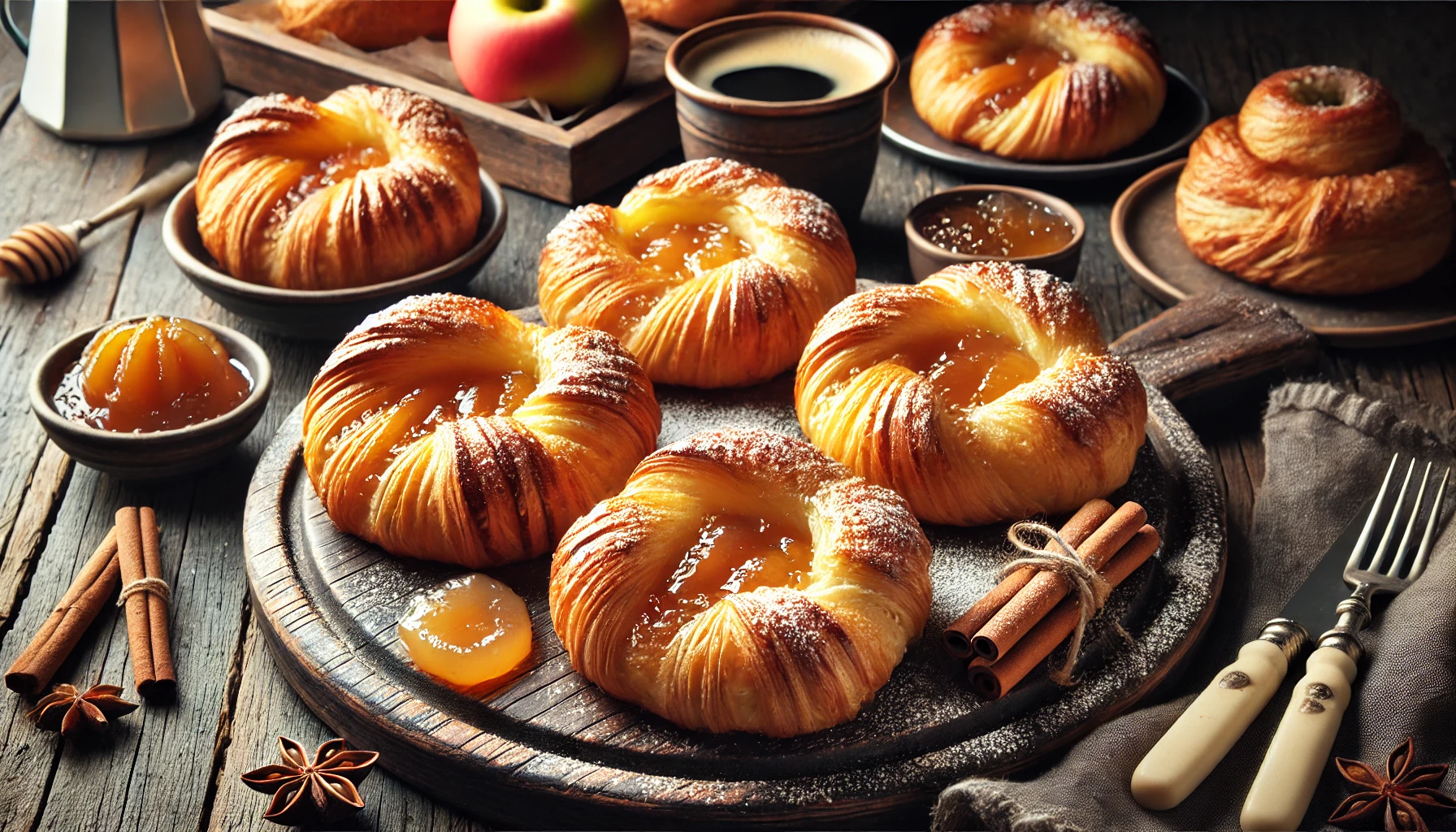
These Danish-inspired apple-walnut pastries have soft, buttery yeast dough folded into little pinwheels around a centre of thick apple jam, ground walnuts and cinnamon. Unlike laminated Danish pastry, this version needs no butter block or repeated folding. The enriched dough rises twice, then bakes until golden around the edges and tender inside. The recipe makes eight pastries, ideal for a weekend breakfast or afternoon coffee. Allow about two and a half hours, with extra time if your kitchen is cool.
Apple-walnut yeast pastries combine a tender, buttery dough with a sweet apple jam filling and the warmth of cinnamon. Folded into individual pinwheels, they look like Danish pastries but are easier to make at home because the butter is mixed into the dough instead of laminated in layers. This batch makes eight pastries. Plan for about 30 minutes of active preparation, 90–120 minutes of rising and 15–20 minutes of baking.
Why this dough is different
Classic laminated Danish pastry relies on thin alternating layers of dough and butter. Here the softened butter enriches a single yeast dough, giving a fluffy crumb rather than crisp flakes. The original recipe uses an enriched dough and folded corners; this adaptation retains those proportions and shaping method. For a separate laminated technique, see our homemade yeasted puff pastry.
Choosing the ingredients
Plain flour gives enough structure to hold the pinwheel shape. Weigh it rather than scooping a packed cup. Milk and egg soften the dough, while sugar adds sweetness and helps colour the crust. Use butter that yields to a finger but is not greasy or melted. Instant yeast can be mixed directly into dough; the brief milk rest in this method is optional for instant yeast but makes it easier to distribute.
Thick apple jam is important because runny preserves can escape through the cuts. Ground walnuts absorb some moisture and add texture. If your jam contains large pieces, chop them before mixing. Do not add water to the filling.
How to make apple-walnut yeast pastries
Develop the dough before working in the butter, then give it time to rise until almost doubled. Shape eight equal squares and leave an uncut centre so the points have somewhere to attach. A ruler helps keep the squares equal and the baking time consistent. Keep the filling in the centre and leave the exposed dough clean for egg wash.
Recipe card
Apple-Walnut Yeast Pastries with Cinnamon
First rise 60–90 minutes; final proof about 30 minutes. Total time allows for the longer rise; allow extra time in a cool room.
Equipment: Digital scale, mixing bowl, dough hook or hands, rolling pin, ruler, sharp knife, baking tray, baking parchment, pastry brush and cooling rack.
Ingredients
Dough
Filling
Glaze
Instructions
Mix and knead the dough
Mix lukewarm milk (about 30–35°C/86–95°F), yeast and a teaspoon of the measured sugar; leave 5 minutes. Combine flour, remaining sugar and salt. Add the egg and milk mixture and knead until cohesive. Work in softened butter gradually, then knead until smooth and stretchy. The dough will be soft and slightly tacky; avoid adding handfuls of flour.
12 minLet the dough rise
Cover the bowl and leave in a comfortably warm, draught-free place for 60–90 minutes or until roughly doubled. Do not put it in a hot oven; the butter should stay incorporated.
90 minMix filling and shape pinwheels
Stir the apple jam, walnuts and cinnamon into a thick paste. Roll the dough on a lightly floured surface into a rectangle approximately 20 × 40 cm (8 × 16 in). Cut into eight 10 cm squares. Cut diagonally from each corner towards the centre, stopping about 2 cm short. Fold every other point towards the centre and press gently to secure. Divide the filling among the centres, using about one eighth per pastry.
12 minProof and brush with egg
Transfer to a parchment-lined tray with room to expand. Cover loosely and proof about 30 minutes until puffy. Preheat a conventional oven to 180°C (350°F). Brush exposed dough lightly with beaten egg, avoiding the jam.
30 minBake and cool
Bake on the middle rack for 15–20 minutes until golden, with firm, lightly browned bases and no wet dough beneath the filling. If needed, bake a few minutes longer, loosely shielding darkening tips with foil. Transfer to a rack and cool before eating; jam stays hot.
20 min
Shaping and baking tips
Soft dough can be difficult to cut neatly. If it feels greasy, cover and chill it briefly until it can be rolled without smearing. Dust the worktop sparingly; too much flour prevents the folded points from sticking. A sharp knife or pizza wheel makes cleaner cuts than dragging a blunt knife through the dough. Cover the shaped pastries while proofing so the surface does not dry and crack.
Troubleshooting
Dense pastries: The dough may have been under-kneaded, over-floured or baked before it had risen sufficiently. Enriched dough often rises slowly in a cool kitchen. Wait until it looks visibly expanded and puffy.
Pinwheels unfold: Press the folded tips gently into the centre before adding the jam. Avoid stretching the points tightly, which makes them spring back.
Dark edges with a doughy centre: The thin tips bake faster than the filled middle. Move the tray away from the top heating element and shield the tips loosely with foil if needed. Let the centre finish baking rather than removing the pastries as soon as the tips colour.
Serving and variations
Serve the pastries warm rather than hot, with coffee, tea or a bowl of plain yoghurt. For a different fruit filling, use thick apricot preserves. If you prefer a pastry with a creamy centre, try our peach cream cheese puff pastry braid. Our Danish pancake balls with jam are another sweet breakfast option.
Make-ahead and allergens
Prepare the walnut-jam filling in advance and refrigerate it covered. For the most predictable rise, make the dough on baking day. The pastries contain wheat, milk, egg and walnuts. Check all packaged ingredients and avoid shared equipment if cooking for someone with a food allergy.
Frequently asked questions
Is this a traditional laminated Danish?
No. It uses softened butter kneaded into a yeast dough rather than a separate cold butter block folded between layers. The crumb is soft, not flaky.
Can I use active dry yeast?
Yes. Use the same weight if the packet allows a direct substitution, dissolve it in the warm milk and allow longer rising if necessary.
Why is the dough sticky?
Egg, milk and butter make this dough soft. Knead until elastic and chill briefly if the butter softens excessively; extra flour can make the pastries dry.
Why does the jam leak?
Thin jam or too much filling can spread into the cuts. Use thick jam and the measured ground walnuts; keep the filling within the centre.
Can I shape these the night before?
You can refrigerate covered shaped pastries immediately after shaping, before their final proof. Bake the following morning once they look puffy, allowing extra time as needed. This overnight variation still needs kitchen testing.
Can I substitute the walnuts?
Finely ground pecans or almonds provide similar bulk. For a nut-free adaptation, use a thick jam without nuts and check all ingredients for cross-contact; the filling may spread more.
How do I know the dough is fully baked?
Look for evenly golden edges and a set, lightly browned underside. The dough directly beneath the jam should not be gummy or raw.
More recipes to try






Spotted a detail that needs correcting? Contact the FeastDelights editors.