French-Style Baked Pork with Onion and Cheese
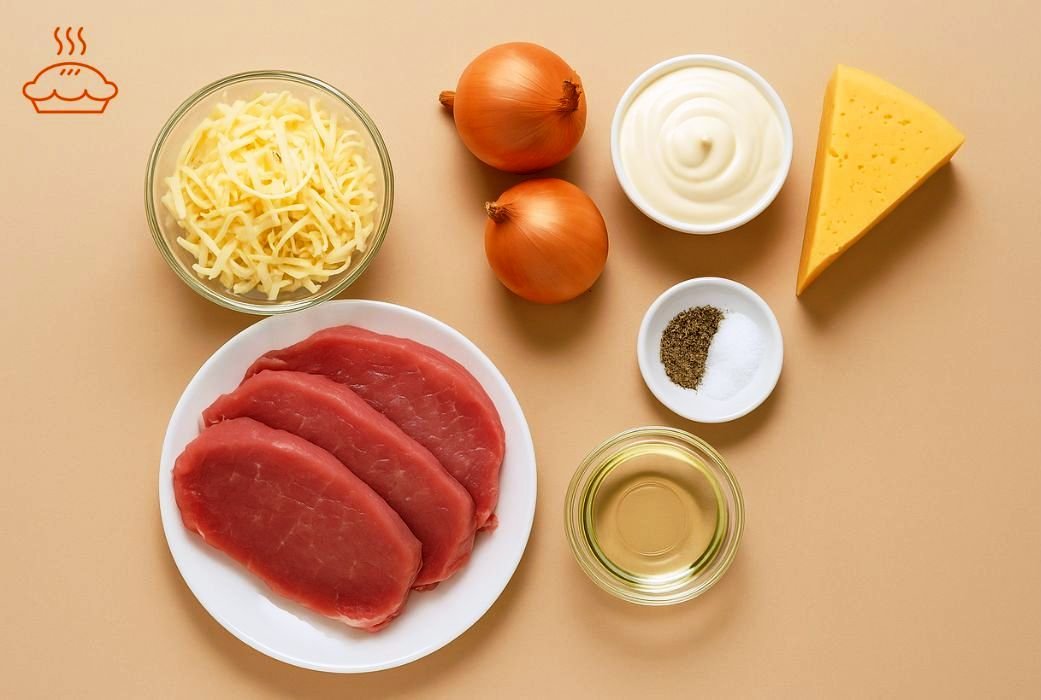
French-style baked pork is an Eastern European oven dish with thin pork cutlets, sweet sliced onion, a creamy sour cream or mayonnaise topping and a golden layer of melted cheese. It uses just six measured ingredients and serves four. Bake the meat in a single layer so the portions cook evenly, and check the centre of the pork rather than judging doneness by the cheese. Allow about an hour, including a short rest, and serve with a crisp salad or boiled potatoes.
Known in Eastern European home cooking as meat French-style, these cheese-topped pork cutlets are not a classical French dish. This version has no potato base, so the meat and onions can cook without waiting for a thick layer of potatoes to soften.
Choosing pork, onions and cheese
Use 600 g (about 1.3 lb) of pork neck or tenderloin, cut into 1–1.5 cm (⅜–⅝ inch) slices. Neck has more intramuscular fat, so it is generally more forgiving during oven cooking. Tenderloin is leaner and needs earlier temperature checks to avoid drying out. Flatten the slices gently with a smooth meat mallet to an even thickness without tearing the meat. Two medium onions supply sweetness and moisture; slice them thinly enough to soften under the cheese.
Use four tablespoons of sour cream or mayonnaise in total, rather than both. Sour cream adds a tangy flavour, while mayonnaise gives a richer topping. Choose a firm melting cheese such as Gouda or mild cheddar and grate it yourself if convenient. The 200 g quantity is about 7 oz. Season the pork lightly because cheese and mayonnaise can contribute considerable salt.
Equipment and oven setup
Use a shallow baking dish around 23 × 30 cm (9 × 12 inches), a meat mallet, separate raw-meat board, knife, grater and instant-read thermometer. Preheat a conventional oven to 180°C (350°F). A dish that fits the pork in a single layer helps the meat cook more evenly; do not stack the pieces.
Recipe card
French-Style Baked Pork with Onion and Cheese
Begin checking lean tenderloin at 20 minutes; cooking time depends on thickness. Rest at least three minutes.
Equipment: Shallow 23 × 30 cm baking dish, smooth meat mallet, separate raw-meat board, knife, grater and thermometer
Ingredients
Pork and seasoning
Topping
Pork and seasoning
For the dish
Instructions
Flatten and season the pork
Preheat a conventional oven to 180°C (350°F). Gently flatten 1–1.5 cm pork slices between food-safe sheets until even. Season lightly with salt and pepper.
Arrange the onion layer
Lightly oil a shallow baking dish and lay the pork in one layer without overlapping. Top each piece with thinly sliced onion.
Add cream and grated cheese
Divide the four tablespoons of sour cream or mayonnaise among the cutlets. Scatter the grated cheese evenly over the top.
Bake and check the meat temperature
Bake about 30–40 minutes, checking tenderloin from 20 minutes. Insert a thermometer sideways into the thickest part of each representative piece; pork must reach at least 63°C (145°F). Tent loosely with foil if the cheese browns too early.
Rest and serve
Remove from oven and rest at least three minutes before serving hot with the pan juices.
How to keep the pork tender
Lightly oil the dish and arrange the flattened, seasoned pork slices without overlapping. Scatter the onion over each portion and spread a spoonful of sour cream or mayonnaise on top. Divide the grated cheese evenly. Thinly sliced onion softens more readily than thick rings; a large mound of raw onion can remain crunchy while the pork overcooks.
Bake uncovered on the middle rack. The original estimate is 30–40 minutes, but begin checking lean tenderloin at about 20 minutes, since thickness, oven calibration and topping affect cooking time. Insert a thermometer sideways into the thickest part of a cutlet so the tip measures the meat itself. According to FoodSafety.gov, whole pork cuts must reach at least 63°C (145°F) before a three-minute rest. Check several pieces, especially if thickness varies. If the cheese darkens before the meat is ready, cover loosely with foil. If the meat is already done, avoid extending cooking solely to achieve a darker topping.
Troubleshooting
Dry pork: flatten evenly and start checking lean cuts early. Onion still crunchy: slice more finely next time, or soften it briefly in a skillet before layering. Watery baking dish: avoid crowding and use thick sour cream; some juices are normal. Cheese browns too quickly: loosely tent the dish and continue only until the pork reaches the required temperature. Cheese turns oily: use a moderate oven and a cheese that melts well.
Variations and serving suggestions
Add thin tomato slices over the onion if desired; blot them first to reduce excess moisture. A small amount of mustard can be stirred into the creamy topping for a sharper flavour. For a more substantial potato-layered meal, follow the separate cheesy pork and potato bake, rather than adding raw potatoes beneath these quick-cooking cutlets. Serve with fresh cucumber salad with dill, cabbage and cucumber salad or boiled potatoes.
Make ahead, storage and allergens
Slice the onion and grate the cheese ahead, then refrigerate them separately. Keep raw pork chilled and do not wash it, since splashes can spread contamination. Wash hands, boards and utensils after handling raw meat. Assemble just before baking. Refrigerate leftovers in shallow covered containers within two hours, or one hour above 32°C (90°F). Keep at 4°C (40°F) or below and use within three days. Freeze portions for up to two months for best quality; the creamy topping may separate. Thaw in the refrigerator and reheat covered until the centre reaches 74°C (165°F). Cheese and sour cream contain milk; mayonnaise normally contains eggs and may contain mustard. Check product labels before serving anyone with an allergy.
Allow the pork its three-minute rest, then lift each cutlet out with its onion and cheese topping intact. Spoon over a little of the pan juice.
Frequently asked questions
Is French-style pork a classical French dish?
No. The name refers to an Eastern European layered meat dish.
Can I use pork loin chops?
Yes, boneless whole-cut pork loin of similar thickness can work; check its temperature early because it is lean.
Can I use both mayonnaise and sour cream?
Yes, divide the measured four tablespoons between them rather than doubling the topping.
Can I use mozzarella?
A low-moisture melting mozzarella works, though it is milder than Gouda or cheddar.
Do the onions need precooking?
Not if sliced very thinly. Briefly softening them first is an optional variation.
Can I double the recipe?
Use two dishes in a single layer and check each dish for doneness. Do not stack the cutlets.
More recipes to try






Spotted a detail that needs correcting? Contact the FeastDelights editors.