Cooked Tomato Pepper Adjika for the Refrigerator
Ripe tomatoes and sweet bell peppers soften into a thick, spoonable sauce with the heat of chillies, the pungency of garlic and a tangy finish from measured vinegar. Sunflower oil rounds out the flavour, and optional paprika and coriander bring extra warmth. This large-batch, Georgian-inspired cooked adjika makes about four litres in 85 minutes, depending on the vegetables and reduction. Cool it promptly in small containers and freeze the extra portions; this recipe is not a tested canning formula.
This refrigerator tomato and pepper adjika is a cooked, Georgian-inspired condiment with ripe tomatoes, sweet peppers, hot peppers and plenty of garlic. It makes roughly four litres of a bold, tangy, spicy sauce in about 85 minutes, depending on reduction. It is intended for refrigeration or freezing only, not shelf-stable canning.
Storage warning: This recipe is for cold storage only. Its vinegar quantity and cooking method have not been validated for shelf-stable preservation. Do not use it as a water-bath or pressure-canning recipe.
Choosing tomatoes, peppers and vinegar
Use 3 kg (6.6 lb) ripe tomatoes, 1 kg (2.2 lb) sweet bell peppers and 300 g (10.6 oz) hot peppers. Tomato varieties differ in water content; fleshy tomatoes generally reduce more readily. Sweet peppers soften and balance the chillies. The hot pepper quantity is considerable, so choose a variety appropriate to your tolerance rather than assuming all red chillies have the same heat. Wear gloves while handling them, and wash your hands and equipment afterwards.
The 200 g of garlic is part of this sauce’s distinctive flavour. Use food-grade 9% vinegar, not household cleaning vinegar. The measured vinegar contributes acidity and flavour but is not evidence that this particular combination of vegetables and oil is suitable for canning.
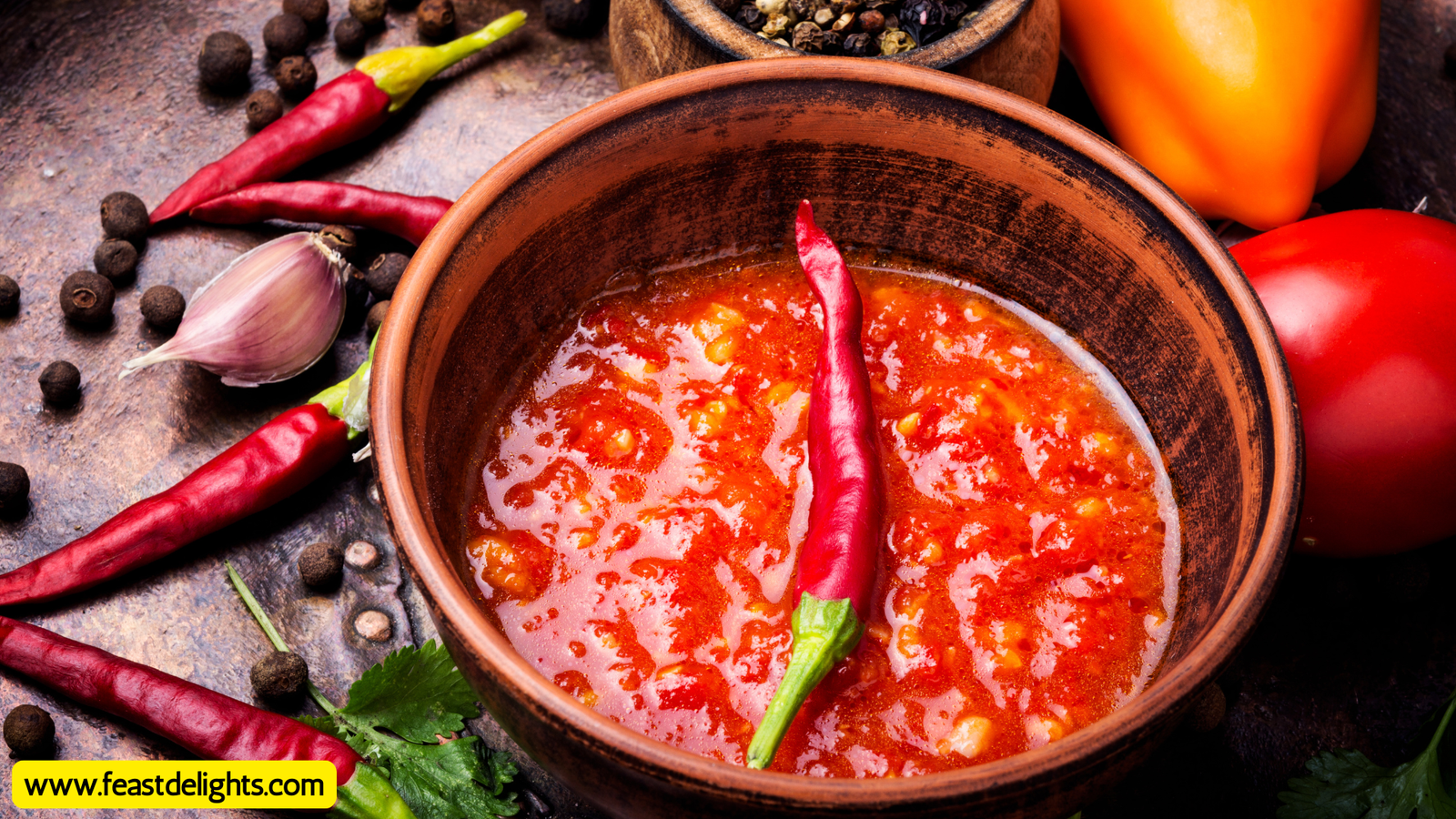
Recipe card
Cooked Tomato Pepper Adjika for the Refrigerator
About 40 minutes simmering plus five minutes after adding vinegar; allow extra time for the pot to reach a simmer. Cool promptly after cooking.
Equipment: Gloves, cutting board, knife, food processor, large heavy 8–10 litre pot, long-handled spoon, measuring jug and shallow heat-safe storage containers
Ingredients
Vegetables
Seasoning
Instructions
Prepare tomatoes, peppers and garlic
Wash the tomatoes and peppers under running water. Trim stems and damaged areas, remove sweet pepper seeds and peel the garlic. Wear gloves when cutting hot peppers; remove some inner ribs and seeds if desired. Avoid touching eyes and face.
Process to a coarse purée
Process tomatoes, peppers and garlic in batches until finely chopped but not necessarily smooth. Transfer each batch to the large pot, leaving ample room for bubbling.
Simmer and reduce
Stir in the salt, sunflower oil and optional spices. Bring to a gentle boil, then simmer uncovered over moderate heat for about 40 minutes, stirring frequently across the bottom. Ventilate the kitchen and reduce heat if the sauce splatters or catches.
40 minStir in the vinegar
Add the measured 100 ml of food-grade 9% vinegar, stir thoroughly and simmer for five more minutes. Check that the vegetables are soft and the sauce is spoonable. This step flavours the sauce; it does not validate it for canning.
5 minCool and store safely
Transfer to small shallow heat-safe containers, cool rapidly and refrigerate within two hours (one hour above 32°C/90°F). Freeze any portions not needed within three days. Do not leave the entire large pot cooling at room temperature and do not pantry-store hot-filled jars.
How to simmer a large batch evenly
Process the vegetables in manageable batches. Leave the purée slightly textured if you prefer a rustic sauce. Choose a heavy pot with generous capacity because tomato purée bubbles and spatters as it thickens. Simmer uncovered, stirring along the bottom and corners, and avoid breathing concentrated chilli vapour by ventilating the kitchen. Lower the heat if the mixture spits vigorously.
After about 40 minutes, stir in the vinegar and continue for five minutes. The sauce should have softened vegetable particles and a spoonable consistency. If it is thinner than you prefer, cook a little longer while stirring. The final yield depends on evaporation. Do not judge preservation safety by thickness, smell, sour taste or the sound of a lid sealing.
Adjika variations and serving
This tomato-rich sauce is Georgian-inspired; it differs from concentrated pepper-and-herb pastes often associated with the Caucasus. Compare the site’s Abkhaz-style dried chilli and garlic adjika for a different preparation. A tomato-apple version is available in tomato-apple adjika with carrots; follow the storage guidance appropriate to each recipe rather than treating the sauces as interchangeable canning formulas.
Serve a small spoonful with roasted potatoes with garlic and rosemary, or use it as a condiment for grilled meat and grains. Check the labels of packaged spices for allergens and avoid cross-contact where relevant.
Cooling, refrigerating and freezing
Do not keep four litres of sauce in a deep pot to cool slowly. Portion into shallow heat-safe containers and cool promptly. Divide the cooked sauce into small, shallow heat-safe containers for rapid cooling. Refrigerate at 4°C (40°F) or colder within two hours (one hour above 32°C/90°F); use within three days. Freeze the rest promptly in freezer-safe containers with expansion space for up to three months for best quality. Thaw in the refrigerator. Use clean utensils; if reheating, bring the sauce to a boil. Never store this sauce in sealed jars at room temperature. A refrigerator recipe is not a canning process, even if you choose to store it in clean glass jars. For pantry preservation, use a separate research-tested recipe from a recognised food-preservation authority.
Serve a little adjika at a time alongside potatoes, grilled dishes or bread. Keep the remainder cold, or freeze in small portions so you can defrost only what you need.
Frequently asked questions
Can I store sealed adjika jars in the pantry?
No. This is a cooked refrigerator or freezer sauce. Hot filling, added vinegar or a sealed lid does not establish a safe shelf-stable canning process.
How spicy will the sauce be?
Heat depends on the hot pepper variety. The measured 300 g is substantial; choose a variety whose heat you enjoy and handle it with gloves.
Can I blend the cooked sauce?
If you want a smoother texture, allow it to cool safely and use an immersion blender, following its instructions. Hot liquids can splash and build pressure in enclosed blenders.
Why is my adjika watery?
Tomato water content and pot width affect reduction. Simmer uncovered and stir until the texture suits you; a longer reduction changes the final yield.
Can I use a different vinegar strength?
For flavour in this refrigerated sauce, another food-grade vinegar changes the tartness. The recipe is written for 9% acidity; no substitution makes it suitable for room-temperature storage.
Can I halve the batch?
Yes, for this refrigerated condiment, halve all measured ingredients. Use a suitable pot and judge reduction by texture rather than halving the simmering time.
More recipes to try






Spotted a detail that needs correcting? Contact the FeastDelights editors.