Grissini Recipe for Crisp Italian Breadsticks
This grissini recipe makes thin Italian breadsticks with olive oil and a crisp, dry bite.
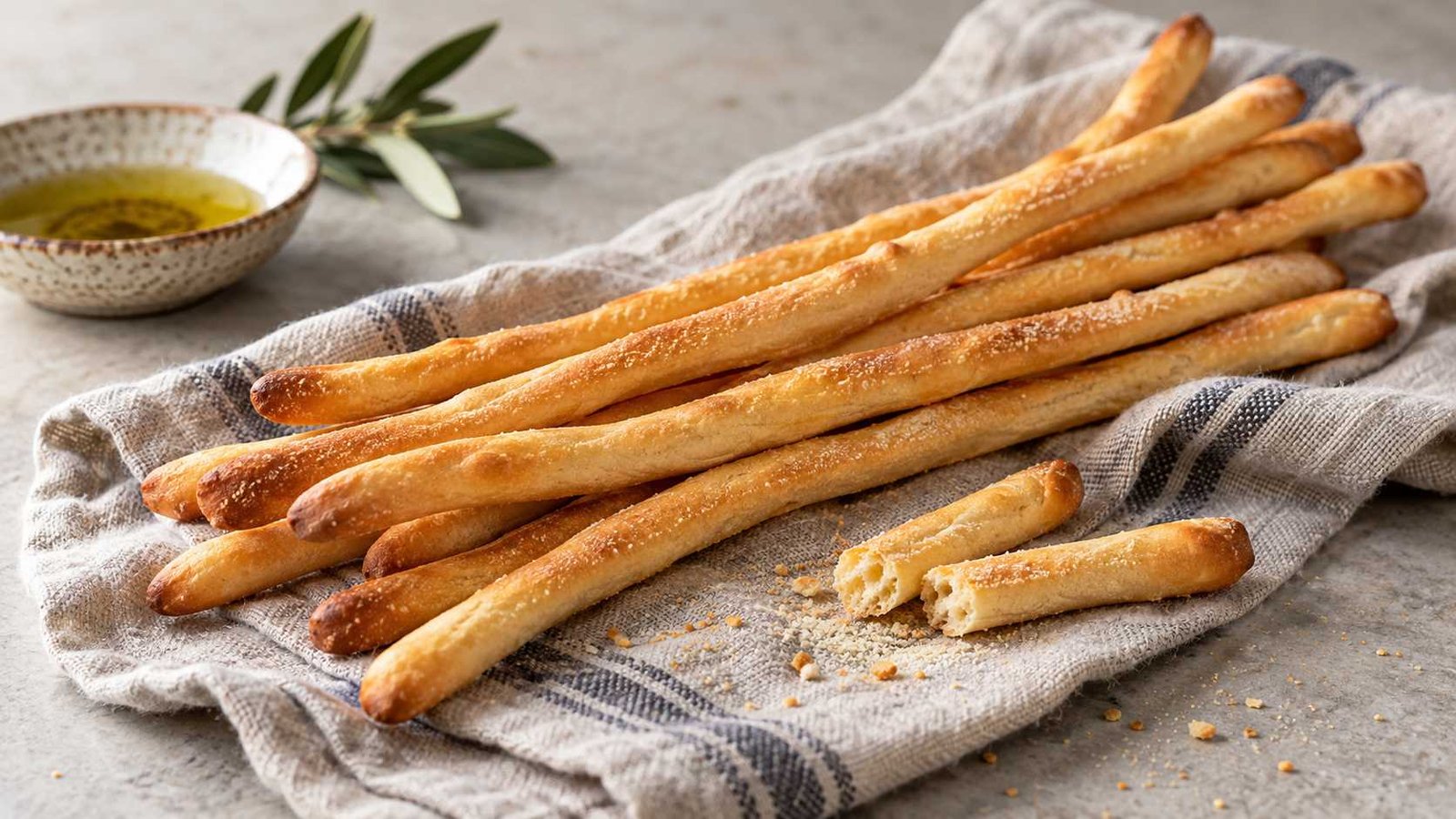
This grissini recipe makes thin Italian breadsticks with olive oil and a crisp, dry bite. The dough rises once before being divided and rolled into long strands. Small differences in shape are part of their appeal, but similar thickness helps them bake evenly. They make a useful accompaniment to soup or an appetizer board. Allow them to cool fully before storing: trapped steam softens a breadstick that seemed crisp straight from the oven.
What matters for grissini
Keep strands around 5–7 mm thick and leave space between them. Thick ends bake more slowly than narrow centers. Grissini should dry as well as brown; if they bend after cooling, return them to a low oven briefly. This batch fits two trays, which can be baked together if your oven browns evenly.
Recipe at a glance
Yield: about 24 thin breadsticks. Preparation: about 30 minutes. Cooking: about 25 minutes. Total elapsed time: about 135 minutes. Includes about 80 minutes for the resting, rising, cooling or chilling described below. Extra sequential cooking or baking batches extend the listed time.
How to make grissini
Recipe card
Grissini Recipe for Crisp Italian Breadsticks
Equipment: Bowl; two baking trays; parchment; scale; cooling racks.
Ingredients
Main
Instructions
Knead dough
Mix flour, yeast, sugar and salt. Add water and oil, then knead 7–8 minutes until smooth and elastic. Cover in a lightly oiled bowl.
Let rise
Rise 60 minutes or until puffy and nearly doubled. Heat oven to 200°C/390°F conventional; line two trays.
Shape thin strands
Divide into 24 pieces, about 21 g each. Roll each to roughly 30 cm, keeping thickness even. If dough springs back, cover and rest 5 minutes. Place on trays with 2 cm gaps and dust lightly with semolina.
Bake until dry
Bake 18–25 minutes until golden, rotating trays and swapping their positions halfway through. Remove thinner pieces earlier if necessary.
Cool and check crispness
Cool 20 minutes on racks. A breadstick should snap rather than bend. If soft inside, return to a 150°C/300°F oven for 5–10 minutes and cool again before storing.
How to tell when it is ready
Golden dry breadsticks snap cleanly after cooling.
Tips
- Keep ends as thin as centers.
- Rest resistant dough briefly.
- Rotate trays for even color.
- Cool uncovered.
Troubleshooting
- Bendy sticks: bake longer at low heat.
- Burnt narrow sections: shape more evenly.
- Tough rolling: let gluten relax under a cover.
Substitutions
- All-purpose flour works with a slightly less chewy dough.
- Use fine cornmeal instead of semolina for dusting.
Variations
- Brush strands lightly with water and add sesame seeds before baking.
Serving suggestions
- Serve with soup.
- Add to an antipasto board.
- Offer with hummus.
- Stand in a tall glass for the table.
Make ahead
Prepare dough earlier in the day and refrigerate after the first rise; let soften before shaping.
Storage
Store fully cooled and airtight up to 5 days for quality. Re-crisp at 150°C/300°F for a few minutes if needed. Freeze up to 2 months and re-crisp after thawing.
Food safety
Keep perishable ingredients at 4°C/40°F or below. Refrigerate perishable leftovers within 2 hours, or within 1 hour above 32°C/90°F. Use clean equipment and separate raw animal ingredients from ready-to-eat food.
Frequently asked questions
Must they be perfectly straight?
No. Keep thickness consistent; a rustic shape is fine.
Can I make thick sticks?
Yes, but they need longer drying and produce a different bite.
More recipes to try
Spotted a detail that needs correcting? Contact the FeastDelights editors.