Zucchini Noodles Recipe with Basil and Pecan Pesto
These raw zucchini noodles are tossed with a fragrant basil and pecan pesto made with garlic, olive oil, grated hard cheese and fresh lemon juice. The zucchini stays crisp and light, while the pesto adds a creamy, nutty coating with a bright citrus finish. Four medium zucchini make four light servings in about 20 minutes, with no cooking required. Use a spiralizer or a vegetable peeler to create the noodles, and toss them with the pesto just before serving to prevent excess water collecting on the plate.
Zucchini noodles, also called courgette noodles or zoodles, are thin strips of fresh zucchini. This Italian-inspired version serves them raw with a pecan and basil pesto rather than cooking them like pasta. It makes four light servings in 20 minutes, with no cooking. Serve as a fresh starter, side dish or light lunch with a substantial accompaniment.
Choose the zucchini and pesto ingredients
Select four medium zucchini that feel firm and have smooth, intact skins. Very large zucchini tend to have more developed seeds and watery centres. Wash under running water, dry thoroughly and trim the ends. Leave the skin on for colour and structure. A spiralizer makes long round strands; a vegetable peeler makes broad ribbons. When using a peeler, turn the zucchini as you work and stop when you reach the very soft seed core.
Use half a US cup of loosely packed fresh basil leaves and one-third cup of pecans. The nuts should smell fresh rather than stale or bitter. Pecans give this version a softer, slightly sweet flavour compared with the pine nuts used in classic Genoese pesto. One-third cup of olive oil is about 80 ml. Use freshly grated hard cheese; the weight of half a cup varies with grating size. Traditional Parmigiano Reggiano is made with animal rennet, so choose a vegetarian-rennet Parmesan-style hard cheese if serving this as a vegetarian dish.
Two cloves of garlic give the sauce a pronounced raw garlic flavour. Lemon juice adds acidity, but lemons vary considerably in size. Start with part of the juice, then add the rest to taste. Optional mustard adds sharpness; taste the pesto before adding it. Salt should go in near serving time because it draws water from zucchini.
Equipment and preparation
A spiralizer or vegetable peeler, food processor, mixing bowl, knife, chopping board, citrus juicer and measuring cups are enough. A small processor works particularly well for this volume of pesto. Dry washed basil and zucchini so excess water does not thin the sauce.
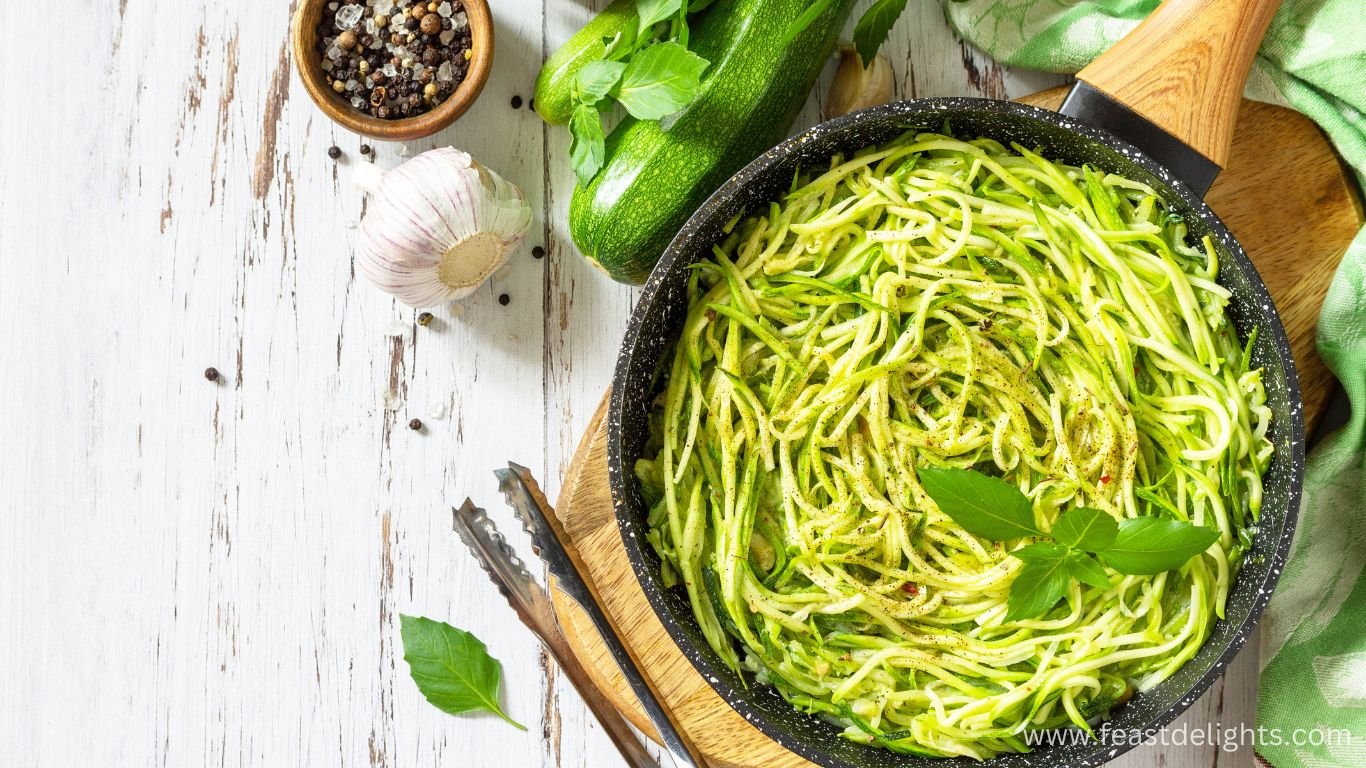
Recipe card
Zucchini Noodles Recipe with Basil and Pecan Pesto
No cooking required; dress immediately before serving.
Equipment: Spiralizer or vegetable peeler, food processor, knife, cutting board, mixing bowl, tongs, measuring cups
Ingredients
Noodles
Basil-pecan pesto
Instructions
Spiralize or shave the zucchini
Wash and dry zucchini, trim the ends and spiralize or shave into long thin ribbons. Avoid the soft seed core if using large zucchini.
Pulse the basil and pecan pesto
Pulse basil, pecans, garlic and olive oil in a food processor until a spoonable, lightly textured sauce forms.
Add cheese and season to taste
Stir in finely grated Parmesan-style cheese. Add lemon juice gradually to taste, then salt, pepper and a little optional mustard if desired.
Toss the raw noodles
Gently lift and toss zucchini with pesto until evenly coated. Do this just before serving to minimise moisture release.
Plate immediately
Divide among four plates and serve immediately. Add extra basil or grated cheese if desired.
How to get the right texture without cooking
Pulse basil, pecans and garlic with olive oil until the pesto is spoonable but retains a little texture. Stir in the cheese and lemon juice. The sauce should cling to a spoon without forming a pool of oil. Use tongs to lift and gently toss the raw noodles with the sauce. Long strands can break if stirred roughly. Plate immediately: the salt and acid gradually draw moisture out of the zucchini.
Troubleshooting watery noodles and bitter pesto
If the noodles release water before dressing, drain and blot them lightly. If the pesto is too thick, mix in a little additional lemon juice or water, tasting as you go. If it is too oily, pulse in a small amount of extra basil or nuts. Avoid running the processor continuously; short pulses prevent excessive heating and give better control of texture. Stale nuts, too much raw garlic or bruised basil can contribute bitterness.
Substitutions and allergens
Walnuts or pine nuts can replace pecans in the same volume, though the flavour changes. For a vegan version choose a suitable plant-based Parmesan-style alternative or nutritional yeast, adjusting salt and texture to taste. If nut allergy is a concern, do not assume a seed-based replacement is safe without checking labels and cross-contact. This recipe contains tree nuts (pecans), milk and optional mustard. Check ingredients for individual dietary requirements.
Serving ideas
Finish with cherry tomatoes, extra basil or a little grated cheese. Add cooked white beans and crusty bread for a more substantial vegetarian meal. For other uses of zucchini or pesto, try grilled vegetable panini with pesto, zucchini and cheese fritters or warm zucchini dip.
Make ahead and food safety
Prepare the pesto separately and refrigerate immediately. Cut and dress the zucchini close to serving. Wash raw produce under running water and use clean utensils. Refrigerate fresh pesto in a clean covered container at 4°C (40°F) or below immediately and use within two days. Do not store homemade garlic-and-oil mixtures at room temperature. Keep cut zucchini separate and chilled, ideally use the same day. Freeze pesto in small portions if needed, thaw in the refrigerator and stir before using. Do not freeze raw zucchini noodles for this recipe.
Frequently asked questions
Do I need to cook zucchini noodles?
No. This recipe uses them raw to keep their crisp texture.
Can I make noodles without a spiralizer?
Yes. Use a vegetable peeler for ribbons or cut thin strips with a knife.
Why do zucchini noodles become watery?
Salt and acid draw water from the cut surfaces. Dry the noodles and dress them just before serving.
Can I use another nut in the pesto?
Yes. Walnuts or pine nuts work, although the flavour changes. Check allergy requirements.
Is Parmesan vegetarian?
Traditional Parmigiano Reggiano uses animal rennet. Choose a vegetarian-rennet Parmesan-style hard cheese if needed.
Can I serve the pesto with pasta?
Yes. Toss it with drained cooked pasta and loosen with a little pasta water if necessary.
More recipes to try


Spotted a detail that needs correcting? Contact the FeastDelights editors.