Baked Potato and Pea Samosas with Crisp Pastry
These baked vegetarian samosas have crisp golden pastry and a tender potato-and-pea filling with grated carrot, sunflower seeds and fragrant spices. The vegetables are cooked before filling the wrappers, which helps the pastry brown without leaving hard potato pieces inside. Ready-made samosa sheets make the folding manageable, and a light brushing of oil replaces deep frying. This version makes ten triangles and takes about 75 minutes, including time for the filling to cool. Serve warm with mint chutney or a cooling yogurt dip.
These baked potato and pea samosas are crisp pastry triangles filled with tender potato, sweet peas, grated carrot and sunflower seeds. Turmeric, coriander and garam masala make the filling aromatic without relying on chilli. This South Asian-inspired variation uses ready-made samosa sheets and a light brushing of oil instead of deep frying. It makes 10 snacks; allow about 75 minutes including cooling the filling.
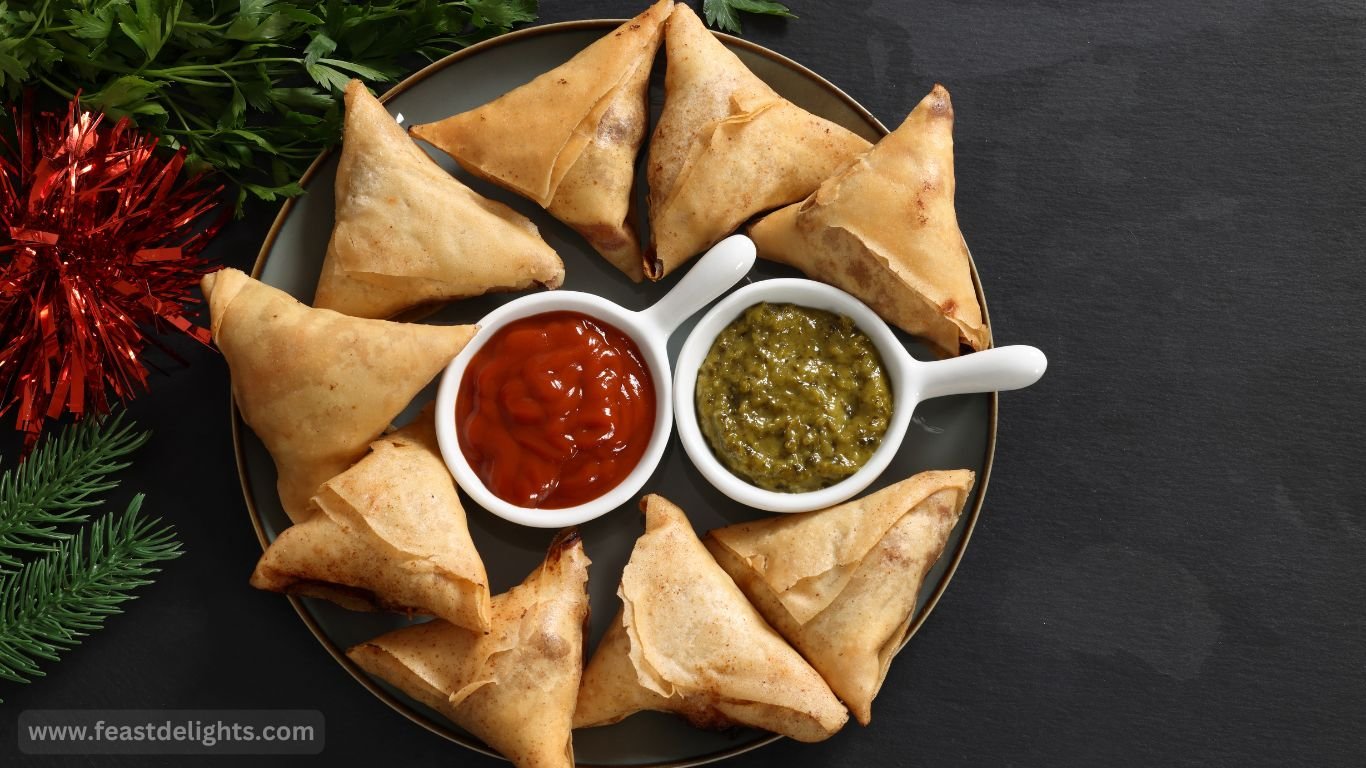
Recipe card
Baked Potato and Pea Samosas with Crisp Pastry
About 20 minutes active preparation, 10 minutes boiling and 20–25 minutes baking, with the carrot sauté overlapping the potato cooking. Cool filling for about 20 minutes, longer if needed before wrapping.
Equipment: Saucepan, colander, knife, cutting board, grater, frying pan, shallow bowl, spoon, pastry brush, lined baking tray
Ingredients
Instructions
Boil the potatoes
Boil diced potatoes in water for about 10 minutes, until a fork slides in easily. Drain well and allow excess steam to escape.
Sauté carrot, seeds and spices
While the potatoes cook, heat 1 tbsp oil over medium heat. Sauté grated carrot and sunflower seeds for about 3 minutes, then stir in turmeric, coriander and garam masala briefly until fragrant.
Cool the filling and fold wrappers
Combine the cooked potato, cooked peas, carrot mixture and salt. Break up any large potato pieces and cool the filling in a shallow bowl, about 20 minutes or until no longer warm. Fold each pastry sheet into a cone according to the package and fill without overpacking.
Seal and brush the triangles
Moisten the clean edges with a little water if appropriate for the wrapper, press closed and place seam-side down. Brush with the remaining tablespoon of oil.
Bake until crisp
Preheat a conventional oven to 200°C (400°F). Bake on a lined tray for 20–25 minutes, turning carefully once the underside sets. The pastry should be crisp and golden and the filling hot.
Choosing ingredients for the filling
Use 300 g (10.6 oz) of peeled potatoes diced into similar-sized pieces so they soften evenly. Drain thoroughly: excess water will soften the pastry from the inside. The 150 g (5.3 oz) of cooked peas bring sweetness and colour; if using frozen peas, cook according to the package and drain before measuring. Grate the carrot finely so it softens during the brief sauté. The sunflower seeds provide a little bite, distinguishing this version from a simple potato-and-pea filling. Ground coriander, turmeric and garam masala need only a short time in the warm oil; avoid scorching them.
Choose ten ready-made samosa wrappers suitable for baking. Follow the package instructions for thawing and sealing, because different brands have different thicknesses. Keep unused sheets covered so they do not dry or crack. The two tablespoons of water are for sealing, not for mixing into the filling. One tablespoon of oil cooks the carrot and spices; the other is for brushing the pastry.
Folding and baking without splitting
Cool the filling in a shallow bowl before placing it on the pastry. Warm filling produces steam that can soften wrappers and weaken seams. Fold a sheet into a cone following its shape or package directions, spoon in filling without packing it tightly, and leave enough clean pastry to close the top. Moisten the seam lightly with water if the wrapper instructions allow it, press firmly and check for gaps. If your wrappers are smaller, use less filling rather than forcing all of it inside.
Arrange the triangles seam-side down with space around them. Brush the surface lightly with oil rather than soaking it. At 200°C (400°F), the pastry should turn crisp and golden over 20–25 minutes. Turn carefully once the underside sets. The potatoes and peas are already cooked, so the aim is crisp pastry and a hot centre, not further softening raw potatoes.
Troubleshooting
Open corners: Remove filling from the sealing edge and press the clean edges together. Soggy bottoms: Drain the potatoes and peas well, cool the filling and avoid crowding the tray. Dry wrappers: Keep the unused sheets covered and handle one at a time. Pale pastry: Check that the oven has reached temperature before baking and give the surface a thin, even coating of oil.
Variations and allergens
Use pumpkin seeds instead of sunflower seeds for a different crunch. Add chilli powder with the spices if you prefer heat. Ready-made pastry varies widely: wheat is common, and some brands contain milk or eggs. Check labels if cooking for vegetarians, vegans or anyone with allergies. A dairy-free chutney is a useful alternative to yogurt dip. Substituting a different pastry can change folding, temperature and bake time; follow its package instructions.
Serving and make-ahead ideas
Serve the samosas warm with mint chutney or yogurt dip. For a light meal, pair them with a fresh cucumber salad or a cauliflower and cucumber salad with yogurt. For a meat-free snack platter, add baked white bean patties. Prepare the filling the previous day, cool promptly in a shallow container and refrigerate covered; assemble and bake the next day for the best pastry texture.
Storage and reheating
Refrigerate cooked samosas within 2 hours (1 hour above 32°C/90°F) in a shallow covered container at 4°C (40°F) or below. Use within 3 days. Freeze baked samosas separately, thaw in the refrigerator and reheat to 74°C (165°F) in the centre. Reheat on a baking tray until crisp and check the centre with a thermometer. Avoid leaving cooked filling or finished samosas at room temperature for extended periods. Follow USDA leftover guidance.
Frequently asked questions
Can I use raw potatoes in samosas?
No. Cook the diced potatoes first; the pastry can brown before raw potato becomes tender.
Do I need to cook frozen peas first?
Yes. Follow the packet instructions, drain and measure 150 g cooked peas.
Can I use spring roll wrappers?
Some can be baked, but check the package and adjust the folding technique and cooking time.
Are these samosas vegan?
The filling uses plant ingredients. Check the pastry for dairy or eggs and choose a vegan dip.
Why are my samosas opening in the oven?
Overfilling, damp pastry and filling on the sealing edges can all weaken seams. Cool the filling and press clean edges firmly.
More recipes to try


Spotted a detail that needs correcting? Contact the FeastDelights editors.