Soft Milk Caramels with Honey, Butter and Vanilla
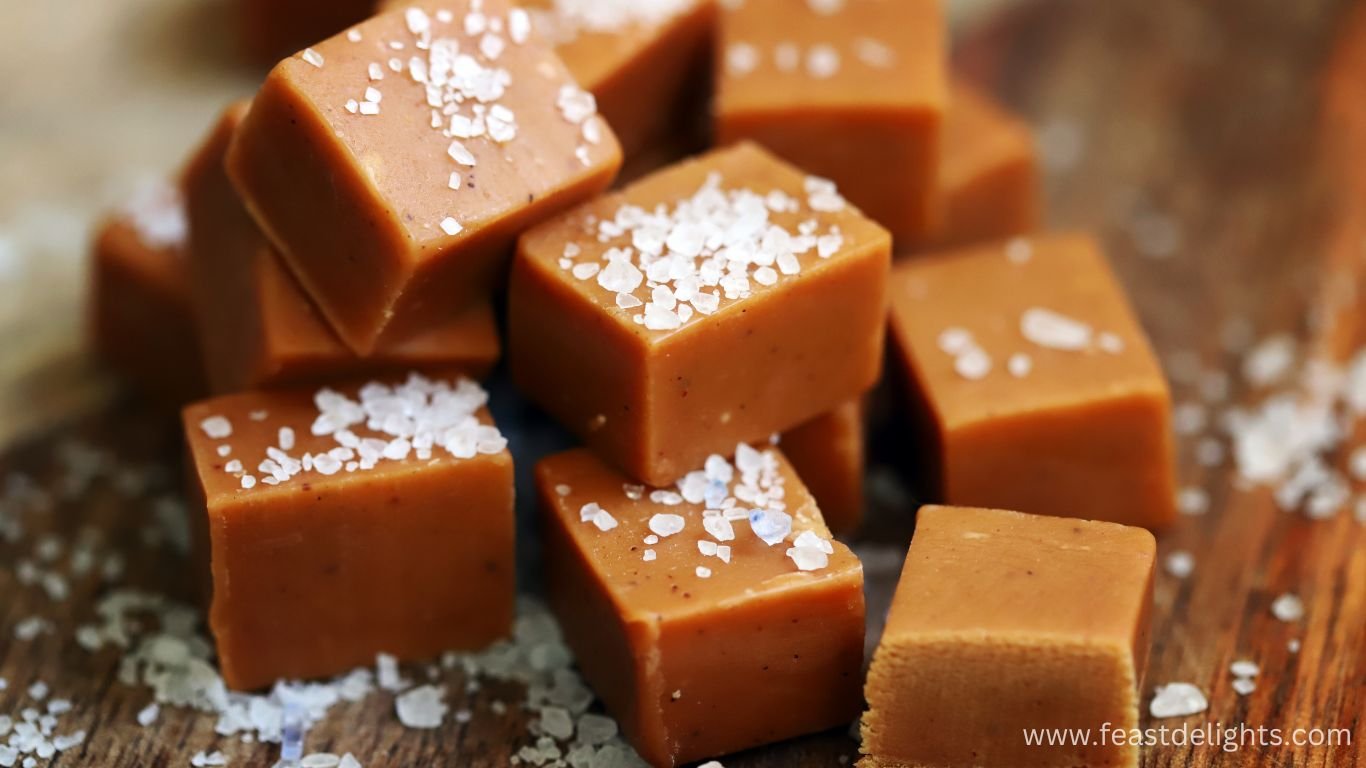
These soft milk caramels are small, chewy sweets made with sugar, butter, honey, milk and vanilla. Cooking the mixture to the firm-ball stage concentrates the sugars so the cooled candy can be cut into individual pieces. Honey contributes its own floral sweetness, and butter rounds out the flavour. This recipe makes about 36 small caramels in a 20 cm square tin, with at least two hours for cooling. Use a candy thermometer rather than judging by colour, and handle the hot mixture carefully: boiling caramel can cause serious burns.
Soft milk caramels are chewy, individually cut candies made from milk, sugar, butter and honey. This formula makes about 36 small pieces in a 20 cm (8 inch) square tin. Allow about 2 hours 40 minutes, including cooling. The aim is a tender, sliceable candy rather than hard toffee or a pourable caramel sauce.
Ingredients and candy-making equipment
Granulated sugar provides the main structure. Honey adds flavour and contributes sugars that interfere with crystallisation. Butter and whole milk give richness and a dairy flavour. Use a deep heavy saucepan because the mixture bubbles up as it cooks. A candy thermometer is important; a small difference in final temperature can change a soft caramel into a much firmer one. Line the tin before switching on the stove.
Recipe card
Soft Milk Caramels with Honey, Butter and Vanilla
Cooking time varies with pan, heat and altitude. Use the thermometer rather than the clock. Cool at least 2 hours and longer if necessary.
Equipment: Kitchen scale, deep heavy saucepan, candy thermometer, long heatproof spatula, 20 cm (8 inch) square tin, parchment, oven gloves, sharp knife
Ingredients
Caramel
Instructions
Line the tin and check thermometer
Line a 20 cm (8 inch) square tin with parchment and lightly grease. Set it on a stable heatproof surface. Check the candy thermometer in boiling water; account for its reading and local boiling point before cooking.
Cook to firm-ball temperature
Combine sugar, butter, honey, milk and salt in a deep heavy saucepan. Heat gently, stirring until the sugar dissolves. Increase to a steady boil over medium heat and stir frequently, scraping the bottom gently to prevent scorching. Keep the thermometer tip immersed but off the pan base. Cook to 118–120°C (244–248°F) at sea level, adjusting for the local boiling point; the lower end gives softer candy.
25 minAdd vanilla off the heat
Remove from heat and wait for vigorous bubbling to subside. Carefully stir in vanilla with a long spatula; avoid leaning over the pan.
Pour and allow to set
Using oven gloves, pour into the prepared tin without scraping burnt or crystallised residue from the pan. Leave undisturbed until cool and firm, about 2 hours. Keep children and pets away from hot caramel.
120 minCut and wrap
Lift the cooled slab using parchment. Cut into about 36 pieces with a lightly oiled knife. If too soft to cut, refrigerate until firm. Wrap individually in parchment or food-safe candy wrappers.
How to control caramel texture
Heat gently until the sugar dissolves, then maintain a controlled boil. Unlike a simple water-and-sugar syrup, this dairy mixture benefits from frequent gentle stirring to prevent milk solids catching on the bottom. Comparable candy methods are described in King Arthur Baking’s caramel recipe. At sea level, aim for 118–120°C (244–248°F). Check your thermometer against boiling water and adjust for altitude and any reading error. Stop at the lower end for a softer result. The precise firmness of this honey-and-milk formula still needs kitchen testing.
Cooling and cutting safely
Hot sugar clings to skin and can cause severe burns. Keep the worktop clear, wear oven gloves and never taste the mixture while hot. Pour carefully into the lined tin and let it cool undisturbed. Cut the slab only when firm enough to lift. A little neutral oil on the knife reduces sticking. Wrap the pieces separately.
Troubleshooting
If the candy is too soft, chill it and check the thermometer before the next batch. If it is very firm, aim slightly lower within the specified range next time. Graininess can result from undissolved sugar or crystals scraped from the sides of the pan. Avoid scraping these into the tin. If the mixture smells burnt, do not try to conceal it with vanilla.
Serving and variations
Offer small wrapped pieces with coffee. For a sauce rather than a candy, use the separate salted milk caramel sauce. Other desserts with caramel flavours include sticky toffee pudding and vanilla flan. A pinch of flaky salt makes a useful variation.
Storage and allergens
Because the shelf stability of this particular milk caramel has not been established, keep wrapped pieces refrigerated and use within a week for quality. Contains milk. Do not give honey-containing sweets to babies under 12 months; chewy candy can also be a choking hazard for young children.
Frequently asked questions
Is this candy the same as hard toffee?
No. These caramels are cooked to a lower sugar stage for a chewy texture rather than the brittle hard-crack stage.
Why use a candy thermometer?
A few degrees affect firmness. Colour alone is unreliable with honey and milk.
Why did my caramel burn on the bottom?
Milk solids can scorch on high heat. Use a heavy pan, steady medium heat and frequent gentle stirring.
Can I use a larger tin?
Yes, but the slab will be thinner and may be harder to cut into substantial pieces.
Why are the caramels too sticky?
They may be undercooked, still warm or exposed to humidity. Chill before cutting and check thermometer accuracy for the next batch.
Can babies eat these caramels?
No. Honey is unsuitable for infants under 12 months, and chewy candy is a choking hazard for young children.
More recipes to try






Spotted a detail that needs correcting? Contact the FeastDelights editors.