Tiramisu with Mascarpone, Coffee and Cooked Yolks
This tiramisu layers coffee-dipped savoiardi biscuits with a creamy mixture of mascarpone, cooked egg yolks and whipped cream, finished with unsweetened cocoa. The recipe uses 250 g mascarpone and makes eight portions in a 20 cm dish. Optional amaretto adds almond-like fragrance, but the coffee-only version works without it. The yolks are heated to 71°C (160°F) before mixing, and the dessert needs at least six hours in the refrigerator. Brief biscuit dipping and completely cooled ingredients help the layers hold their shape.
Tiramisu with mascarpone and coffee is a chilled dessert of espresso-dipped savoiardi biscuits, rich mascarpone cream and a dusting of bitter cocoa. This recipe uses 250 g mascarpone, three cooked egg yolks and 200 ml whipping cream, making eight portions. Allow about 7 hours 15 minutes, including cooling and at least six hours of refrigeration. There is no oven baking.
Choosing the biscuits, coffee and mascarpone
Savoiardi, also called ladyfingers, are light, dry biscuits that absorb coffee quickly. The original recipe calls for 24 pieces; their sizes vary, so check that they fit the dish in two layers. Use a roughly 20 cm (8 inch) square dish with enough depth for biscuits and cream. A shallow dish may require a different arrangement. Strong brewed coffee or espresso provides the bitter contrast to the sweet filling. Cool it completely before dipping; hot coffee can soften biscuits too quickly.
Mascarpone is a rich Italian dairy product, not the same as tangy cream cheese. Keep it refrigerated until needed and mix it gently; excessive beating can make it grainy or loose. Use cold heavy cream suitable for whipping. Amaretto is optional, and the recipe works without alcohol. Check its ingredient label if allergies are a concern; almond-flavoured products differ in composition.
Heating the yolks safely
The earlier raw-egg method has been replaced with a cooked yolk mixture. Place a heatproof bowl over barely simmering water, keeping its base above the water. Whisk the three yolks with 100 g sugar continuously, scraping the bowl as needed, until the mixture reaches at least 71°C (160°F) throughout as checked with a clean food thermometer. Do not rely on colour or thickness alone. Avoid letting the bowl touch boiling water, which can scramble the eggs. Pasteurised egg yolks are a prudent choice, particularly for people at increased risk of foodborne illness. The FDA egg safety guidance explains the importance of cooking egg mixtures and using pasteurised eggs when appropriate.
Remove the bowl from heat and cool the mixture promptly over an ice bath, keeping water out of it. Stir occasionally until cold or cool enough not to warm the mascarpone. If the mixture contains scrambled pieces, or if you cannot confirm safe heating, do not use it as an uncooked dessert filling.
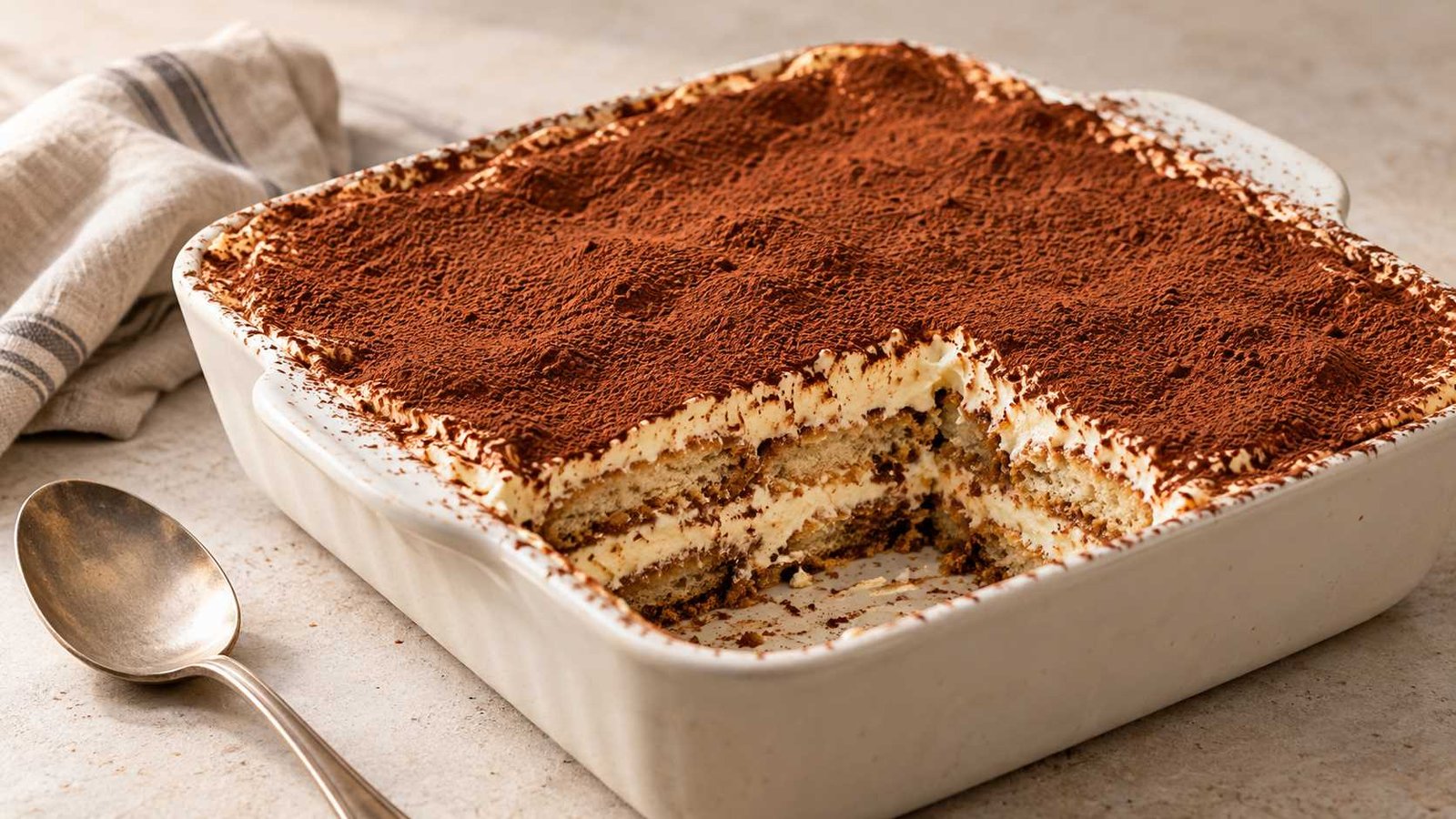
Recipe card
Tiramisu with Mascarpone, Coffee and Cooked Yolks
Allow about 30 minutes for cooling coffee and yolk mixture, plus at least 6 hours of refrigeration after assembly. Overnight chilling is fine within safe storage limits.
Equipment: Kitchen scale, heatproof bowl, small saucepan, whisk, instant-read food thermometer, ice bath, mixing bowls, mixer, shallow dipping dish, 20 cm (8 inch) square or similarly sized deep dish, spatula and fine sieve.
Ingredients
Mascarpone filling
Coffee soak
Mascarpone filling
Assembly
Mascarpone filling
Coffee soak
Instructions
Brew and cool coffee
Brew strong coffee, transfer to a shallow dish and cool completely. Stir in amaretto only if desired.
Cook yolks with sugar
Whisk yolks and sugar in a heatproof bowl over barely simmering water without touching the water. Whisk continuously until thickened and at least 71°C (160°F) throughout, checked with a clean thermometer. Cool promptly over an ice bath.
Prepare mascarpone cream
Gently loosen chilled mascarpone, add the cooled yolk mixture and vanilla in small additions. Separately whip cold cream to medium peaks and fold into the mascarpone mixture until smooth.
Dip and layer ladyfingers
Quickly dip biscuits in cooled coffee, about 1 second per side to start. Arrange half in a deep 20 cm (8 inch) dish, spread half the cream, and repeat.
Refrigerate and finish
Cover and refrigerate at 4°C (40°F) or below for at least 6 hours until set. Dust with cocoa just before serving. Keep remaining portions refrigerated.
How to make a stable mascarpone filling
Gently loosen the mascarpone with a spatula, then incorporate the cooled yolk mixture and vanilla in small additions until smooth. Whip the cold cream separately to medium peaks, then fold it into the mascarpone in two additions. Do not continue beating after the filling looks uniform. It should be soft enough to spread but not watery. Refrigerate it briefly if the kitchen is warm.
Dip, layer and chill
Pour the cooled coffee into a shallow dish and stir in optional amaretto. Dip each ladyfinger briefly, roughly one second on each side as a starting point. The outside should be moistened without the biscuit falling apart; it will absorb more moisture while chilling. Arrange half the biscuits in a single layer, trimming pieces to fit if necessary. Spread half the cream evenly over them, then repeat with the remaining biscuits and cream. Cover and refrigerate at 4°C (40°F) or below for at least six hours, preferably until the layers hold together when scooped. Dust with cocoa shortly before serving.
Troubleshooting
Soggy base: Shorten each coffee dip and use dry savoiardi rather than soft sponge fingers. Loose cream: Cool the egg mixture fully and avoid overbeating mascarpone. Chill the completed dessert longer if the filling is soft but otherwise sound. Grainy cream: Gentle folding reduces the risk of splitting. Hard biscuit centres: Allow the full chilling time; the biscuits soften gradually. Too bitter: Use a lighter cocoa dusting or a less intensely brewed coffee next time.
Variations and allergens
Use decaffeinated coffee or omit amaretto for an alcohol-free version. The base recipe contains milk, eggs and wheat from the cream and biscuits; check every label for other allergens. A filling made without egg is not necessarily an egg-free dessert, because savoiardi commonly contain egg. For a different method, see our tiramisu with whipped mascarpone and no added raw eggs. A larger cooked-yolk formula appears in tiramisu with cooked egg cream; our vegan coffee tiramisu uses a different ingredient approach.
Make ahead and storage
Make the dessert several hours ahead or the night before serving. Keep covered in the refrigerator at 4°C (40°F) or below and use within three days or the earliest ingredient use-by date. Do not leave it out for more than two hours, or one hour above 32°C (90°F). This is a perishable dairy and egg dessert, not a shelf-stable cake. Freezing may affect the cream and biscuit texture, so refrigeration is preferred. Serve small chilled portions and put leftovers away promptly.
Frequently asked questions
Can I omit amaretto?
Yes. Coffee alone supplies the soak; no alcohol is needed.
Can I use decaffeinated coffee?
Yes, use strong decaffeinated coffee and cool it completely.
Why must the yolk mixture reach 71°C?
This cooked-yolk recipe uses the standard 160°F egg-dish temperature as a food safety measure. Confirm it with a clean thermometer.
Can I substitute cream cheese?
It is tangier and often firmer than mascarpone, so the texture and flavour would change.
Do I need all the coffee?
No. Use only what the biscuits absorb during quick dips; discard excess.
Can I make tiramisu overnight?
Yes. Cover and refrigerate the dessert, then dust with cocoa just before serving.
More recipes to try






Spotted a detail that needs correcting? Contact the FeastDelights editors.