Rich Tiramisu with Cooked Yolks and Mascarpone
This rich tiramisu layers espresso-dipped savoiardi with a thick mascarpone cream made from six gently cooked egg yolks, sugar and whipped cream. Unsweetened cocoa balances the sweet filling, and optional grated chocolate adds texture. No alcohol is needed for this version. Heat the yolk mixture over a water bath to 71°C (160°F), cool it promptly, then fold it into the mascarpone. Chill the assembled dessert for at least six hours so the biscuits soften and the layers settle. Makes eight generous portions.
This rich tiramisu uses 500 g mascarpone and six cooked egg yolks for a substantial coffee-flavoured dessert with two layers of savoiardi. Unlike a raw-egg preparation, the yolk and sugar mixture is heated to 71°C (160°F) and the lightness comes from whipped cream rather than uncooked egg whites. No alcohol is added. Allow at least six hours in the refrigerator after assembly.
What makes this tiramisu rich?
Tiramisu is an Italian layered dessert made with coffee-soaked biscuits and mascarpone. Here, the high proportion of mascarpone and six yolks gives the cream a dense, smooth body balanced by bitter coffee and cocoa. Whipped cream lightens the filling just enough to spread between the layers. The dessert is not baked after assembly, so the temperature of the cooked egg mixture and careful refrigeration are essential.
There are several ways to prepare tiramisu cream. This recipe uses twice the mascarpone and yolks of our smaller mascarpone and cooked-yolk tiramisu formula, with a different cream-to-cheese ratio. For a filling prepared without egg yolks, see our whipped-cream tiramisu. The ladyfingers in either recipe may still contain eggs.
Choosing the ingredients
Use full-fat mascarpone made from pasteurised dairy. It is a soft, rich cheese, not interchangeable in equal quantities with ordinary cream cheese without changing the texture and flavour. Keep it refrigerated until needed. Heavy cream should be cold and suitable for whipping, generally around 35% fat or higher. Lower-fat pouring cream may not form peaks.
Egg yolks contribute colour, richness and body. The granulated sugar is whisked into them before cooking; do not replace it with a much larger volume of liquid sweetener. Pasteurised eggs are preferred where available. The remaining egg whites are not used in this dessert; refrigerate or freeze promptly for another fully cooked dish. Avoid tasting the yolk mixture before it reaches the target temperature.
Savoiardi are dry, airy ladyfinger biscuits. They absorb coffee quickly and soften further in the refrigerator. Soft cake-style fingers may become soggy much faster, so the stated brief dip is only a starting point for the dry type. Weigh 200 g rather than relying on a fixed biscuit count, since brands vary in length and thickness.
Use strong espresso or concentrated coffee without extra sugar. The cream is already sweet. Unsweetened cocoa adds a bitter finish rather than another layer of sugar. Optional dark chocolate gives a slightly firmer texture and additional chocolate flavour.
Equipment, yield and timing
Have a heatproof bowl, saucepan, whisk, instant-read thermometer, ice bath, two mixing bowls, flexible spatula, shallow coffee dish, deep square serving dish and fine sieve ready. A 20–23 cm (8–9 inch) square dish is a starting point; choose one deep enough for two biscuit and cream layers. The recipe serves eight. Allow approximately 40 minutes active preparation, ten minutes heating the yolks and at least six hours of chilling. Coffee and yolk cooling can overlap with other preparation; allow extra time if they remain warm.
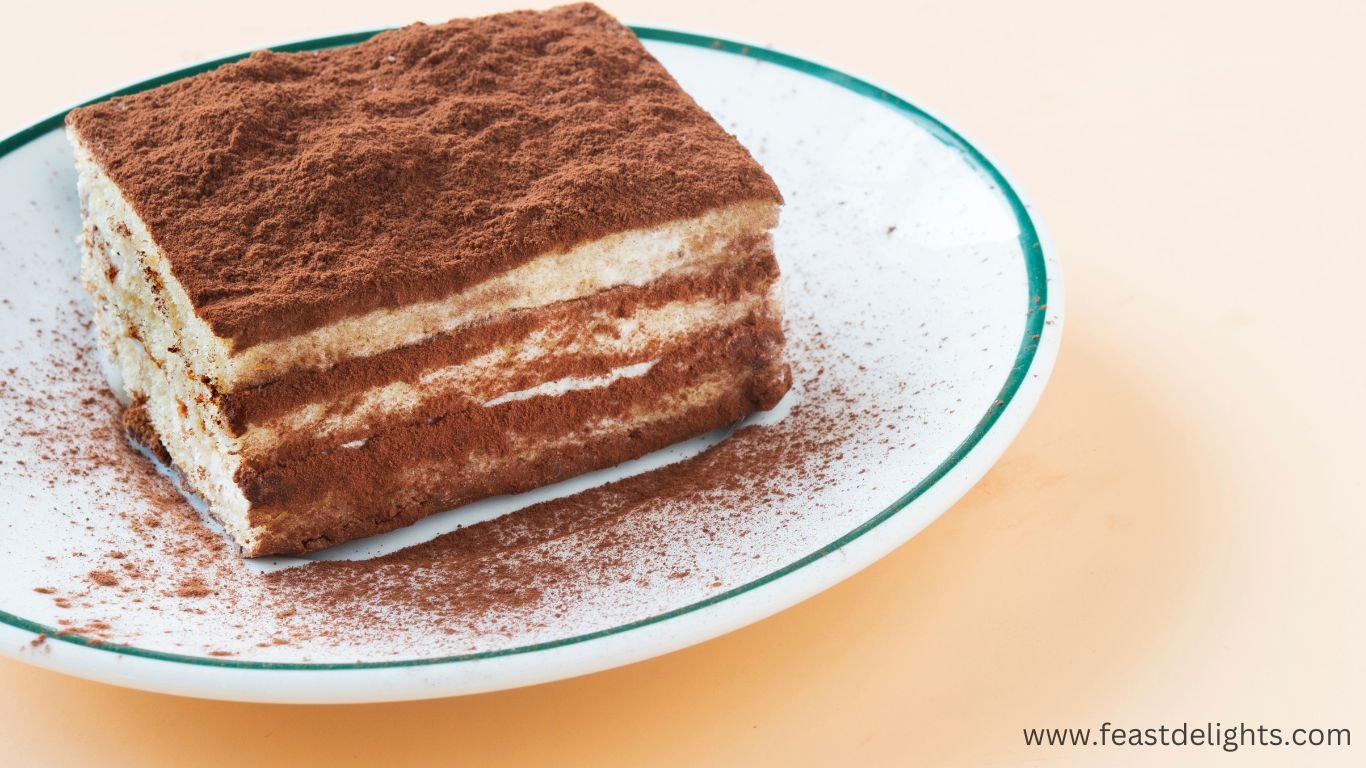
Recipe card
Rich Tiramisu with Cooked Yolks and Mascarpone
At least six hours chilling; overnight is suitable. Allow extra cooling time if espresso or cooked yolks are still warm.
Equipment: Heatproof bowl; saucepan; whisk; thermometer; ice bath; mixing bowls; spatula; shallow coffee dish; deep square dish; sieve
Ingredients
Mascarpone cream
Coffee soak
Layers
Finish
Instructions
Brew and cool the espresso
Brew 300 ml strong espresso or strong coffee. Transfer to a shallow clean dish and cool completely, using an ice bath if needed. Do not dip biscuits in warm coffee.
Cook the yolks and sugar
Whisk six yolks and sugar in a heatproof bowl set over a saucepan of barely simmering water. The bowl must not touch the water. Whisk continuously, scraping the sides, until thickened and at least 71°C (160°F) throughout, measured with a clean thermometer. Remove from heat and cool promptly over an ice bath, stirring; do not let water enter the mixture.
Fold in the mascarpone and cream
Gently loosen the cold mascarpone with a spatula. Fold in the cooled yolk mixture in small additions. In a separate chilled bowl whip the cream to soft peaks, then fold it into the mascarpone until smooth, stopping before the mixture becomes grainy.
Build two layers
Briefly dip each dry savoiardo in cooled coffee, about one second per side to start. Arrange half the biscuits in a deep approximately 20–23 cm (8–9 inch) square dish, trimming biscuits if needed. Spread half the cream over them. Repeat with remaining biscuits and cream, smoothing the top. Do not pour unused coffee into the dish.
Refrigerate and finish
Cover and refrigerate at 4°C (40°F) or below for at least six hours, preferably overnight. Dust with cocoa through a small sieve shortly before serving and add the optional grated chocolate. Slice into eight portions and keep remaining dessert chilled.
How to cook the yolks gently and safely
Set the bowl over a saucepan with a small quantity of barely simmering water. The bottom of the bowl should sit above the water so steam warms it gradually. Whisk continuously, reaching the sides of the bowl where the mixture heats first. If the water boils vigorously, turn the heat down. A thick pale ribbon falling from the whisk indicates that the mixture is developing body, but it is not a food safety measurement.
Use a clean thermometer to confirm at least 71°C (160°F) throughout the yolk mixture, stirring before checking and keeping the probe away from the hot bowl. This is consistent with the FoodSafety.gov minimum for egg dishes. If the mixture has thickened but has not reached that temperature, continue whisking over gentle heat. Once it reaches the target, remove it from the steam immediately. Set the bowl over ice water and stir to cool promptly. Prevent water from splashing into the yolks.
Cooling before mixing is especially important: hot yolks can soften the mascarpone and destabilise the cream. Do not rely on a fixed ten-minute rest if the mixture is still warm. The yolks should feel cool before you combine them with chilled dairy.
Folding a smooth mascarpone cream
Mascarpone does not need vigorous whipping. Start by loosening it with a spatula, then fold in a little cooled yolk mixture. Once smooth, add the remainder in portions. This makes it easier to avoid small lumps of cold cheese. If using a mixer, keep it on a low setting and stop as soon as the ingredients combine.
Whip the cold cream separately. Soft peaks bend at their tips when you lift the whisk. They are easier to fold into mascarpone than stiff, dry-looking peaks. Add a small portion first to loosen the base, then fold in the rest with broad strokes, scraping the bottom of the bowl. Stop once there are no obvious streaks. Repeated stirring can make the cream lose volume or become grainy.
Layering without soaking the biscuits through
Pour the fully cooled espresso into a shallow dish. Dip one biscuit briefly and test how quickly it softens. You are flavouring the exterior, not waiting until the centre is saturated. Arrange the dipped biscuits side by side, trimming a few to fill larger gaps. Do not crush the biscuits into a compact sheet; they need space to absorb moisture.
Spread half the cream evenly to the corners with a spatula, taking care not to drag the biscuit layer upward. Repeat the coffee dip with the remaining biscuits and cover with the rest of the cream. Leave unused coffee behind rather than pouring it over the dessert. A dry-looking biscuit centre at this stage will continue to soften while the dish chills.
How to know when it is ready to serve
Refrigerate the covered dessert for at least six hours. Overnight chilling is useful when you want to serve neat portions the next day. The surface should be set enough to hold a gentle mark from a spoon, and the biscuits should be soft enough to cut without crunching. The cream is meant to be spoonable and rich, not as firm as a baked cheesecake.
Dust cocoa just before serving so the powder stays dry and attractive. For cleaner slices, dip a knife in warm water, dry it and wipe between cuts. A wide serving spatula supports the bottom biscuit layer when you lift each portion.
Troubleshooting
Yolks form lumps: the heat may be too high or the bowl may touch the water. Reduce the heat and whisk continuously. If the mixture is badly scrambled, do not try to conceal it in the mascarpone; start again with properly heated yolks.
Cream is runny: check whether the yolks were fully cooled, the cream whipped to soft peaks and the mascarpone kept cold. Chill the assembled dish for the full time. If it is still too soft for slices, serve with a spoon rather than adding an untested thickener after assembly.
Biscuits collapse: shorten the coffee dip. Choose dry savoiardi instead of soft sponge fingers and never pour extra coffee into the dish.
Cocoa looks wet: the powder absorbs moisture during refrigeration. Dust shortly before serving rather than adding more powder repeatedly during chilling.
Variations, serving and allergens
Use decaffeinated espresso if preferred; it still provides coffee flavour without added alcohol. A little finely grated orange zest can change the aroma of the cream. The original recipe does not require liqueur, and the optional grated chocolate can be omitted. Dairy-free replacements are not direct equivalents; for a separately formulated alternative, see our vegan coffee tiramisu.
Serve chilled with coffee or as a dessert after a light main course. The recipe contains milk, egg and wheat. Check chocolate, cocoa and biscuit labels for soy, nuts or other cross-contact concerns. Coffee contains caffeine unless decaffeinated, and a decaffeinated product may still contain a small amount.
Make ahead, food safety and storage
This is a good make-ahead dessert because the chilling period is part of the method. Prepare it the evening before serving, keep it covered and refrigerate promptly. Follow the general guidance on chilling perishable foods. Cover and refrigerate at 4°C (40°F) or colder immediately after assembly. Use within three days of preparation. Serve chilled and return leftovers to the refrigerator promptly; discard portions left at room temperature for more than two hours, or one hour above 32°C (90°F). For best texture, avoid freezing; the cream may separate on thawing. Do not use a warm serving environment to soften the dessert.
Dust with cocoa shortly before serving and cut into eight portions with a clean knife. The chilled coffee, gently cooked yolks and brief biscuit dip are what keep the layers distinct.
Frequently asked questions
Is this tiramisu made with raw eggs?
The yolks are heated to 71°C (160°F) and the recipe uses whipped cream rather than raw whites. Follow the thermometer check and use pasteurised eggs if available.
Can I skip the water bath?
Direct heat can scramble the yolks. A bowl over barely simmering water gives gentler heat and better control.
Can I use instant coffee?
Yes. Make 300 ml of strong coffee, cool it fully and use it for the quick biscuit dip.
Why is my mascarpone cream grainy?
Mascarpone can separate if overbeaten or combined with a hot yolk mixture. Cool the yolks, loosen the cheese gently and fold rather than vigorously whipping.
Why are the biscuits soggy?
They were likely dipped too long or extra coffee was poured into the dish. Dry savoiardi continue absorbing moisture from the cream while chilling.
Can I make the dessert without alcohol?
Yes. This recipe has no added alcohol. Check the biscuits and other packaged ingredients if complete avoidance matters.
Can I make tiramisu the day before?
Yes. Cover and refrigerate overnight; dust with cocoa just before serving.
Can I use a larger dish?
A larger dish makes shallower layers and changes how many biscuits fit. Use a deep dish close to the suggested size for the stated proportions.
More recipes to try






Spotted a detail that needs correcting? Contact the FeastDelights editors.