Baked Vanilla Soufflés with Whipped Egg Whites
Vanilla soufflé is a warm French-inspired dessert with a delicate risen top and a soft, airy centre. This version begins with a cooked milk, flour and butter base, enriched with egg yolks and vanilla. Whipped egg whites provide the lift without baking powder. Bake in four individual ramekins and bring them straight to the table while puffed. The method rewards careful folding and a fully preheated oven, rather than extra mixing or a long wait before baking.
A baked vanilla soufflé relies on trapped air in whipped egg whites and a cooked flour-thickened base to support its rise. Prepare the ramekins and preheat the oven before whipping the whites so the finished batter can be baked immediately. This recipe makes four individual soufflés, with approximately 25 minutes preparation and 30 minutes cooking including the base and baking. The dessert is best eaten directly from its ramekin.
Choosing the milk, flour and eggs
Whole milk gives richness while flour thickens the cooked base. Butter disperses the flour and helps produce a smooth mixture. Weigh both rather than estimating with a packed cup. Divide the 100 g sugar into equal portions, using one half in the base and one half in the whipped whites. The separate tablespoon coats the ramekins. Use vanilla extract or vanilla sugar, and keep the egg whites free of yolk.
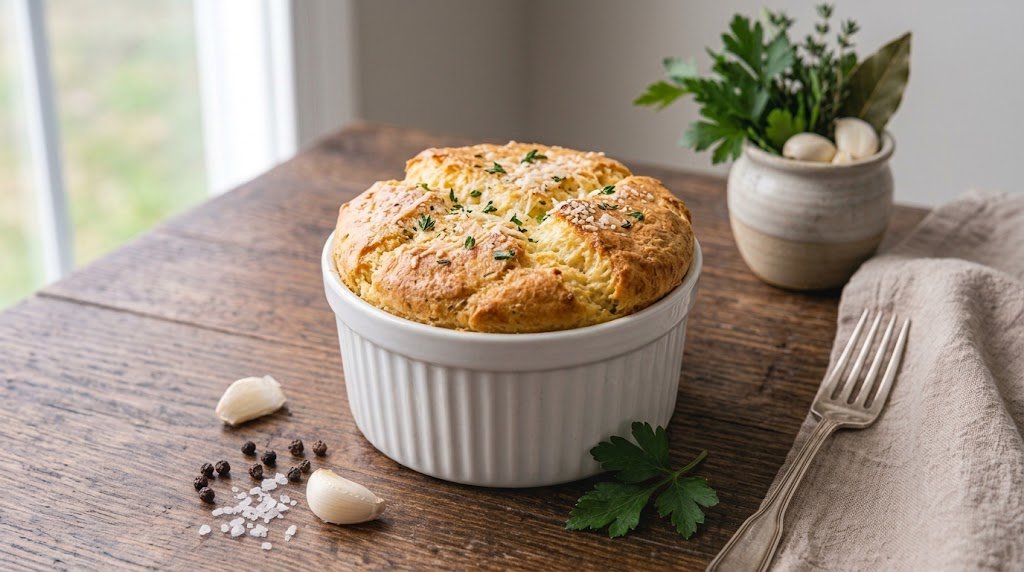
Recipe card
Baked Vanilla Soufflés with Whipped Egg Whites
25 minutes preparation including cooling the cooked base briefly, about 5 minutes stovetop cooking and 20–25 minutes baking; allow longer if the centre is not cooked.
Equipment: Four 180 ml (6 fl oz) oven-safe ramekins, spare ramekin if needed, saucepan, whisk, clean mixing bowl, electric mixer, spatula, baking tray, instant-read thermometer
Ingredients
Soufflé base and foam
Eggs
Soufflé base and foam
Ramekins
To serve
Instructions
Prepare the oven and ramekins
Preheat conventional oven to 180°C (350°F). Grease four 180 ml oven-safe ramekins with a little butter and coat the insides with the tablespoon of sugar, tapping out excess. Set on a baking tray. Separate the eggs into clean bowls, keeping the whites free of yolk and grease.
Cook the milk and flour base
Melt 50 g butter in a saucepan over low to medium heat. Whisk in flour and cook for about 1 minute without browning. Gradually whisk in milk and 50 g sugar until smooth. Stir over medium heat until thick and gently bubbling. Remove from heat and cool about 5 minutes until warm rather than very hot.
Incorporate the yolks
Whisk egg yolks into the warm base one at a time, then add vanilla. Transfer to a sufficiently large bowl if necessary. The base should be smooth and thick, not hot enough to scramble the eggs.
Whip and fold the egg whites
In a clean bowl, beat whites to soft peaks. Gradually add the remaining 50 g sugar and beat to glossy medium peaks that hold their shape with a slight bend. Stir one-third into the base to loosen it, then gently fold in the remainder with a spatula until no large white streaks remain. Do not beat the folded batter.
Bake until risen and safely cooked
Divide promptly among prepared ramekins, leaving some room for rising; use a spare ramekin if the batter is excessive. Bake 20–25 minutes until puffed, lightly golden and the centre is no longer liquid. Avoid opening the oven early; check near the end that the centre reaches at least 71°C (160°F), baking longer if needed. Dust with powdered sugar and serve immediately. Handle hot ramekins with oven gloves.
How to whip and fold without losing the rise
Separate the eggs while cold, when the yolks are less likely to break. Use a grease-free metal or glass bowl for whites. Beat until soft peaks appear before adding sugar gradually. The finished foam should look glossy and hold a slightly bending peak. If it looks dry or clumpy, it has been overbeaten and is harder to fold evenly. The American Egg Board dessert soufflé guide explains the cooked base and whipped egg technique.
Loosen the thick base with a small portion of the foam before folding in the rest. Draw a spatula through the centre, sweep along the bowl and lift the mixture over itself. Rotate the bowl and repeat gently until large streaks disappear. Avoid stirring vigorously, which releases the air that provides lift.
Baking and checking doneness
Use oven-safe ramekins with straight sides. Grease and coat them evenly. Divide the batter promptly and do not overfill; bake any excess separately. Avoid opening the oven during the early rise. At the end, look for a puffed, golden top and a centre that is tender rather than liquid. Check at least 71°C (160°F), following FoodSafety.gov egg-dish guidance. A soufflé settles as it cools, so have plates and garnishes ready.
Troubleshooting
A dense soufflé can result from an overly hot base or vigorous folding. If the tops brown before the centres cook, continue baking as needed and check oven temperature next time. If the soufflés rise unevenly, check that the ramekins were coated uniformly and that the batter was divided evenly.
Serving and variations
Serve with a little icing sugar or fresh berries. For other egg-based desserts, try baked vanilla flan, cherry clafoutis or vanilla panna cotta for a chilled gelatin-set alternative.
Make ahead, storage and allergens
Prepare ramekins ahead and measure the ingredients, but fold the batter close to baking. Serve immediately for the best texture. Refrigerate any leftovers in a covered container at 4°C (40°F) or below within 2 hours (1 hour above 32°C/90°F), for up to 3 days. Reheat to 74°C (165°F) if desired, but expect a much flatter, firmer dessert. Freezing is not recommended. Contains wheat, milk and eggs. Check vanilla sugar and any toppings for other allergens.
Serve straight away with care around the hot dishes.
Frequently asked questions
Why did my soufflé fail to rise?
Grease or yolk in the egg whites, overfolding, a cool oven or a long delay before baking can reduce lift.
Why does soufflé sink after baking?
Some settling is normal as the trapped warm air cools. Serve promptly rather than expecting the rise to remain permanent.
Can I make the batter in advance?
Prepare and grease the dishes ahead. The cooked base can be cooled and refrigerated separately, but whip and fold the whites just before baking.
What are medium peaks?
The whites should be glossy and hold a peak that bends slightly at the tip, not look dry or clumpy.
Can I use a larger dish?
Yes, but a deeper soufflé takes longer to bake. Check doneness and internal temperature instead of using the individual ramekin timing.
Can I substitute cornstarch for the flour?
Not directly by the same weight. Starch thickens differently, so use a separately tested gluten-free soufflé formula.
More recipes to try

Cream Cheese Chocolate Truffles Rolled in Cocoa

Cream Cheese Cheesecake Danish with Lemon and Vanilla

Fresh Fruit Salad with Orange Honey Dressing

Ptichye Moloko Bird’s Milk Mousse with Chocolate Glaze
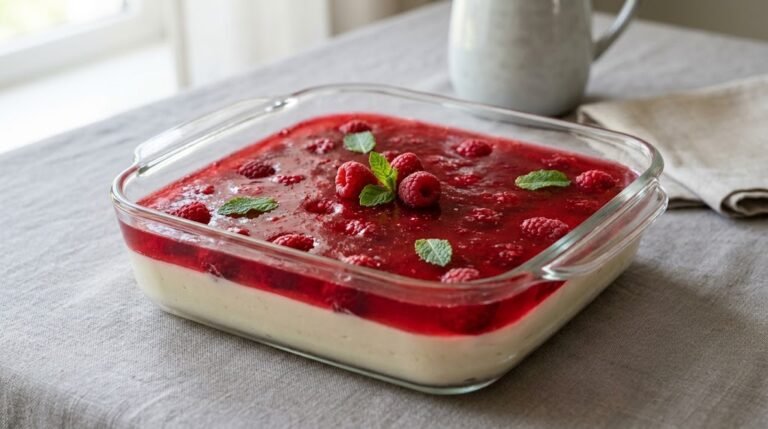
Bird’s Milk Jello with Creamy Mousse and Raspberry Jelly
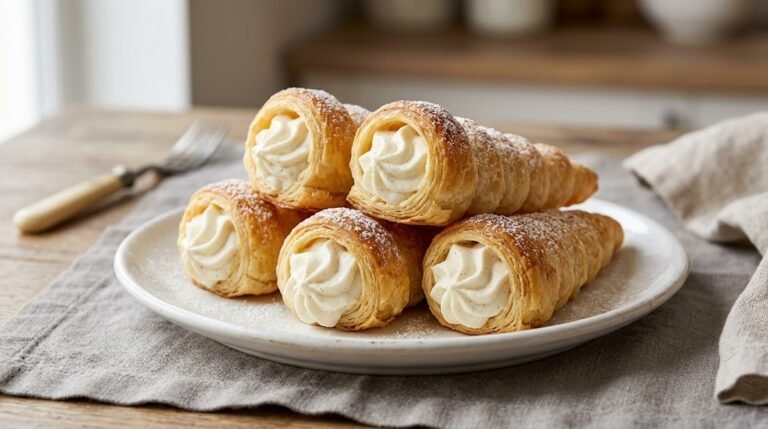
Cream Horn Trubochki with Vanilla Cream Filling
Spotted a detail that needs correcting? Contact the FeastDelights editors.