Soft Cinnamon Sugar Snickerdoodle Cookies
These cinnamon sugar snickerdoodles have lightly crisp rims, tender centres and a gentle tang from cream of tartar. The buttery dough is rolled into small balls, coated in cinnamon sugar and baked until the centres are set but still soft. Use softened rather than melted butter and leave room for the cookies to spread. This batch makes about 30 cookies, with 20 minutes of preparation and up to 36 minutes of baking across three trays.
Snickerdoodle cookies are soft butter cookies coated in cinnamon sugar, with a lightly tangy flavour and a delicate cracked surface. This version makes about 30 cookies. Cream of tartar and baking soda give the dough its distinctive character. Allow 20 minutes to mix and shape, then 10–12 minutes per tray in the oven.
Why cream of tartar matters
Cream of tartar is an acidic powder used in baking, not tartar sauce. It reacts with baking soda and adds a gentle tang that distinguishes these cookies from plain cinnamon sugar cookies. Removing it without adjusting the raising agent can change flavour and spread. Compare our vanilla butter shortbread, which relies on a different dough structure.
Choosing the ingredients
Butter should yield to a finger without looking oily. Beating softened butter with sugar incorporates some air; melted butter behaves differently and can make the cookies spread. Weigh the flour rather than packing cups. Keep the two sugar quantities separate: 300 g belongs in the dough and 25 g is for the cinnamon coating. Use fresh baking soda and cream of tartar.
How to make soft snickerdoodles
Cream the butter and dough sugar, add eggs and vanilla, then mix in the dry ingredients just until combined. Portion the dough evenly and roll each ball in the cinnamon mixture. A hot tray can melt the butter before the cookie structure sets, so allow a reused tray to cool. Bake until the edges hold their shape and the centres are no longer wet. The cookies firm as they rest on the tray.
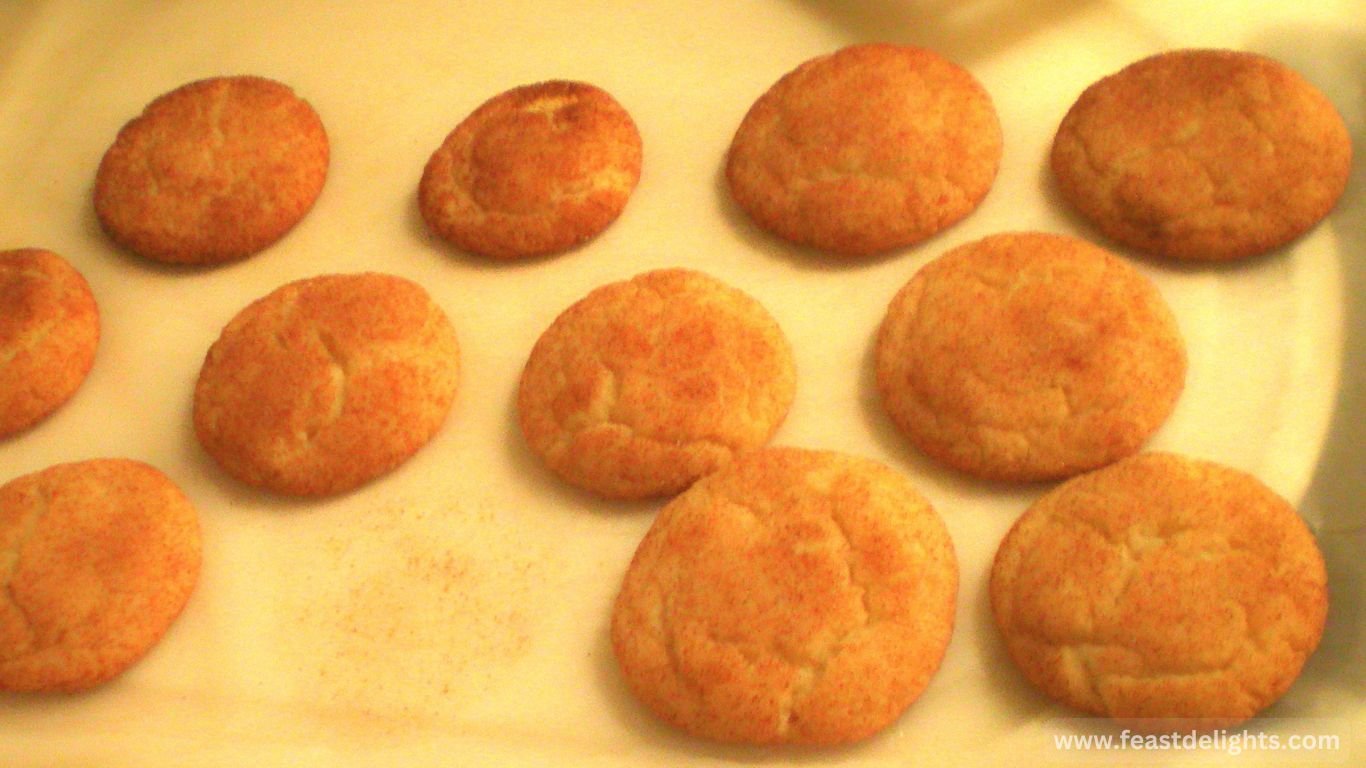
Recipe card
Soft Cinnamon Sugar Snickerdoodle Cookies
Bake each tray 10–12 minutes; total assumes three consecutive trays of about 10 cookies. Rest each tray 5 minutes, overlapping the next batch when practical. Allow an extra 20 minutes if the dough needs chilling, and additional time for complete cooling.
Equipment: Digital scale, mixing bowls, electric mixer or sturdy whisk, spatula, small bowl, cookie scoop, three lined trays or a cooled reusable tray and wire rack.
Ingredients
Cookie dough
Cinnamon coating
Instructions
Cream the butter and sugar
Preheat a conventional oven to 180°C (350°F). Line baking trays with parchment. Beat softened butter and the 300 g dough sugar until lighter and fluffy, about 2–3 minutes. Beat in eggs one at a time, then vanilla, scraping the bowl as needed.
Mix the dry ingredients
Whisk flour, cream of tartar, baking soda and salt in a separate bowl. Add to the butter mixture and mix on low speed or fold until no dry streaks remain. If the dough is greasy or difficult to roll, refrigerate for about 20 minutes before shaping.
Portion and coat
Mix the 25 g coating sugar and cinnamon in a shallow bowl. Divide the dough into about 30 equal balls, roughly 32 g each before coating. Roll each in the cinnamon sugar and arrange approximately 5 cm (2 inches) apart on cool lined trays.
Bake until set
Bake one tray on the middle rack for 10–12 minutes. The edges should be set, the tops lightly cracked and the centres soft but no longer wet or raw. If they still look doughy, continue briefly. Repeat with the remaining trays, allowing reused trays to cool.
Rest and cool
Leave cookies on each tray for about 5 minutes so the structure firms, then move them to a wire rack. Let cool completely before storing.
Troubleshooting spread and texture
Flat cookies: Check the butter temperature and flour weight. Chill soft dough before rolling. Bake one trial cookie if you are uncertain how much the dough will spread.
Dry or hard cookies: Check the oven temperature and begin checking at ten minutes. Deeply browned cookies may be crisp throughout instead of tender.
Uneven coating: Stir the cinnamon sugar between portions, since the powder can settle. Coat just before arranging on the tray.
Serving ideas and variations
Serve with milk, coffee or tea. For a more spiced cookie, see our honey gingerbread cookies. Our oatmeal raisin cookies offer a different chewy texture. A pinch of nutmeg can be added to the coating without changing the dough.
Make ahead, storage and allergens
Freeze portioned dough before coating or freeze the baked cookies once cool. Never taste raw cookie dough: both flour and eggs can carry harmful bacteria, as explained in the FDA flour safety guidance. The standard recipe contains wheat, milk and eggs. Check any substitutions for allergens.
Frequently asked questions
What does cream of tartar do?
It is an acid that reacts with baking soda and adds the characteristic tang. Use the specified amount.
Can I skip cream of tartar?
Not as a direct omission, because it balances the baking soda. A baking-powder version needs a separately adjusted formula and will taste different.
Why did my cookies spread too far?
Butter may have been too warm, the tray hot or the flour undermeasured. Chill soft dough and bake on a cool lined tray.
Why are my cookies hard?
Excess flour or a long bake can dry them out. Weigh the flour, portion evenly and remove when the centres are set but tender.
Do I need to flatten the dough balls?
Not for this formula. Bake the rounded portions and allow them to spread naturally; a trial cookie can establish the best shape in your oven.
Can I freeze the dough?
Yes. Freeze individual balls before coating, then thaw in the refrigerator, roll in cinnamon sugar and bake until set.
More recipes to try






Spotted a detail that needs correcting? Contact the FeastDelights editors.