Gooseberry Jam without Added Pectin for the Refrigerator
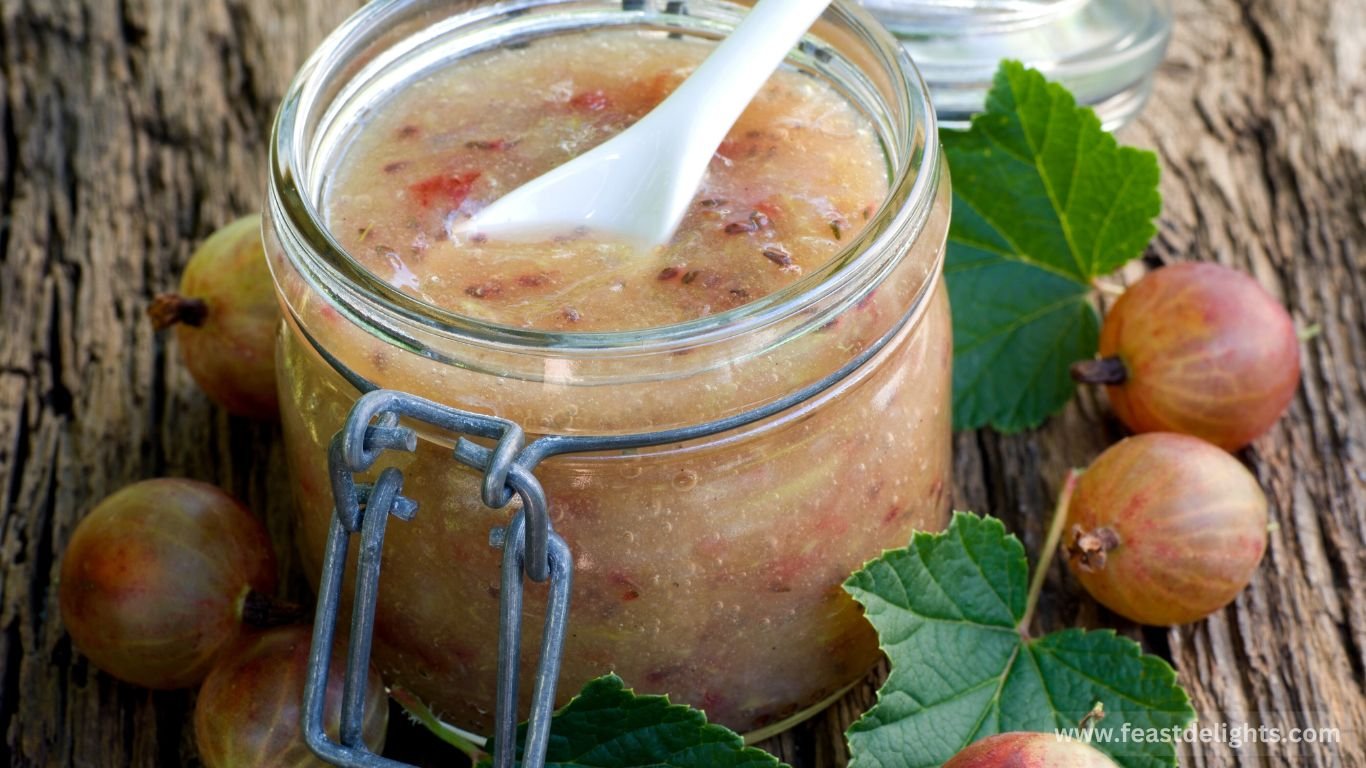
This gooseberry jam uses just topped-and-tailed gooseberries, granulated sugar and water to produce a sweet-tart spread with a soft, spoonable set. Gooseberries naturally contain pectin, so this formula does not require an added commercial setting agent. Dissolve the sugar, simmer the berries gently and check a cooled spoonful on a cold plate before stopping the cook. The recipe estimates 1.5–1.8 kg of jam, depending on evaporation and fruit ripeness. Allow about 55 minutes for preparation and cooking, plus cooling. Refrigerate or freeze this batch rather than storing it in the pantry.
Gooseberry jam without added pectin is a sweet-tart fruit spread made with equal weights of gooseberries and sugar, plus a little water. This recipe estimates 1.5–1.8 kg of soft jam and takes approximately 55 minutes to prepare and cook, followed by cooling. It is intended for refrigerator or freezer storage, not shelf-stable canning.
Recipe card
Gooseberry Jam without Added Pectin for the Refrigerator
Cooking time is approximate and depends on evaporation; the cold-plate sample determines the set. Cooling and final refrigerated setting are additional and may take longer than the stated active recipe time.
Equipment: Digital scale, colander, small scissors or knife, wide heavy saucepan, long heatproof spoon, two small chilled saucers, ladle and clean heatproof containers
Ingredients
Jam
Instructions
Wash, sort and trim the gooseberries
Sort the fruit and discard spoiled or mouldy berries. Rinse sound gooseberries under running water, drain and remove both stems and dried blossom ends. Weigh 1 kg of prepared fruit. Place two small saucers in the refrigerator or freezer for the set test.
Dissolve the sugar in water
Combine 1 kg sugar and 200 ml water in a wide heavy saucepan with plenty of headroom. Heat gently, stirring until the sugar is fully dissolved. Avoid scorching the base before the berries release their juice.
Simmer the berries
Add the gooseberries and bring back to a controlled boil, then simmer gently for about 20–30 minutes, stirring and scraping the base often. Crush some berries with a spoon if a smoother spread is preferred. Reduce heat if the jam foams towards the rim.
Test a cooled sample for set
Remove the pan from heat. Spoon a small amount onto a chilled saucer and cool completely for a few minutes in the refrigerator or freezer. Push gently with a spoon; a soft mound that holds its shape rather than flowing like syrup indicates the intended set. If runny, return the pan to the heat briefly and retest. Do not touch or taste hot jam.
Portion, chill and freeze extras
Ladle into small clean heatproof containers, leaving expansion room in freezer-safe containers. Cool promptly and refrigerate within two hours. Keep covered and allow the jam to finish cooling and setting in the refrigerator before serving. Freeze extra portions once cold. Never rely on a jar seal for pantry storage.
Choose gooseberries and understand natural pectin
Use firm, sound berries and trim the stalk and dried blossom from each end. Green, red and yellow varieties differ in sweetness, acidity and colour. A mixture of ripe and slightly underripe berries can help the set. The National Center for Home Food Preservation identifies gooseberries as fruit that often contains enough natural pectin to form a gel. The amount varies, so the recipe does not guarantee the same firmness for every variety.
Weigh the fruit after trimming and retain the original equal-weight sugar ratio. Sugar provides sweetness and contributes to the gel, so a substantially lower-sugar version needs a different tested formula. The 200 ml water helps dissolve sugar and start cooking, but must be reduced by evaporation. Use a wide, heavy pan with headroom because fruit jam can foam vigorously.
Cook and test for a soft set
Dissolve the sugar gently before adding the fruit. Stir often enough to prevent the syrup catching on the bottom. Once the berries soften, crush some if a more uniform texture is desired, or leave most whole for a rustic spread. Avoid using the cooking time alone as the endpoint: pan width, burner heat and fruit moisture change evaporation rates.
Remove the pan from heat while testing so the rest does not overcook. Cool a small sample on a chilled plate and push it with a spoon. The NCHFP refrigerator test provides a useful way to judge consistency. Here the target is a soft mound, not an exceptionally stiff gel. If still runny, cook briefly and repeat. A sample must be cold before it is handled or tasted; hot jam can cause severe burns.
Troubleshooting and yield
If the jam sets too firmly, warm only the portion you intend to serve with a little water and use immediately. Do not dilute the stored batch and assume its shelf life remains unchanged. If the berries appear suspended in a thin syrup, check a fully cooled sample first. If too loose, serve as a refrigerated fruit topping rather than claiming a firm jam. The original 1.5–1.8 kg yield is an estimate; weigh the actual batch after cooking.
Serving and related recipes
Serve on toast, with plain yoghurt or over fluffy American pancakes. It can also accompany vanilla cupcakes. For another seasonal fruit spread, see our refrigerator or freezer cherry jam.
Refrigerator storage and freezing only
Use small clean heatproof containers to allow prompt cooling, then refrigerate at 4°C (40°F) or below within two hours. General NCHFP jam storage guidance describes refrigerator and freezer jams as a separate product category. The original two-week refrigerator limit is retained as a conservative recommendation, not a measured shelf life for this formula. Freeze surplus for up to three months for best quality. Leave room for expansion and thaw in the refrigerator. Use clean utensils and discard the entire container if mould or fermentation appears. A sealed lid does not make this recipe safe for pantry storage. No intentional major allergens are listed; check ingredients and equipment for cross-contact.
Frequently asked questions
Do gooseberries need added pectin?
Often not; gooseberries naturally contain pectin. Ripeness and reduction affect the set, so test a cooled sample.
Can I use fully ripe fruit?
Yes, but very ripe fruit generally contains less pectin. A mixture of ripe and slightly underripe sound berries may help the set; the exact texture varies.
Why is my jam runny?
The syrup may not have concentrated sufficiently. Cool a test spoonful before deciding, then simmer a little longer and retest.
Can I reduce the sugar substantially?
Not with the same expected set. Lower-sugar jam behaves differently and may have shorter storage life; use a separate tested low-sugar formulation.
Can I pantry-can this jam?
Not using this recipe. A tested recipe and its exact jar-processing instructions are required for shelf-stable storage.
What if mould appears on the jam?
Discard the entire affected container; do not scrape off the surface and eat the rest.
Can I freeze gooseberry jam?
Yes, portion cooled jam into freezer-safe containers with expansion space. Thaw in the refrigerator and use a clean spoon.
More recipes to try

Cream Cheese Chocolate Truffles Rolled in Cocoa

Cream Cheese Cheesecake Danish with Lemon and Vanilla

Fresh Fruit Salad with Orange Honey Dressing

Ptichye Moloko Bird’s Milk Mousse with Chocolate Glaze
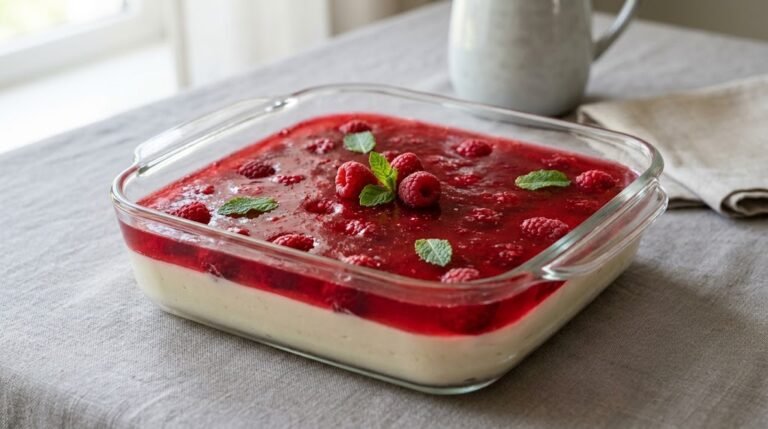
Bird’s Milk Jello with Creamy Mousse and Raspberry Jelly

Cream Horn Trubochki with Vanilla Cream Filling
Spotted a detail that needs correcting? Contact the FeastDelights editors.