Garlic and Bay-Leaf Sauerkraut with Carrot
Garlic and bay-leaf sauerkraut is a Ukrainian-style fermented cabbage preparation with finely grated carrot, whole peppercorns and garlic. The cabbage releases its own brine when mixed with weighed pickling salt. This large batch uses five kilograms of cabbage and requires about three to four weeks of controlled fermentation, not just a few days. Keep the vegetables submerged, monitor temperature and acidity, and refrigerate the finished kraut. The result should be pleasantly tart and crisp, suitable for serving with potatoes, bread or meat dishes.
This large-batch sauerkraut uses garlic, bay and peppercorns for a distinct aromatic flavour. The method is an adaptation of standard vegetable fermentation guidance rather than a laboratory-validated preservation formula. For a research-tested starting point, use the linked plain sauerkraut recipe from the National Center for Home Food Preservation.
Salt ratio and fermentation safety
The earlier recipe used 100 g salt and described a 3–5-day ferment. This revision increases the salt to 120 g, approximately 2.3% of the combined cabbage and carrot weight, and allows three to four weeks at 21–22°C (70–72°F). These changes follow general guidance from Colorado State University Extension and University of Minnesota Extension. They do not establish laboratory validation of this particular garlic-and-carrot formulation. For the tested plain method, follow the National Center for Home Food Preservation’s sauerkraut recipe without modification.
Ingredients and equipment
Choose firm, fresh white cabbage and remove damaged outer leaves. Weigh five kilograms (about 11 lb) after trimming. Use 150 g grated carrot for colour and a modest sweetness. Weigh 120 g iodine-free canning or pickling salt on a scale, rather than estimating spoonfuls of coarse salt. Use whole bay leaves and black peppercorns and freshly crushed garlic. Do not reduce the salt or add sugar or vinegar as a shortcut.
Use clean food-grade fermentation crocks or glass jars with suitable airlocks, food-safe weights, a scale, a shredder, a room thermometer and a calibrated food pH meter. Divide the batch among suitable containers if needed, distributing the vegetables, salt and seasonings evenly by weight. Allow several centimetres of headspace and room for the brine to rise.
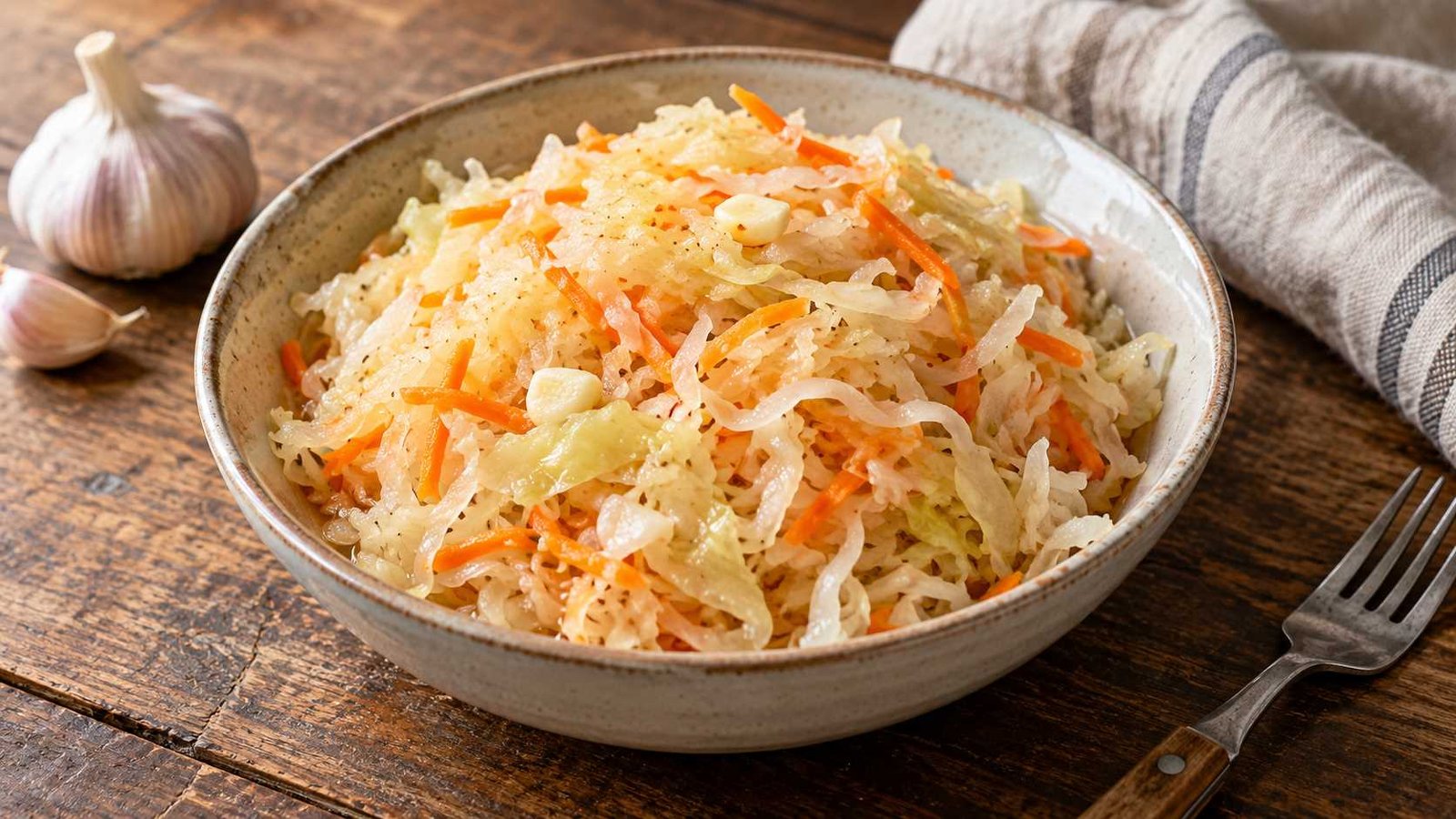
Recipe card
Garlic and Bay-Leaf Sauerkraut with Carrot
Approximately 3–4 weeks at 21–22°C; may take longer. Completion depends on acidity and bubbling, not elapsed time alone.
Equipment: Food-grade fermentation crock or jars, suitable airlock, food-safe weights, scale, shredder, room thermometer and calibrated food pH meter
Ingredients
Vegetables
Fermentation salt
Whole seasonings
Instructions
Shred and weigh the vegetables
Wash and trim the cabbage, weigh 5 kg and shred evenly. Grate 150 g carrot and combine in a clean bowl.
Massage in salt and seasonings
Weigh 120 g canning or pickling salt. Mix thoroughly into the vegetables and massage until liquid is released. Add garlic, bay leaves and peppercorns.
Pack beneath the brine
Pack firmly into clean food-grade fermentation vessels, distributing the salt and vegetables evenly. Add all expressed liquid and use clean fermentation weights to keep solids 2.5–5 cm below brine. If brine is insufficient, refrigerate and seek extension advice rather than proceeding.
Ferment and monitor acidity
Use a suitable vented fermentation lid or airlock. Keep at 21–22°C (70–72°F) out of sunlight for about 3–4 weeks; check brine coverage, temperature and pH regularly. Completion requires pH 4.6 or lower and bubbling to stop. Discard suspect or spoiled batches without tasting.
Refrigerate the finished kraut
When properly fermented, transfer with brine to clean covered containers and refrigerate at 4°C (40°F) or colder. Use within three weeks. Do not can this adapted recipe.
Packing and monitoring fermentation
Shred cabbage uniformly and mix with the carrot and weighed salt. Massage and press until liquid collects. Mix in the seasonings and pack firmly in layers, removing air pockets and including the expressed liquid. Weight the cabbage so all vegetable pieces remain beneath the brine, ideally by 2.5–5 cm (1–2 inches). If there is not enough liquid to cover the cabbage, do not proceed with room-temperature fermentation; refrigerate and seek extension guidance rather than adding unmeasured water.
Fit a fermentation lid that lets carbon dioxide escape without allowing unnecessary air exposure. Keep at 21–22°C out of direct sunlight. Check the brine level, temperature and acidity regularly with clean equipment. The University of Minnesota recommends a pH of 4.6 or below and cessation of bubbling as completion indicators; a sour taste alone is not a safety test. Expect about three to four weeks at the stated temperature, potentially longer at cooler temperatures. Do not eat an incomplete or suspect ferment. If the pH does not decline appropriately, the cabbage is exposed to air, or mould, slime or a putrid smell develops, discard the batch rather than tasting or trying to rescue it.
Serving suggestions and variations
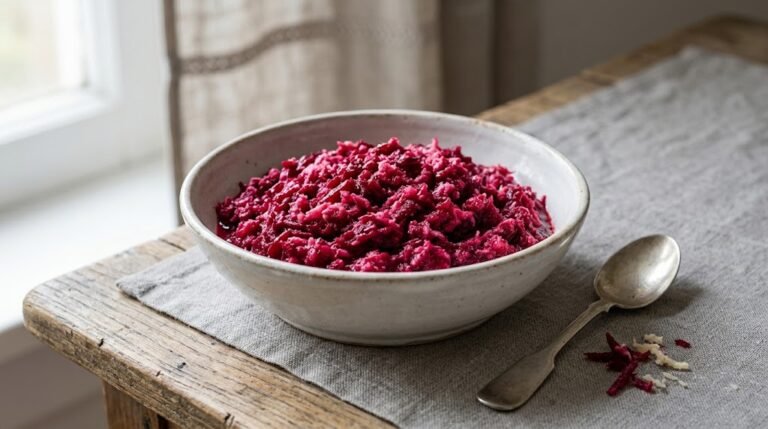
Serve cold with boiled potatoes, rye bread or as an accompaniment to roast meat. Use a portion in kapustnyak sauerkraut soup or vinegret beet salad. The site’s plain cabbage sauerkraut is a different preparation. For flavour variation, add fresh dill or sliced onion at serving time rather than changing the fermentation formula.
Refrigeration and allergens
Once properly fermented, transfer to clean covered containers, keep cabbage beneath brine and refrigerate at 4°C (40°F) or colder. Use within three weeks as a conservative quality limit. Freeze portions if desired; texture may soften. Do not use this adapted recipe for shelf-stable canning. Discard an uncertain or spoiled batch without tasting. No wheat, dairy or eggs are required in the basic recipe; check accompanying foods and seasonings. A kitchen and food-preservation review is still needed for this specific adapted formulation.
Allow enough time for the cabbage to acidify completely before chilling. Serve with a clean utensil and return the remaining kraut to the refrigerator promptly.
Frequently asked questions
Can I use less salt?
No. Salt helps control fermentation; do not reduce the weighed amount.
Can I use ordinary iodised table salt?
Use iodine-free canning or pickling salt as recommended by extension guidance. Weigh it rather than relying on volume.
Is bubbling normal?
Carbon dioxide bubbles are expected during active fermentation, but they do not prove safety. Monitor acidity and brine coverage.
Is three days enough?
No. Standard full fermentation at the stated temperature takes several weeks. Use acidity and completion checks rather than a fixed short time.
Can I add vinegar to speed things up?
No. This is a lactic fermentation method. Do not use vinegar to compensate for an unsuccessful ferment.
Can I make half a batch?
Yes, if all ingredients are proportionally weighed, suitable equipment is used and the same controls are followed. The tested plain method remains the recommended starting point.
Can I store this at room temperature after fermentation?
No. This adaptation is for refrigerator storage, not shelf-stable canning.
More recipes to try





Spotted a detail that needs correcting? Contact the FeastDelights editors.