Homemade Fermented Sauerkraut with Cabbage and Salt
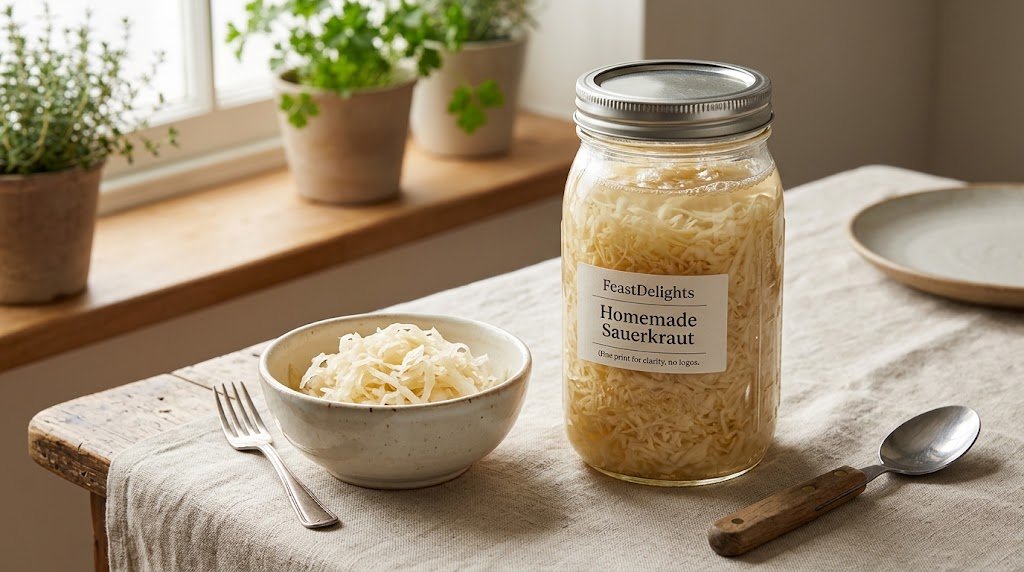
Sauerkraut is cabbage transformed by fermentation, with salt drawing out the juice that becomes its brine.
Sauerkraut is cabbage transformed by fermentation, with salt drawing out the juice that becomes its brine. This version follows the National Center for Home Food Preservation cabbage-and-salt method. It does not use vinegar, sugar or carrots. Temperature and submersion matter throughout the waiting period. The estimated total allows four weeks at the stated temperature; a cooler room can require longer. Do not confuse this process with overnight refrigerator cabbage.
Recipe at a glance
Yield: About 2 litres sauerkraut. Preparation: 35 minutes. Cooking: 0 minutes. Additional resting, chilling, marinating or drying wait: 40320 minutes. Total: 40355 minutes. Times are estimates; follow the doneness cues in the directions.
Equipment
Food-grade fermentation vessel, weight, sharp knife and room thermometer
Recipe card
Homemade Fermented Sauerkraut with Cabbage and Salt
Total includes additional waiting time stated in the directions. Preparation overlaps are stated where applicable; times are estimates.
Equipment: Food-grade fermentation vessel, weight, sharp knife and room thermometer
Ingredients
Optional supplementary brine
Instructions
Prepare
Clean a suitable 4-litre food-grade fermentation vessel and weight. Remove damaged leaves, rinse cabbage and cut into thin shreds.
Salt and pack
Work 3 tbsp salt into 5 lb cabbage thoroughly. Pack firmly until juice covers it. Keep cabbage 2.5–5 cm below brine under a clean weight. If juice is insufficient, boil the supplementary water and salt, cool fully and add only enough to cover.
Ferment
Cover according to the fermentation vessel instructions, allowing gas to escape. Keep at 21–24°C (70–75°F) for about 3–4 weeks. Check submersion daily and remove surface scum promptly. Discard cabbage that is slimy, foul-smelling or spoiled.
Chill when finished
Once bubbling has ceased and kraut is uniformly sour, transfer to clean containers with its brine and refrigerate. This recipe supplies refrigerated storage, not canning instructions.
Cooking tips
- Do not reduce the salt.
- Use a food-grade vessel.
- Keep cabbage below brine.
- Allow fermentation gas to escape.
Serving suggestions
- Serve a small portion with potatoes.
- Add to a cooked sausage plate.
- Use in sandwiches.
- Cook into a cabbage soup.
Substitutions and variations
Use canning or pickling salt. Do not substitute a low-sodium salt blend.
After fermentation, dress a serving with chopped onion and sunflower oil.
Make ahead and storage
Begin 3–4 weeks before needed; colder fermentation can take 5–6 weeks.
Keep finished kraut covered by brine in the refrigerator. NCHFP permits several months cold storage; use clean utensils and discard spoiled product. Do not imply pantry storage.
Food safety
Use clean equipment and prevent raw meat or egg cross-contamination. Keep perishable food at 4°C (40°F) or below; refrigerate within 2 hours, or 1 hour above 32°C (90°F). Follow the specific cooking, cooling and storage guidance in this recipe.
Questions and troubleshooting
Is four days enough?
Not for this method. Allow roughly 3–4 weeks at 21–24°C.
What if the cabbage turns slimy?
Discard it. Do not taste questionable or foul-smelling fermented food.
How to tell when it is ready
Work 3 tbsp salt into 5 lb cabbage thoroughly. Pack firmly until juice covers it. Keep cabbage 2.5–5 cm below brine under a clean weight. If juice is insufficient, boil the supplementary water and salt, cool fully and add only enough to cover. Cover according to the fermentation vessel instructions, allowing gas to escape. Keep at 21–24°C (70–75°F) for about 3–4 weeks. Check submersion daily and remove surface scum promptly. Discard cabbage that is slimy, foul-smelling or spoiled.
Tips
- Do not reduce the salt.
- Use a food-grade vessel.
- Keep cabbage below brine.
- Allow fermentation gas to escape.
Troubleshooting
- Not for this method. Allow roughly 3–4 weeks at 21–24°C.
- Discard it. Do not taste questionable or foul-smelling fermented food.
Substitutions
- Use canning or pickling salt. Do not substitute a low-sodium salt blend.
Variations
- After fermentation, dress a serving with chopped onion and sunflower oil.
Serving suggestions
- Serve a small portion with potatoes.
- Add to a cooked sausage plate.
- Use in sandwiches.
- Cook into a cabbage soup.
Make ahead
Begin 3–4 weeks before needed; colder fermentation can take 5–6 weeks.
Storage
Keep finished kraut covered by brine in the refrigerator. NCHFP permits several months cold storage; use clean utensils and discard spoiled product. Do not imply pantry storage.
Food safety
Use clean equipment and prevent raw meat or egg cross-contamination. Keep perishable food at 4°C (40°F) or below; refrigerate within 2 hours, or 1 hour above 32°C (90°F). Follow the specific cooking, cooling and storage guidance in this recipe.
Frequently asked questions
Is four days enough?
Not for this method. Allow roughly 3–4 weeks at 21–24°C.
What if the cabbage turns slimy?
Discard it. Do not taste questionable or foul-smelling fermented food.
Serve in the style described above and adjust optional seasonings to taste.
More recipes to try




Spotted a detail that needs correcting? Contact the FeastDelights editors.