Profiteroles with Vanilla Cream and Chocolate
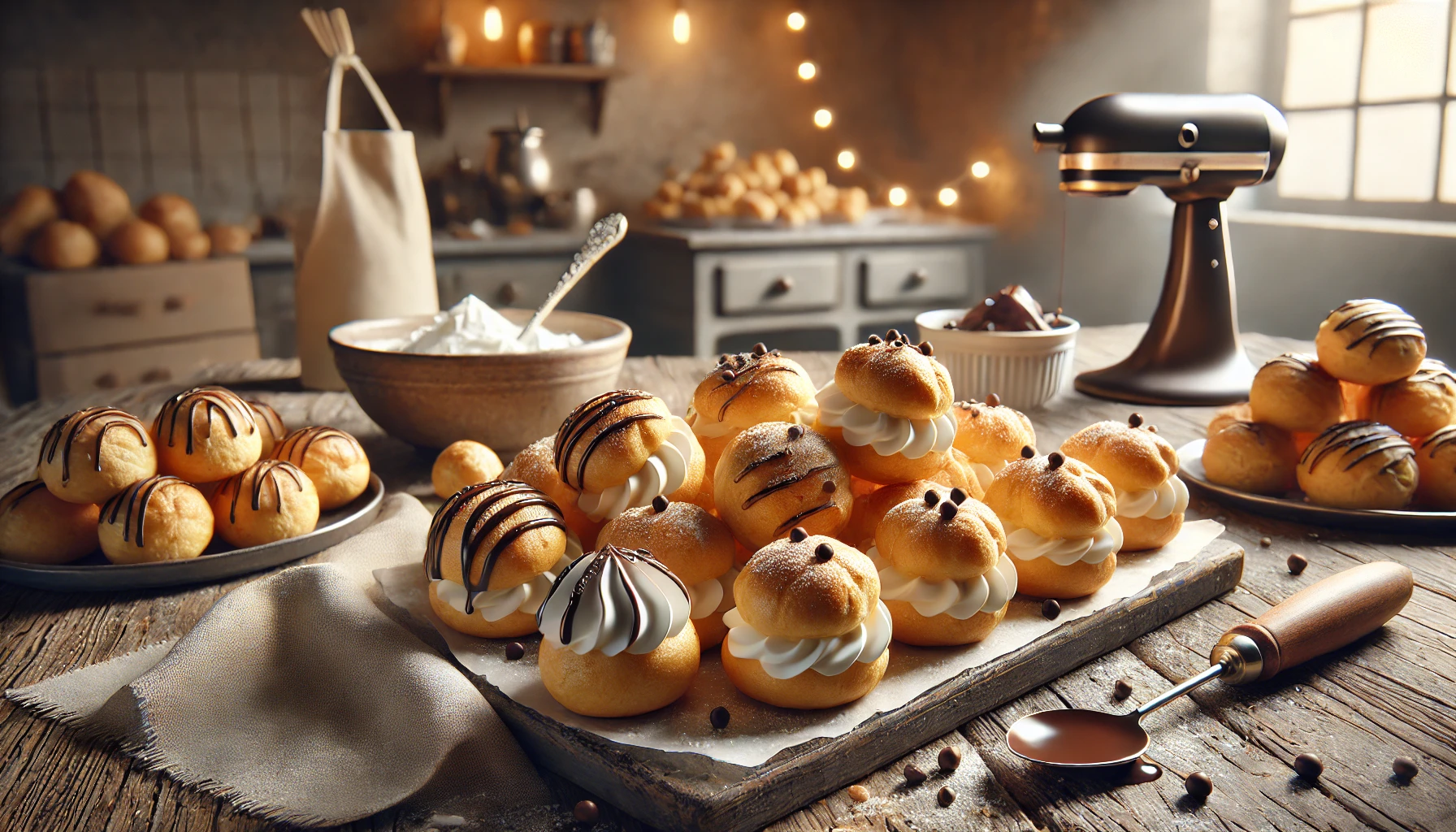
These profiteroles are small, airy choux pastry shells filled with chilled vanilla pastry cream or whipped cream and finished with optional melted chocolate. The dough is cooked briefly in a saucepan before eggs are added, then piped into mounds and baked until hollow and golden. A short drying period in the switched-off oven helps the shells hold their shape. Let them cool completely before filling so the cream stays cool and the pastry retains its crispness. This recipe makes about 24 small profiteroles for dessert or a celebration.
Profiteroles with vanilla cream are small choux pastry puffs filled after baking. Their golden shells should feel light and hollow, with a tender cream centre. This French-inspired version makes about 24 pieces in roughly 1 hour 32 minutes including drying and cooling, using prepared chilled filling. If making pastry cream yourself, prepare and chill it ahead.
Understand the ingredients before starting
Water and butter form the liquid base for choux pastry. Flour is added all at once to the hot liquid so its starches absorb moisture and form a cohesive paste. Eggs provide structure and contribute moisture that turns into steam during baking. Since egg size and evaporation vary, use the fourth egg as an adjustment rather than forcing it all into the dough. The paste should be glossy, thick and able to hold a mound. A piping bag gives evenly sized shells, though two spoons also work.
Use chilled prepared vanilla pastry cream or whipped cream. For custard from scratch, follow the separate vanilla pastry cream recipe and allow time for chilling. The chocolate is optional.
Recipe card
Profiteroles with Vanilla Cream and Chocolate
Cook paste about 2 minutes and bake 20–25 minutes (25 counted). Dry 10 minutes in the switched-off oven, then cool about 30 minutes. Assumes one tray; add time for extra batches and for making pastry cream from scratch.
Equipment: Kitchen scale, medium saucepan, wooden spoon, mixing bowl, spatula, piping bag with plain nozzle, parchment-lined baking tray, skewer, cooling rack
Ingredients
Choux shells
Filling and finish
Instructions
Cook the initial choux paste
Preheat a conventional oven to 200°C (400°F). Line a large tray with parchment. Bring water, butter, sugar and salt to a boil in a saucepan, ensuring butter has melted. Remove from heat and add flour all at once, stirring briskly until combined.
Dry the paste on the stove
Return to low heat and stir for 1–2 minutes until the paste pulls away from the pan and leaves a thin film. Transfer to a bowl and cool about 5 minutes, until warm rather than steaming hot.
2 minAdd eggs to the correct consistency
Beat in the first three eggs one at a time until absorbed. Beat the fourth egg separately and add gradually only as needed. Stop when the glossy paste falls from the spoon in a thick V and holds a piped mound. Egg size and paste moisture affect the amount needed.
Pipe, bake and dry shells
Pipe about 24 mounds roughly 3 cm (1¼ inch) wide onto the lined tray, spacing well apart. Flatten sharp points with a damp fingertip. Bake 20–25 minutes until deeply golden and firm; avoid opening the door early. Turn off oven, carefully pierce each shell to release steam and leave in the ajar oven for 10 minutes. Bake in additional batches if needed.
25 minCool, fill and finish
Cool completely on a rack, about 30 minutes. Pipe chilled prepared vanilla pastry cream or whipped cream into the shells, dividing it between them. Drizzle with optional melted chocolate and serve or refrigerate promptly.
How to judge choux pastry consistency
After flour is stirred into the hot liquid, return the pan to low heat and work the paste until it forms a ball and leaves a thin film. This drying step helps control how much egg the dough needs. Cool briefly before incorporating eggs so they do not scramble. The mixture may look separated after each addition; continue stirring until smooth. Add the last beaten egg in small portions. Lift the spoon: a thick V of paste should hang from it. If the paste pours like cake batter, it is too loose to pipe reliably. Do not taste uncooked flour-and-egg paste.
Baking, drying and filling
Pipe similar-sized mounds, leaving room for expansion. Do not open the oven while the pastry is still pale and fragile. The shells should become deeply golden, light and firm. Once baked, carefully pierce them to vent steam and let them dry briefly in the switched-off oven. Cool fully on a rack before adding chilled cream. The filling will gradually soften the shells, so assemble shortly before serving.
Troubleshooting
- Flat puffs: check the paste consistency, oven preheating and baking time.
- Collapsed shells: bake until the walls are firm and avoid opening the door early.
- Cracked tops: smooth sharp piping points and use evenly sized mounds; small cracks are normal.
- Soggy shells: vent and dry after baking, cool on a rack and fill later.
Serving and variations
Finish with melted chocolate or a light dusting of icing sugar. Try a little thick fruit preserve with whipped cream, without overfilling. For a different use of the same pastry technique, see the choux pastry for éclairs or the small croquembouche. This recipe focuses on individually filled profiteroles rather than plain choux dough.
Make ahead, storage and allergens
Bake shells ahead and keep them dry; re-crisp unfilled shells in a low oven and cool again before filling. Freeze unfilled shells for up to a month for quality. Keep cream and filled pastries refrigerated at 4°C (40°F) or below and follow the two-hour rule for perishables, reduced to one hour above 32°C (90°F), as explained by FoodSafety.gov. Filled puffs are best within a day. Contains wheat, milk and eggs; chocolate and prepared cream may have additional allergens. Check labels.
Frequently asked questions
Why did my profiteroles collapse?
The walls may be underbaked or too much egg may have made the paste loose. Bake until firmly golden, vent steam and dry the shells before cooling.
Do I need all four eggs?
Not necessarily. Add the final beaten egg gradually until the paste forms a thick V and holds its piped shape.
Can I make the shells without a piping bag?
Yes. Spoon equal small mounds onto the tray and smooth the peaks with a damp finger.
Why are the shells wet inside?
The pastry may need more baking or drying. Pierce the cooked shells to let steam escape and dry in the switched-off oven.
Can I fill profiteroles the day before?
It is better to store shells and cream separately because the filling softens the pastry. Fill shortly before serving.
Do profiteroles require chocolate?
No. Chocolate is an optional finish; the choux shells and cream are the main components.
More recipes to try

Cream Cheese Chocolate Truffles Rolled in Cocoa

Cream Cheese Cheesecake Danish with Lemon and Vanilla

Fresh Fruit Salad with Orange Honey Dressing

Ptichye Moloko Bird’s Milk Mousse with Chocolate Glaze
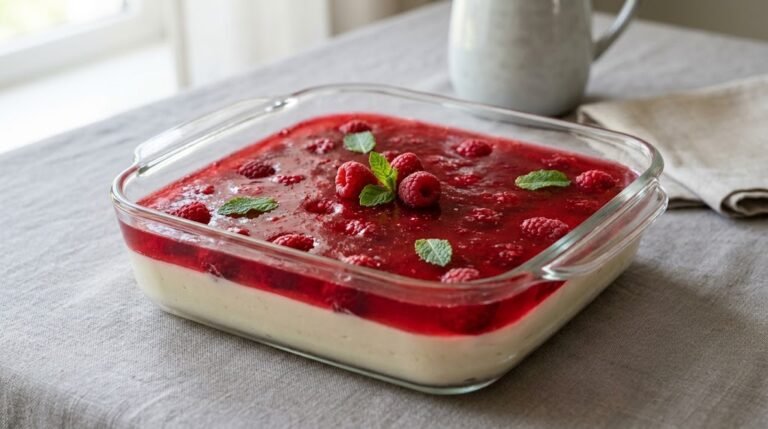
Bird’s Milk Jello with Creamy Mousse and Raspberry Jelly
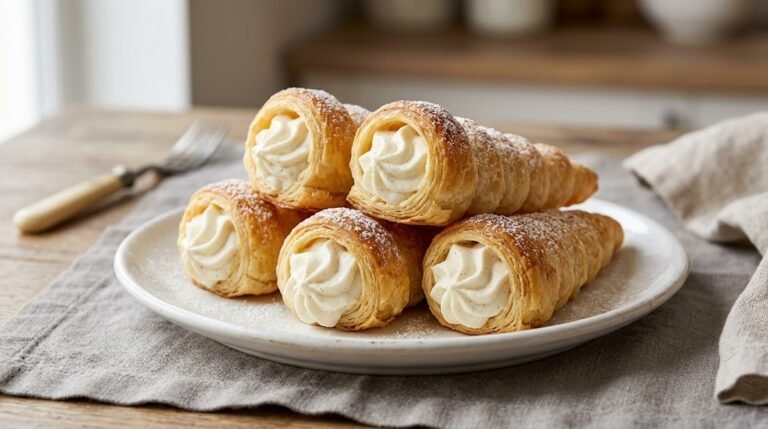
Cream Horn Trubochki with Vanilla Cream Filling
Spotted a detail that needs correcting? Contact the FeastDelights editors.