Vanilla Butter Pound Cake in a Loaf Pan
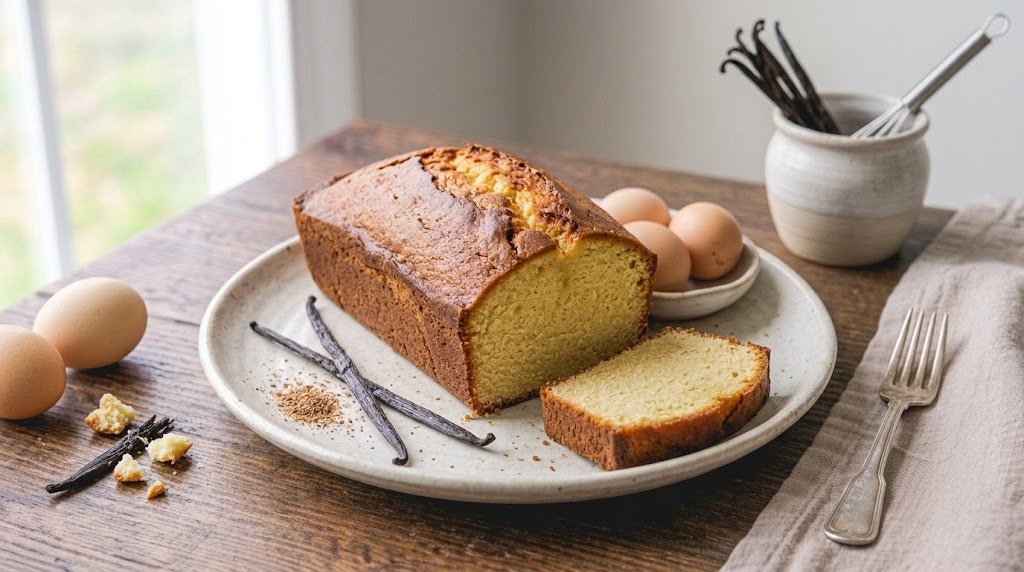
This vanilla pound cake is a rich butter loaf with a golden crust and a tender, close crumb. Unlike the earliest equal-weight pound cakes, this version includes milk and baking powder and uses a generous amount of sugar. Cream the softened butter and sugar first, then incorporate the eggs and alternate the flour with milk. The recipe is intended to make ten slices. Use a deep 23 × 13 cm loaf pan and check its capacity before filling; allow the cake to cool completely before slicing.
A pound cake should be rich and evenly baked rather than wet or greasy in the middle. This version keeps the existing sweet butter-and-milk formula, with practical guidance on creaming and pan capacity. The recipe is intended for ten slices, with about 20 minutes preparation, 60–75 minutes baking and approximately an hour cooling. Check the pan capacity and centre rather than relying on a fixed timer.
Choosing and measuring ingredients
Traditional pound cake takes its name from an equal-weight formula of flour, sugar, butter and eggs. This version adds milk and baking powder and contains more sugar than flour by weight. The existing proportions are retained; they should be tested in the specified pan before assuming an exact bake time. Use unsalted butter, large eggs and plain flour. Weigh both flour and sugar, because cup measurements vary. The milk helps loosen the batter and vanilla supplies the principal flavour.
Recipe card
Vanilla Butter Pound Cake in a Loaf Pan
20 minutes prep, check after 50 minutes and allow about 60–75 minutes or longer if needed; allow approximately 1 hour cooling. Original formula is high in sugar and requires a kitchen test to confirm exact bake time and pan capacity.
Equipment: Deep 23 × 13 cm (9 × 5-inch) loaf pan, parchment, kitchen scale, bowls, electric mixer, spatula, skewer, wire rack, optional muffin tin for excess batter
Ingredients
Cake batter
Instructions
Prepare the loaf pan
Preheat conventional oven to 180°C (350°F). Grease and line a deep 23 × 13 cm (9 × 5-inch) loaf pan with parchment. Have a lined muffin tin ready if necessary; do not fill the loaf pan beyond two-thirds of its depth.
Cream butter and sugar
Beat softened butter until smooth, then gradually add sugar. Beat at medium speed for 3–4 minutes until noticeably lighter and aerated, scraping the bowl. Avoid using melted butter.
Incorporate the eggs
Beat in eggs one at a time, mixing until each is incorporated, then add vanilla. If the mixture starts to curdle, add a spoonful of the measured flour and mix gently.
Alternate flour with milk
Whisk flour, baking powder and salt separately. Add in three portions, alternating with milk and beginning and ending with flour. Mix on low speed or fold just until no dry streaks remain. Do not taste raw batter.
Bake and cool completely
Transfer batter to the prepared pan, stopping at two-thirds full. Bake any excess separately in muffin cups, checking those much earlier. Bake loaf, checking at 50 minutes; allow about 60–75 minutes or longer if needed until golden, centre springs back and a skewer inserted deeply emerges without wet batter. Tent loosely with foil if darkening too soon. Cool in pan 15 minutes, then transfer to a rack until completely cool.
How to cream butter and sugar correctly
Butter should yield under gentle pressure but should not look oily. Beat it with sugar until the mixture appears lighter and fluffier. This incorporates air before baking, as explained in King Arthur Baking’s creaming guide. Add eggs individually so the mixture can emulsify. Alternate milk and flour, then stop mixing as soon as the flour disappears. Excessive mixing can develop gluten and create a dense loaf.
Pan capacity and doneness
Choose a deep metal loaf pan. Pan depths vary even when their length and width are the same, and the original batter is substantial. Fill no more than about two-thirds; bake any excess in muffin cups. See baking pan size guidance for why capacity matters. Begin checking at 50 minutes. The top may crack naturally. Use a long skewer to check the centre, looking for a golden crust and no wet batter. Tent with foil if the sweet crust darkens before the middle cooks. Cool in the pan briefly, then on a rack.
Troubleshooting
Greasy streaks may indicate butter was too warm or the batter curdled. A sunken centre can mean underbaking or overfilling. Dry edges with a wet middle indicate a deep batter or excessive surface heat. Do not reduce the sugar arbitrarily; changing its quantity affects several aspects of the cake and needs testing.
Serving and variations
Enjoy plain slices, or add citrus zest to the batter for another flavour. Serve berries or cream separately. For alternative loaf formulas, see sour cream pound cake, vanilla kefir pound cake or cottage cheese and kefir loaf cake.
Storage and allergens
Cool completely and wrap tightly. Store plain, unfrosted cake in a cool room for up to 2–3 days, or refrigerate for up to 5 days. Freeze wrapped slices for up to 2 months for best quality. Refrigerate any cream or custard toppings separately. Contains wheat, eggs and milk. Do not wrap a warm loaf tightly, as trapped condensation softens the crust. See cake storage guidance for plain versus cream-filled cakes.
Slice after cooling for the neatest crumb.
Frequently asked questions
Why is my pound cake dense?
Butter that is too cold or melted, insufficient creaming and overmixing flour can all affect the crumb.
Why does the top crack?
A central crack is common as loaf cake expands and its surface sets. Check that the interior is cooked.
Can I reduce the sugar?
Sugar affects browning, tenderness and structure. The original amount is relatively high; a reduced-sugar version needs a separate kitchen test.
How full should my loaf pan be?
No more than about two-thirds. Bake excess batter separately rather than risking overflow.
Why is the middle wet while the crust is brown?
The deep loaf may need longer. Shield the top loosely with foil and continue until no raw batter remains.
Can I freeze pound cake?
Yes. Wrap completely cooled slices individually and freeze for up to two months for best quality.
More recipes to try






Spotted a detail that needs correcting? Contact the FeastDelights editors.