Thin Water Pancakes with Eggs (1 Litre Recipe)
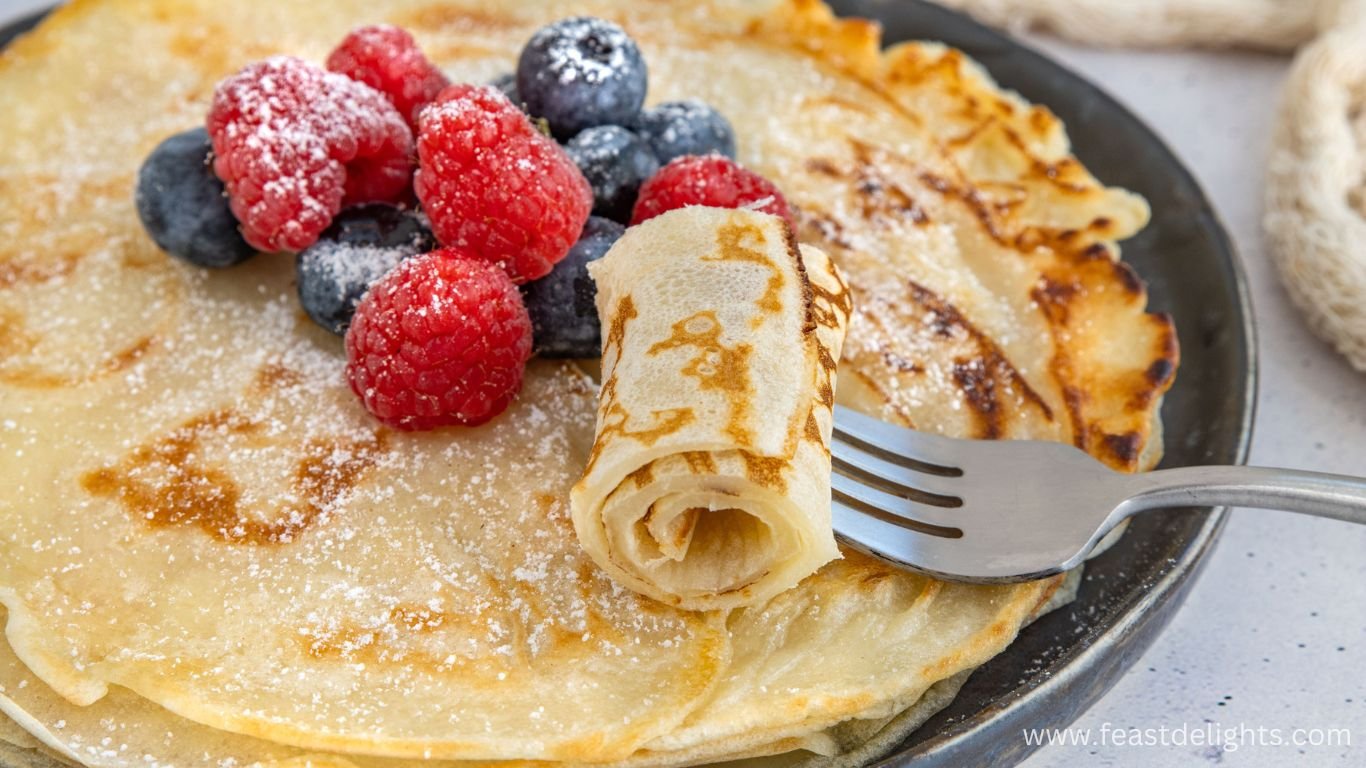
These thin water pancakes are flexible, crêpe-like rounds made with a full litre of water instead of milk, two eggs, flour and a little oil. They have a mild flavour and lightly golden surfaces that suit sweet or savoury fillings. Rest the batter before cooking, swirl a small ladleful around a 24 cm skillet and turn each pancake when the surface is set. The batch makes approximately 18–22 pancakes, depending on pan size and batter thickness. Serve them warm, roll them around a filling or freeze the cooled stack.
Thin water pancakes are flat, flexible pancakes similar to crêpes, made with water rather than milk. This one-litre batch uses 400 g flour and two eggs to produce approximately 18–22 pancakes. Allow about 80 minutes including a 20-minute batter rest and cooking the pancakes one at a time. They are not thick, fluffy breakfast pancakes: the batter should spread into a thin film and cook into a round that can be folded or rolled without breaking.
For a milk-based version, see thin milk blini. Our sparkling mineral-water pancakes use a different liquid, while fluffy egg-free water pancakes are a separate style.
Ingredient roles and equipment
Water is the main liquid, so the pancakes have a lighter flavour than milk-based versions. Eggs help bind the thin batter and set its structure during cooking. Use all-purpose flour and weigh the 400 g; adding too much flour produces thick rounds that resist swirling. The measured sugar is mild enough for many fillings, although it can be reduced for a savoury meal. Salt gives balance. Neutral oil in the batter improves handling; reserve the last tablespoon for lightly greasing the skillet. Optional vanilla sugar is best for sweet toppings.
Choose a large bowl, whisk, ladle, 24 cm nonstick or well-seasoned skillet, thin spatula and plate. A broad, flat skillet makes it easier to spread the batter in a thin layer. Mix the flour into part of the water first; a slightly thicker mixture is easier to whisk smooth before thinning with the remaining measured water.
Recipe card
Thin Water Pancakes with Eggs (1 Litre Recipe)
Rest for 20 minutes; cook 1–2 minutes per pancake plus time for pouring and turning. Yield varies with pan and ladle.
Equipment: Large mixing bowl, whisk, ladle, 24 cm skillet, thin spatula, plate and clean towel.
Ingredients
Batter and pan
Instructions
Whisk the liquid ingredients
Whisk the eggs with sugar, salt and about half the litre of water in a large bowl. Add optional vanilla sugar if making sweet pancakes.
Add flour and rest the batter
Gradually whisk in the flour until no dry lumps remain. Add the remaining water in stages, whisking to a smooth, thin batter. Stir in 30 ml (2 tbsp) neutral oil. Cover and refrigerate for 20 minutes to hydrate the flour.
Check the pouring consistency
Stir the rested batter gently. It should pour easily from a ladle and spread across a tilted pan. If too thick, add water 1 tablespoon at a time; if the first cooked pancake repeatedly tears despite correct heat and full cooking, whisk in a tablespoon of flour at a time and rest briefly.
Swirl and cook the first side
Heat a 24 cm (9½ inch) nonstick or seasoned skillet over medium heat. Wipe the surface with a little of the remaining oil. Add about 60–75 ml (¼ cup to 5 tbsp) batter and immediately tilt the pan to coat the base thinly. Cook about 1 minute, until the top loses its wet shine and edges lift easily.
Turn, cook and stack
Slide a thin spatula under the pancake, turn gently and cook the other side for 30–45 seconds until set with pale golden spots. Transfer to a plate and cover loosely with a clean towel. Stir the batter periodically and repeat, lightly oiling the pan only as needed.
How to judge the batter and pan temperature
Resting allows the flour to hydrate and makes the batter easier to handle. The batter should flow freely off the ladle rather than falling in thick ribbons. Stir gently before cooking and occasionally between pancakes because flour can settle. Do not taste raw batter; cook a small test pancake instead. If the pancake is too thick, reduce the amount in the ladle or add a little water. If it tears despite a fully set surface and an adequately heated pan, add a spoonful of flour and rest briefly.
Preheat the skillet over medium heat and wipe it with a thin film of oil. Pour the batter into the centre and immediately lift and tilt the pan in a circular motion. If the batter sets before reaching the edges, the pan may be too hot or the batter too thick. If it sits wet for a long time without setting, increase the heat slightly. Adjust after the first pancake rather than repeatedly changing the entire batter.
Flipping, stacking and troubleshooting
Wait until the surface has lost its wet shine and the rim releases from the skillet. Slide a thin spatula beneath the pancake, lift and turn it in one movement. The second side needs less time. Do not insist on a dark colour: pale golden spots and fully set batter are enough. If pancakes stick, clean away any cooked residue, restore a light oil film and allow the pan to heat evenly. Too much oil can create uneven patches.
Stack warm pancakes and cover loosely with a clean towel. This traps enough moisture to soften the edges without leaving them soaking wet. For filled pancakes, cool slightly before adding delicate fillings. The number of rounds depends on the amount used per ladle and the actual diameter of the pan.
Sweet and savoury serving ideas
Spread with jam or add berries and yogurt if dairy is suitable. For savoury pancakes, omit vanilla and fill with cheese, herbs or cooked vegetables. Use our turkey and mushroom nalesniki for another filled crêpe approach. A little butter between warm pancakes is optional and adds dairy. Choose dairy-free fillings if that matters.
Make ahead, storage and allergens
Keep raw egg batter covered and refrigerated, and cook within 24 hours. Cool cooked pancakes promptly and refrigerate within two hours, or one hour above 32°C (90°F), at 4°C (40°F) or colder. Use within three days. Reheat leftovers until 74°C (165°F) throughout, or freeze cooled pancakes with parchment between them for up to two months for best quality. Thaw in the refrigerator. This recipe contains wheat and egg; milk is not included in the batter. Check fillings and cross-contact. Avoid eating raw batter, consistent with CDC food safety guidance.
Editorial note: the original litre of water and ingredient amounts are retained. The cooking allowance now accounts for a full skillet batch; actual yield and time depend on ladle size.
Frequently asked questions
Can I make these pancakes without milk?
Yes. This recipe uses water, not milk. Eggs provide binding; check toppings and oil labels if avoiding dairy.
Why do the pancakes tear when flipped?
Wait until the surface sets and the edges lift. If properly cooked pancakes still tear, add a little flour, rest again and use a slightly smaller ladleful.
Why is the first pancake often uneven?
The pan may not yet be evenly heated or the oil may be unevenly distributed. Adjust heat and batter quantity after the first pancake.
Can I make them without eggs?
Not by simply omitting the eggs from this formula. Choose a recipe developed for egg-free batter.
Can I use sparkling water?
You can use sparkling water for part of the liquid, but the texture may change. For a more distinct lacy pancake, choose a mineral-water recipe.
How do I keep pancakes soft for rolling?
Cook only until set, avoid excessive heat and stack under a clean towel so the edges do not dry out.
Can I halve the recipe?
Yes. Use 500 ml water, one egg, 200 g flour and half the remaining ingredients. Pan size and cooking time per pancake stay similar.
More recipes to try


Spotted a detail that needs correcting? Contact the FeastDelights editors.