Thin Milk Blini Recipe for Soft, Flexible Pancakes
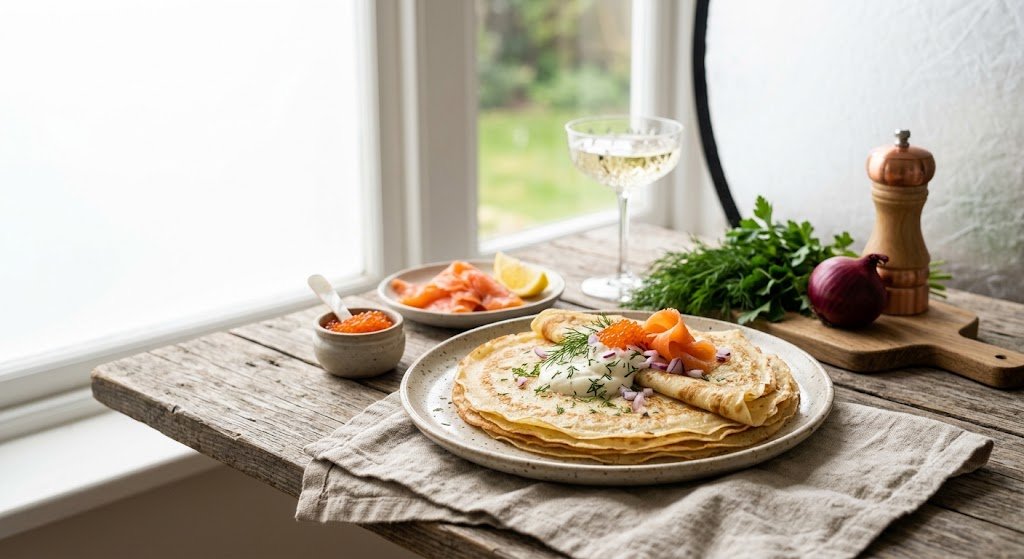
These thin milk blini are soft, flexible Eastern European-style pancakes made with milk, eggs, flour and a little sugar. Cook each ladleful in a lightly oiled skillet until the surface sets and the underside develops golden spots. A 25-minute rest helps the flour hydrate and makes the batter easier to spread. The recipe makes about twelve pancakes, depending on pan size and thickness. Serve them folded with sour cream and jam, rolled around cooked mushrooms, or stacked with fresh berries for breakfast.
Thin milk blini are delicate skillet pancakes with a mild, lightly sweet flavour and soft surfaces that fold easily. This recipe makes about twelve using 500 ml milk, eggs and two cups of flour. Allow approximately 70 minutes including the 25-minute batter rest. Unlike small, thick cocktail blini, these are broad, flexible rounds intended for folding or rolling around fillings.
For a milk-free batter, see our thin water pancakes with eggs. The sparkling mineral-water pancakes offer a different texture.
Ingredients and equipment
Plain milk gives these blini a richer flavour and encourages light browning. Eggs bind the batter and help it set, while all-purpose flour provides enough structure to lift a cooked pancake without tearing. Two cups of spooned and levelled flour correspond approximately to 240 g, although cup measurements vary. Use a scale when practical. The sugar gives a gentle sweetness; reduce it for savoury fillings. The measured vegetable oil is for lightly coating the skillet, not deep-frying.
Use a mixing bowl, whisk, ladle, 22–24 cm nonstick or well-seasoned skillet, flexible spatula and plate. A thin spatula helps release the pancake without scratching a nonstick pan. Prepare a clean towel for the finished stack.
Recipe card
Thin Milk Blini Recipe for Soft, Flexible Pancakes
Rest 25 minutes. Cook each pancake until set on both sides; total cooking time depends on pan size and heat.
Equipment: Mixing bowl, whisk, ladle, 22–24 cm skillet, flexible spatula, plate and clean towel.
Ingredients
Batter
For the skillet
Instructions
Whisk a smooth milk batter
Whisk eggs, sugar and salt with about half the milk. Gradually add the flour, whisking until smooth. Whisk in the remaining milk in stages to make a pourable batter. Scrape the bottom of the bowl to check for dry flour.
Rest the batter
Cover and refrigerate for 25 minutes. Stir gently after resting; if the batter is too thick to spread easily, add milk one tablespoon at a time.
Preheat and lightly oil the skillet
Heat a 22–24 cm (9-inch) nonstick or seasoned skillet over medium heat. Wipe with a small amount of the measured oil. Avoid leaving a pool of oil in the pan.
Swirl, set and turn each blin
Pour in roughly 45–60 ml (3–4 tbsp) batter and tilt the skillet immediately to coat the base. Cook until the top loses its wet shine and the edges release, about 1–2 minutes. Slide a spatula underneath and turn. Cook the second side until set and lightly spotted, about 30–60 seconds or longer if needed.
Stack and serve
Transfer to a plate and cover loosely with a clean towel. Stir the batter periodically and repeat, using the remaining oil sparingly. Serve warm or cool promptly for storage.
How to get a smooth, spreadable batter
Start by whisking flour into the eggs and part of the milk. This creates a thicker mixture in which lumps are easier to break up. Then add the remaining milk gradually. Rest the covered batter in the refrigerator for 25 minutes so the flour hydrates. It should flow easily off a ladle and spread when the skillet is tilted. If the mixture seems thick after resting, add a tablespoon of milk at a time rather than pouring in a large amount.
Cooking thin blini without tearing
Heat the skillet over medium heat and wipe it with a little oil. Add enough batter to form a thin layer, lifting and tilting the pan immediately. The first pancake is a useful test: if it sets before reaching the sides, reduce the heat slightly or thin the batter. If it stays wet and sticks, let the pan heat a little longer. Wait until the top is no longer glossy and the edges lift easily before turning.
Cook the other side until it is fully set, with small golden spots. Avoid cooking until dark and crisp if you intend to roll the pancakes. Stack under a clean towel so the edges remain soft. Stir the batter periodically and adjust the ladle size to suit the pan.
Sweet and savoury fillings
Fold warm blini with jam and sour cream, or add berries and a thick yogurt topping. For savoury servings, reduce the sugar and roll around cooked, well-drained mushrooms. Our turkey and mushroom nalesniki illustrate a filled pancake meal. For a sweet variation, see crêpes with Greek yogurt cream. Avoid adding a hot, watery filling to a thin pancake, as it can make the wrapper fragile.
Make ahead, refrigerate or freeze
Keep raw milk and egg batter refrigerated and cook within 24 hours. Do not taste uncooked flour or egg batter. Cool cooked blini promptly and refrigerate within two hours, or one hour above 32°C (90°F), at 4°C (40°F) or colder. Use within three days. Reheat leftovers to 74°C (165°F), or freeze plain cooled pancakes in a stack separated by parchment for up to two months for best texture. Thaw in the refrigerator. Filled pancakes may have shorter storage requirements.
The recipe contains wheat, milk and eggs. Check fillings and cross-contact for allergy concerns. The original ingredient proportions and 25-minute rest are retained; the yield depends on the thickness and diameter of each pancake.
Frequently asked questions
What are blini?
Blini are pancakes associated with Eastern European cooking. They may be thin and flexible or thicker and yeast-raised; this is a thin milk-based version without yeast.
Can I make the batter with water?
Yes, but the flavour and browning change. Use our separate one-litre water pancake recipe for a water-based formula.
Why do my blini tear?
The batter may be too thin, the pan may be insufficiently heated or the first side may still be wet. Let the pancake set before turning; adjust the batter only after testing.
How can I prevent lumps?
Mix the flour with eggs and part of the milk first, then gradually whisk in the remaining liquid. Pass through a sieve if necessary.
How do I make savoury blini?
Reduce the sugar if desired and serve with cooked mushrooms, cheese or herbs. Keep fillings thick enough to roll without leaking.
Can I prepare the batter in advance?
Cover and refrigerate for up to 24 hours, stir before cooking, and cook the egg and flour batter thoroughly.
Why are the edges dry?
Excessive heat or prolonged cooking can dry the thin edges. Reduce heat slightly and stack finished pancakes under a clean towel.
More recipes to try




Spotted a detail that needs correcting? Contact the FeastDelights editors.