Opera-Inspired Coffee Chocolate Almond Layer Cake
This Opera-inspired cake combines a rich chocolate-almond sponge, a coffee soaking syrup and a cocoa butter filling. Unlike classical French Opéra, it uses one baked almond sponge divided into layers instead of separate thin joconde sheets, ganache and coffee buttercream. Allow the sponge to cool completely before splitting it, brush the layers lightly with coffee syrup and chill the assembled cake until firm. The original formula makes about ten small slices. Its rich almond crumb and relatively butter-heavy filling are best served in modest portions.
This Opera-inspired coffee chocolate almond cake layers a chocolate-almond sponge with coffee syrup and a rich cocoa butter filling. The recipe makes ten small slices and takes about 3 hours 15 minutes, including cooling and chilling. It preserves the original ingredient proportions while clarifying the assembly method.
How this cake differs from classical Opéra
Traditional French Opéra combines thin almond joconde, coffee syrup, coffee buttercream and chocolate ganache. The Royal Collection Trust’s Gâteau Opéra recipe illustrates that layered construction. Here, melted chocolate goes into a single almond sponge, and a simple butter and cocoa mixture supplies the filling. The result is a related flavour combination, not a classical pastry formula.
Understanding the ingredients
Finely ground almond flour supplies both structure and richness. This cake has no added wheat flour or chemical raising agent, so the air whisked into the eggs is important. Almond flour does not behave like wheat flour; expect a moist, relatively dense crumb rather than the height of a conventional sponge. Use dark chocolate that melts smoothly and cool it until fluid but no longer hot before folding it into the batter.
Brew the coffee to your preferred drinking strength, then dissolve the measured 50 g sugar in it. The original glaze sugar allocation of 150 g is split between syrup and filling. Preserve the remaining 100 g for the butter filling, but use finely powdered icing sugar by weight rather than coarse granulated sugar to reduce graininess. This is a texture correction; the total sugar allocation is unchanged. The high butter-to-sugar ratio produces a rich filling rather than a stiff American-style buttercream.
Preparing the almond sponge
A lined 20 cm (8 inch) pan is a practical starting point, not a kitchen-tested size for this particular formula. Whisk whole eggs and the sponge sugar until the mixture is thick, pale and leaves a visible ribbon on the surface for several seconds. Fold in the almond flour and vanilla gently. Stir a small portion of the egg mixture into the cooled melted chocolate to lighten it, then fold back into the remaining batter. Avoid vigorous mixing that releases the trapped air.
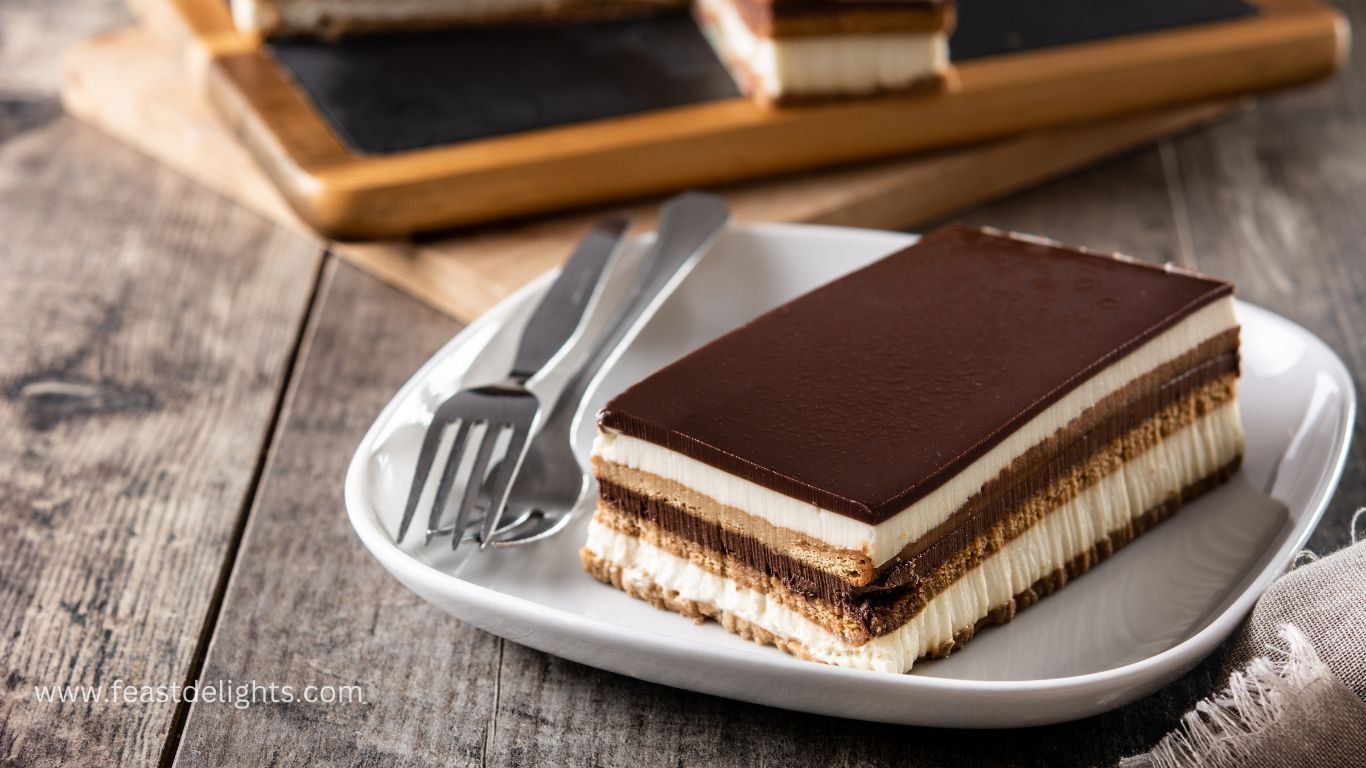
Recipe card
Opera-Inspired Coffee Chocolate Almond Layer Cake
Allow roughly 60 minutes to cool the sponge and 60 minutes to chill the assembled cake; a deeper sponge or a warm kitchen can require longer.
Equipment: Kitchen scale, electric mixer, mixing bowls, heatproof bowl, saucepan, spatula, parchment, approximately 20 cm (8 inch) round cake pan, cooling rack, serrated knife and pastry brush.
Ingredients
Almond sponge
Coffee syrup
Cocoa butter filling
Instructions
Whisk, fold and bake the sponge
Preheat the oven to 180°C (350°F). Line a roughly 20 cm round pan. Whisk eggs and 200 g sponge sugar to a thick ribbon. Fold in almond flour and vanilla sugar; lighten the cooled melted chocolate with a little batter, then fold it in gently. Bake 25–30 minutes, until set with no wet batter on a tester. Cool fully.
Prepare the coffee syrup
Warm brewed coffee with 50 g sugar, stirring until dissolved. Cool before use.
Beat the cocoa filling
Beat softened butter until smooth. Gradually add the 100 g sifted icing sugar and cocoa, then beat until combined and spreadable.
Split and assemble
Use a serrated knife to split the fully cooled sponge into two layers, or three only if sufficiently tall and stable. Brush the cut surfaces lightly with coffee syrup; use only as much as the sponge absorbs without becoming soggy. Spread filling between layers.
Chill and slice
Spread the remaining filling on top. Refrigerate until firm, about 60 minutes or longer, and cut into ten small slices. Keep leftovers cold.
Baking, splitting and assembling
Bake at 180°C (350°F) until the centre is set and a tester does not carry wet batter. Let the sponge rest briefly in the pan and cool fully on a rack. Almond sponges can be fragile, so assess the height before attempting to cut. Two layers are the safer starting point; split into three only if the cake is tall and strong enough. If the sponge is too thin or crumbles, keep it as one layer, brush lightly with syrup and spread filling over the top.
Brush each cut surface with cooled coffee syrup in thin applications, allowing it to absorb before deciding whether more is necessary. The measured syrup may not all be needed, depending on sponge thickness. Do not pour it over the cake. Beat softened butter until smooth and gradually add sifted icing sugar and cocoa. Spread a thin layer on the bottom sponge and add the upper layer. Use the remaining filling for the top. Refrigerate until stable enough to cut.
Troubleshooting
Flat sponge: The eggs may not have been whisked enough, or the foam may have collapsed during folding. Some compactness is normal for this formula. Crumbly cake: Cool fully and use a long serrated knife; do not force three layers. Soggy sponge: Apply less syrup and allow each brushing to absorb. Grainy filling: Use finely powdered sugar and sift it before adding. Greasy filling: Butter may be too warm. Chill briefly until pliable, then beat gently.
Variations, serving and allergens
Use decaffeinated coffee if desired. A light dusting of unsweetened cocoa can finish the top. Serve with berries or unsweetened coffee to balance the richness. This recipe contains almonds (tree nuts), eggs and milk; chocolate may also contain soy or milk and cross-contact warnings. Although the formula lists no wheat flour, verify all ingredients and equipment before serving someone with a gluten-related condition. Almond flour is not directly replaceable with wheat flour.
Make ahead and storage
Prepare the sponge and syrup in advance if needed; cool and cover separately. Refrigerate the assembled cake at 4°C (40°F) or below for up to three days. Allow only the serving portions to soften briefly and return leftovers within two hours, or one hour above 32°C (90°F). This filling has not been tested for shelf stability. Freezing the bare sponge is preferable to freezing the assembled cake because the filling texture may change.
Related recipes
For a more conventional chocolate layer cake, try two-layer chocolate cake. See chocolate cream cheese frosting or Italian meringue buttercream for separate frosting techniques.
Frequently asked questions
Is this a classical French Opéra cake?
No. It is an adaptation with a chocolate almond sponge and cocoa butter filling rather than separate joconde, coffee buttercream and ganache.
Do I need all the syrup?
Not necessarily. Brush gradually and stop before the sponge becomes saturated.
Can I bake the sponge the day before?
Yes. Cool it completely, cover and refrigerate before splitting and filling.
Can I use decaffeinated coffee?
Yes, replace the brewed coffee with the same volume of decaffeinated coffee.
Can I make three layers?
Only if the baked sponge is tall and firm enough. Two layers are easier to cut without breaking.
Can I omit almond flour?
No direct substitute is recommended. Changing the flour requires a different cake formula.
More recipes to try






Spotted a detail that needs correcting? Contact the FeastDelights editors.