Homemade Egg Noodles Recipe with Three Ingredients
Homemade egg noodles need flour, eggs and salt, with a little water only if the dough feels too dry. Kneading and a covered rest make the firm dough easier to roll. Cut it into thin ribbons and boil them until tender with a slight chew. This recipe serves four and takes about 70 minutes including a 30-minute rest. Use the noodles in soup, with butter or with sauce. Cook them fresh, refrigerate promptly or freeze rather than relying on uncontrolled room-temperature drying.
Homemade egg noodles are a useful alternative to dried pasta when you want a fresh, tender ribbon for broth or sauce. The dough is deliberately firm, so it can be rolled thinly without sticking. Egg size and flour absorption vary; use the optional water only if kneading does not bring the dough together.
Working with the firm dough
At first the dough may look shaggy. Knead before adding water because flour continues to absorb egg. Too much water makes the dough difficult to roll and cut. Keep the unused portion covered so it does not form a dry skin.
Rolling without sticking
A short rest relaxes the dough and makes the sheet less likely to spring back. Dust the surface lightly; too much flour will leave a dusty coating and make the cooking water cloudy. Roll from the centre outward and turn the sheet periodically.
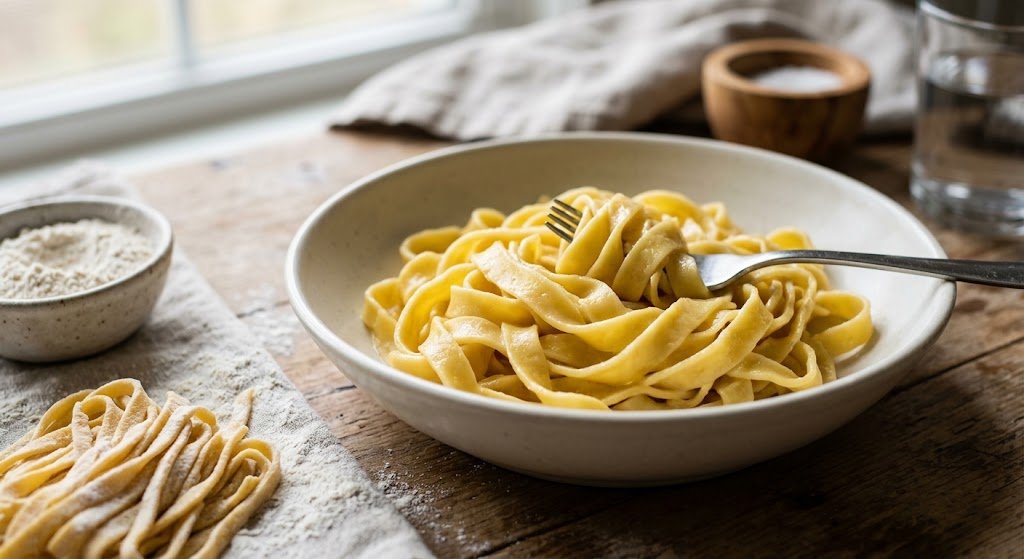
Recipe card
Homemade Egg Noodles Recipe with Three Ingredients
Allow 30 minutes covered dough rest; thin noodles usually cook in 2–4 minutes once water boils.
Equipment: Scale, mixing bowl, fork, rolling pin or pasta machine, sharp knife, large saucepan, colander
Ingredients
Main ingredients
Instructions
Mix the dough
Place 250 g flour in a bowl or on a clean surface. Make a well, add 3 large eggs and ½ tsp salt, and mix with a fork while drawing flour into the centre.
Knead and rest
Knead for 8–10 minutes until smooth and firm. If dry crumbs will not incorporate, add water by the teaspoon, up to 1 tbsp. Wrap and rest 30 minutes.
Roll thinly
Divide into two portions. Keep one covered while rolling the other on a lightly floured surface to 1–2 mm. With a pasta machine, begin at its widest setting and reduce the gap gradually.
Cut the noodles
Dust the sheet lightly, fold or roll loosely and cut into 5 mm strips. Shake apart immediately and dust sparingly with flour. Repeat with the second portion.
Boil and check
Cook in a large pot of boiling salted water for 2–4 minutes, stirring after adding. Check a noodle: it should be tender with no raw floury centre. Never taste raw dough.
Drain and serve
Drain promptly and toss with the intended sauce, or add the cooked noodles to hot soup. Refrigerate or freeze any uncooked portion promptly.
Cooking and troubleshooting
Fresh noodles cook much faster than dried ones. If they clump, separate the ribbons before boiling and stir immediately after adding. Thicker strips need a little longer; a noodle should be cooked through rather than merely floating.
Serving and safe make-ahead
Use the noodles in chicken or vegetable broth, or toss with butter and herbs. If freezing, arrange floured nests separately on a tray, freeze promptly and transfer to a freezer bag. Illinois Extension guidance on homemade noodles cautions against extended room-temperature drying. The recipe contains wheat and eggs.
Storage and make-ahead
Refrigerate uncooked noodles promptly in a covered container at 4°C/40°F or below; use within 1 day or freeze loose nests up to 2 months for quality. Do not dry raw egg noodles at room temperature for pantry storage. Refrigerate cooked noodles within 2 hours (1 hour above 32°C/90°F), use within 3 days and reheat to 74°C/165°F.
Frequently asked questions
Do I need a pasta machine?
No. A rolling pin and sharp knife work for these ribbons.
Why does the dough shrink when rolled?
Cover and rest it a little longer to relax the gluten.
Can I make wider noodles?
Yes, cut wider strips; check their thickness and doneness as they cook.
Why are my noodles sticking?
Dust the sheets lightly and separate strips immediately after cutting.
Can I cook frozen noodles directly?
Yes, add them to boiling water in small portions and cook until tender throughout.
Can I make the dough without eggs?
Not with this ratio; an egg-free noodle dough needs a different formula.
More recipes to try






Spotted a detail that needs correcting? Contact the FeastDelights editors.