Oven-Baked Mackerel with Lemon
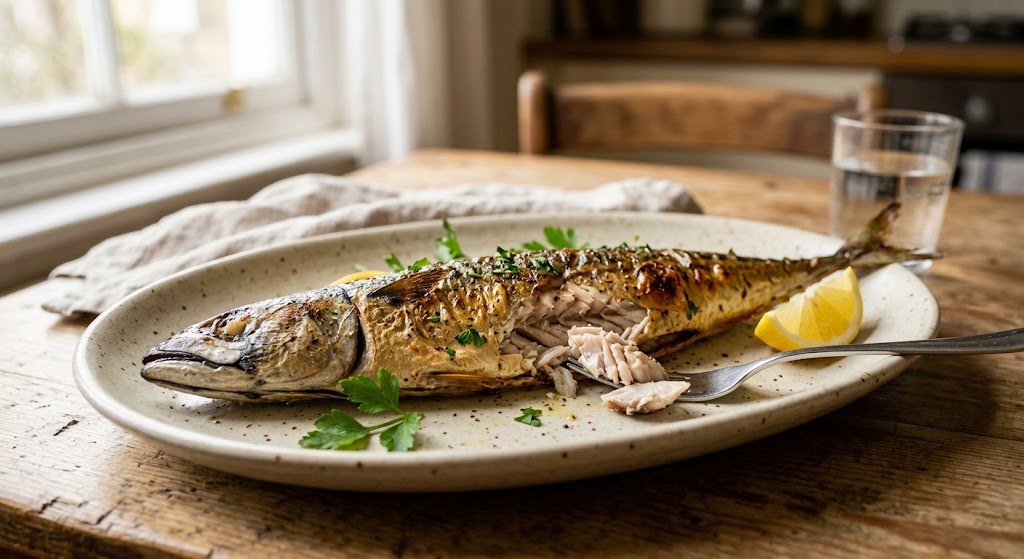
Whole mackerel roasts with lemon slices, olive oil and black pepper until the skin is lightly golden and the flesh flakes away from the bone. Fresh parsley adds colour and a bright herbal note, while the lemon balances the naturally rich taste of this oily fish. The recipe serves two in about 40 minutes and uses a single baking dish. Choose properly chilled Atlantic mackerel of similar size and roast until the thickest part reaches 63°C (145°F). Serve hot with potatoes or a crisp salad.
Oven-baked mackerel with lemon is a simple way to cook whole fish with rich, tender flesh and lightly browned skin. Two cleaned mackerel make two servings with lemon, olive oil, salt, pepper and parsley. Allow about 40 minutes for preparation and roasting; larger fish may need longer. Check the thickest part with a thermometer rather than relying only on the clock.
Choosing fresh mackerel
Use two cleaned whole Atlantic mackerel of similar size. Buy from a reputable supplier that keeps fish properly chilled. Mackerel can develop histamine if mishandled, and cooking or freezing will not remove it once formed. See the FDA histamine guidance. Transport fish cold and keep refrigerated until cooking. Atlantic mackerel differs from king mackerel, a high-mercury species; follow FDA pregnancy seafood advice and check local recommendations.
One sliced lemon, two tablespoons (30 ml) olive oil and simple salt and pepper are enough for this rich fish. Parsley adds freshness at the end. If the fish are small, adjust the roasting time rather than increasing seasoning.
Recipe card
Oven-Baked Mackerel with Lemon
Timing assumes two similar-sized cleaned fish. Check doneness earlier for small fish; the internal temperature determines readiness.
Equipment: Oven-safe baking dish, knife, separate cutting board for raw fish, paper towels, spatula, instant-read thermometer, oven mitts
Ingredients
Fish
Seasoning
To finish
Instructions
Prepare the fish and oven
Preheat the oven to 190°C (375°F). Ask the fishmonger to gut and clean two similar-sized Atlantic mackerel, or use properly cleaned fish. If frozen, thaw according to the package instructions in the refrigerator, removing vacuum packaging before thawing unless the label directs otherwise. Pat dry with paper towels and place in an oven-safe baking dish.
Season with lemon and oil
Season the fish inside and out with the measured salt and pepper. Divide the sliced lemon between the cavities and drizzle both fish with the olive oil.
Roast and check doneness
Roast uncovered for 25–30 minutes. Begin checking earlier for small fish. The flesh should be opaque and separate easily; insert a thermometer into the thickest part without touching the bone and cook to at least 63°C (145°F). Extend the time if necessary.
30 minFinish and serve
Scatter chopped parsley over the fish. Transfer with a spatula and serve hot, removing the backbone and checking for small bones before eating.
How to bake whole mackerel evenly
Pat the cleaned fish dry so the skin roasts rather than steams. Use a dish with room around each fish and distribute the lemon slices between the cavities. Do not crowd or tightly fill the cavity. Roast at 190°C (375°F) and begin checking before the estimated end of cooking. The flesh should become opaque and separate readily from the backbone. Use a thermometer at the thickest part, avoiding contact with bone, and cook to 63°C (145°F). If the surface browns early, cover loosely while the centre finishes.
Serving and variations
Finish with parsley or dill. Serve with garlic and rosemary roasted potatoes, fresh cucumber salad or roasted vegetables with squash and peppers. Lift the flesh away from the bones with a fork and check for small bones, especially when serving children. This recipe contains fish; avoid cross-contact with other foods and utensils.
Make ahead and storage
Slice lemon and chop parsley ahead, keeping them separate from raw fish. Season just before baking for the freshest texture. Keep raw fish at 4°C (40°F) or colder and use within two days of purchase or freeze. Refrigerate cooked portions in shallow covered containers within two hours, or one hour above 32°C (90°F), and use within three days. Freeze cooked portions for up to two months for best quality; thaw in the refrigerator. Reheat gently to 74°C (165°F). Cooking and freezing cannot remove histamine already formed in mishandled mackerel.
Serve the hot mackerel with parsley and a little lemon from the cavity. Separate the flesh carefully from the backbone and check for small bones before eating.
Frequently asked questions
Can I bake mackerel from frozen?
For the stated timing, thaw it safely in the refrigerator first. Follow the package thawing directions and remove vacuum packaging before thawing unless directed otherwise.
How do I know mackerel is cooked?
Check the thickest part with a thermometer; it should reach 63°C (145°F), with opaque flesh that flakes easily.
Which kind of mackerel should I buy?
Atlantic mackerel is a suitable choice for this whole-fish recipe. King mackerel is a different, higher-mercury species that FDA guidance advises pregnant and breastfeeding people and young children to avoid.
Can I use fillets instead?
Yes, but they are thinner and generally cook much faster. Check their temperature early rather than using the whole-fish timing.
Why is my baked fish dry?
It may have cooked longer than necessary. Use similar-sized fish, start checking early and remove when the safe temperature is reached.
More recipes to try






Spotted a detail that needs correcting? Contact the FeastDelights editors.