Homemade Pork Liver and Offal Sausage
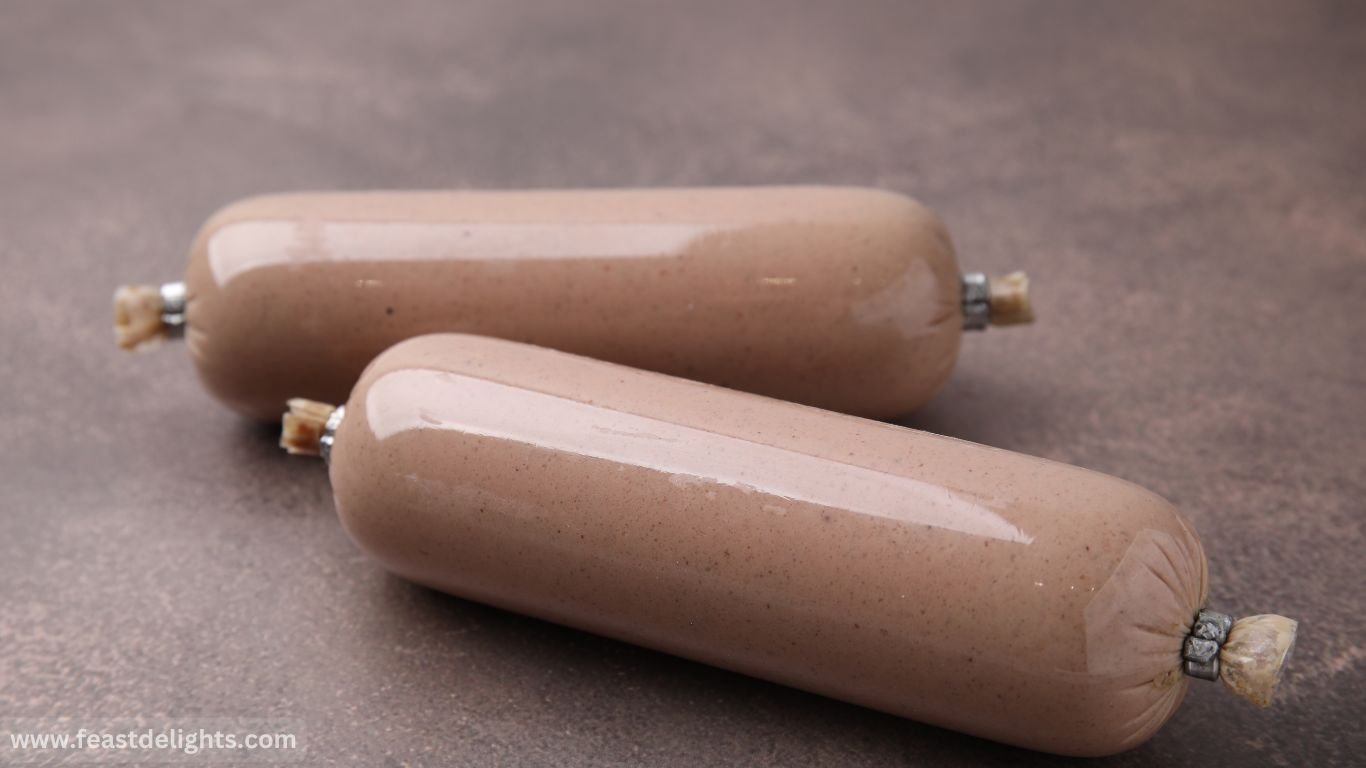
Homemade pork liver and offal sausage combines liver, heart and kidney with pork fat, softened vegetables, eggs and semolina. The organs are cooked separately, chilled, ground and packed into casings before a gentle final poach. The result should be rich, firm enough to slice and mildly garlicky. Allow about 4 hours 45 minutes including cooling before stuffing; a thermometer is essential. Serve warm with potatoes or chilled with mustard and rye bread. This is fresh cooked sausage, not a cured or shelf-stable product.
This Eastern European-style pork liver sausage uses 500 g each of liver, heart and kidney. Heart contributes a meaty texture, kidney has a stronger flavour and liver supplies richness. Eggs and semolina bind the mixture. The approximate finished yield is 2 kg, depending on trimming and cooking losses. Plan for several hours and keep the ingredients cold between cooking stages.
Choosing and preparing pork organs
Use fresh organs from a reliable butcher. Refrigerate them and cook or freeze within one to two days of purchase. Ask the butcher to remove tough ducts and connective tissue if necessary. Weigh the usable meat after trimming. Kidney has a more pronounced flavour than heart; separate cooking prevents its cooking liquid from dominating the mixture. Discard the cooking water.
Fresh food-grade casings need preparation according to their packaging. A grinder and stuffer help with this large batch. Keep a clean thermometer, shallow containers and separate boards for raw and cooked meat ready. Never put cooked organs on the board used for raw meat without washing it first.
Why the sausage is cooked twice
Precooking softens the organs so they can be ground. The second cook sets the binder and cooks the raw fat and eggs. The filling is not ready to eat after mixing, even though the organs are already cooked. The USDA guidance for ground pork sausage specifies 160°F; check the centre of several links. The colour of the meat or casing is not a reliable safety test.
Recipe card
Homemade Pork Liver and Offal Sausage
Cooling is an estimate; chill organs completely before grinding. Cooking varies with piece and link size.
Equipment: Scale, separate cutting boards, saucepans, grinder, sausage stuffer, instant-read thermometer, shallow containers
Ingredients
Organs and fat
Binder and seasoning
Cooking liquid
Casings
Cooking liquid
Instructions
Trim and cook the organs
Trim connective tissue and vessels from the heart, central white tissue from the kidney and visible ducts from the liver. Keep raw organs separate from cooked foods. Simmer heart and kidney separately in water with one bay leaf each until tender and at least 71.1°C/160°F at the centre; heart may need 60–90 minutes or longer. Cook the liver separately to at least 71.1°C/160°F. Check with a food thermometer.
Cool promptly
Drain the organs, cut into smaller pieces with clean utensils and spread in shallow containers. Refrigerate promptly at 4°C/40°F or colder until thoroughly chilled. Chill the pork fat and clean grinder parts.
Grind and soften vegetables
Grind the cold organs and 200 g pork fat through a medium plate. Finely chop 2 onions and grate 1 carrot; soften in a nonstick pan with a little water, then cool promptly. Keep the meat refrigerated.
Mix and check seasoning
Combine ground meat, vegetables, 3 minced garlic cloves, 100 g semolina, 2 eggs, 2 tsp salt and 1 tsp black pepper. Mix evenly. Cook a small sample to 71.1°C/160°F before tasting. Never taste raw filling.
Fill the casings
Prepare the 3 m of food-safe casing according to its instructions. Fill loosely, tie into short links and keep chilled until poaching. Work in batches if needed.
Poach and check the centre
Lower the links into gently simmering water. Avoid a rolling boil. Cook until a clean thermometer inserted into the centre of several thick links reads at least 71.1°C/160°F. Diameter determines cooking time. Serve or refrigerate promptly.
Texture and troubleshooting
A medium grinder plate gives a slightly coarse texture. Grind a second time for a finer result while the mixture remains cold. Warm fat smears rather than cutting cleanly. Semolina absorbs moisture during poaching, so avoid adding more simply because the uncooked filling seems soft.
If the filling appears dry, consider whether the organs were overcooked or ground too finely. Cook a small test patty before adjusting seasoning or consistency. Casings packed to their limit can burst as the mixture expands. Keep the poaching water below a rolling boil; vigorous bubbling can tear the casing.
Serving and make-ahead
Serve warm with boiled potatoes, mustard or cabbage and pea salad. Chilled links are easier to slice for rye bread. Cook the organs the same day or the day before stuffing and refrigerate promptly. Count storage time from the initial cook rather than restarting the clock after stuffing.
Storage and allergens
Refrigerate at 4°C/40°F or below within 2 hours (1 hour above 32°C/90°F). Use within 3 days of the initial organ cooking. Freeze portions up to 2 months for quality; thaw in the refrigerator and reheat leftovers to 74°C/165°F. Not shelf-stable. Contains wheat in the semolina and eggs. Check casing and ingredient labels if cooking for someone with an allergy.
Serve sliced with mustard or a sharp cabbage salad, and refrigerate the remaining links promptly.
Frequently asked questions
Can I use liver alone?
That changes the texture and flavour substantially. Keep the measured organ mixture for this version.
Why cook the organs separately?
Heart, kidney and liver cook at different rates; separate pans allow independent tenderness checks.
What if a casing splits?
Finish cooking the filling to 71.1°C/160°F and serve as a loose sausage mixture. Fill the next links less tightly.
Can I use a food processor?
Pulse small chilled batches. Avoid turning the mixture into a warm paste.
Is this cured sausage?
No. The recipe has no curing or preservation process.
Can it be eaten cold?
Yes, after the final poach and prompt refrigeration. Use clean utensils to slice.
More recipes to try






Spotted a detail that needs correcting? Contact the FeastDelights editors.