Lemon Meringue Pie with Tangy Lemon Filling
Lemon meringue pie pairs a crisp, blind-baked pastry shell with a smooth, tart lemon filling and a fluffy layer of golden meringue. Fresh juice and finely grated zest give the filling its bright flavour, while egg yolks, butter and cornstarch help it set. The three whites left from the yolks become the topping. Make this in a 23 cm (9-inch) pie dish for eight slices, and allow time for both cooling and chilling so the filling holds when cut.
The contrast between sharp lemon filling and sweet, airy meringue is the reason to make this pie. Prepare the equipment and separate the eggs before starting: the filling needs to be hot when the meringue goes on. Use a thermometer, not browning alone, to confirm the topping is cooked. This recipe makes eight slices from a 23 cm (9-inch) dish. Allow roughly 40 minutes to prepare, 45 minutes to cook and bake, plus about four hours to cool and chill.
Understanding the three layers
The pastry holds the filling, so it needs a head start in the oven. Baking it empty with weights is called blind baking: the weights support the sides and stop the base from puffing. Remove the weights to let the bottom dry before adding the filling. The finished crust should look matte rather than wet.
The filling is a cooked lemon custard thickened with cornstarch (cornflour in the UK). This is different from a curd thickened mainly with eggs and butter. Here the starch provides structure, the yolks add richness, and butter rounds out the sharp citrus taste. Whisk the starch into cold water and sugar before heating; adding it directly to hot liquid tends to create lumps. Use the specified amount of juice rather than guessing from the number of lemons.
The topping uses three egg whites and fine sugar. Even a trace of yolk or grease can interfere with whipping, so separate each egg into a small bowl before transferring the white to the mixer. Cream of tartar supports the foam as air is beaten in. Soft peaks bend at the tips; stiff peaks stand upright. Stop once the foam is glossy and holds its shape.
Prepare before the filling comes off the heat
Weigh the two separate amounts of sugar, zest the lemons before juicing and set out the butter and thermometer. Keep the yolks and whites refrigerated until needed. Have the crust ready and the mixer beside you. If another person is helping, they can whip the meringue as the filling finishes; otherwise work quickly with the prepared ingredients. The hot filling helps the bottom of the topping cook as the oven heats it from above.
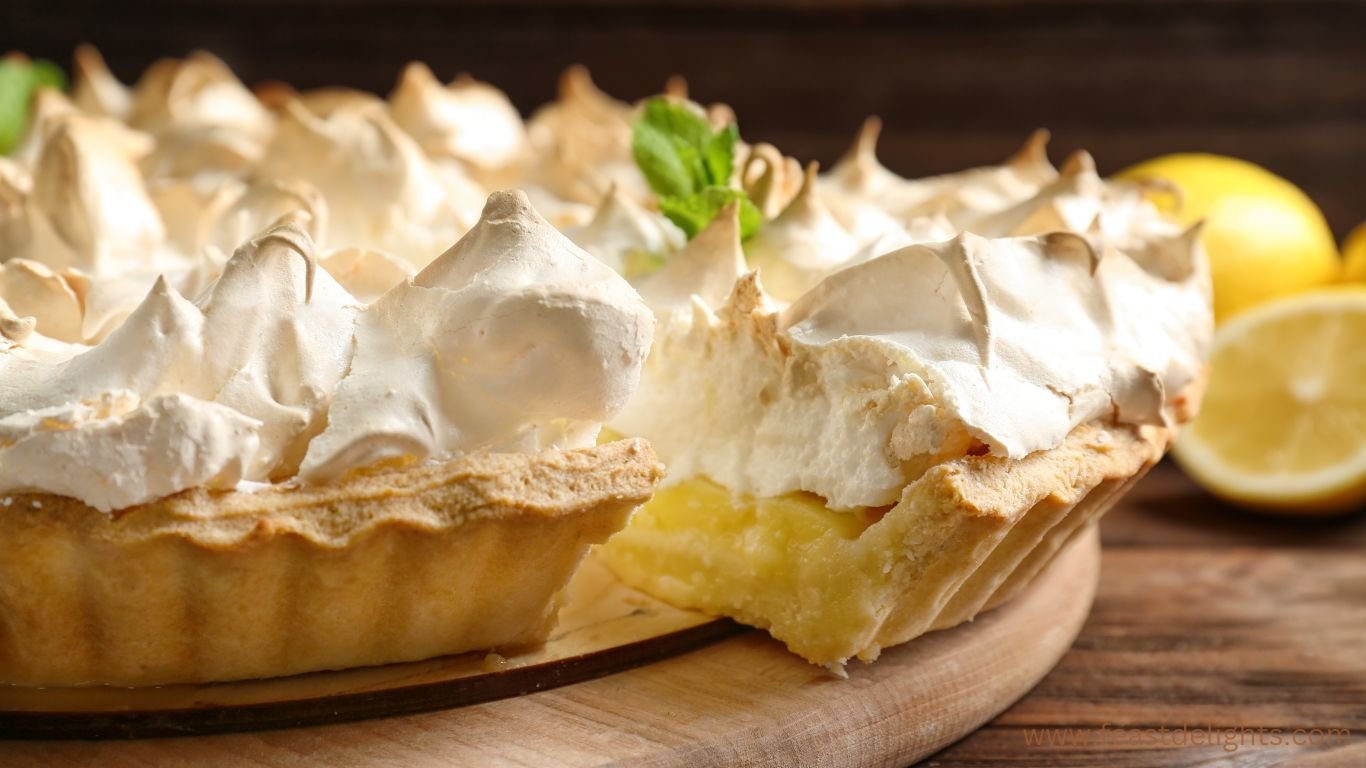
Recipe card
Lemon Meringue Pie with Tangy Lemon Filling
40 minutes preparation, about 45 minutes cooking and baking, about 4 hours cooling and chilling combined; actual chilling and cooking times vary.
Equipment: 23 cm (9-inch) pie dish, parchment, pie weights, saucepan, whisk, electric mixer, clean metal or glass bowl, fine grater, juicer, instant-read thermometer, wire rack
Ingredients
Pastry shell
Lemon filling
Meringue
Instructions
Blind-bake the pastry
Preheat conventional oven to 190°C (375°F). Fit crust into a 23 cm (9-inch) dish, line with parchment and fill with weights. Bake 15 minutes; remove parchment and weights and bake another 5–8 minutes or until the bottom is dry and lightly golden. Cool on a rack. Reduce oven to 180°C (350°F) for the topping.
Thicken the lemon filling base
Whisk 200 g sugar, cornstarch and water in a saucepan until smooth. Heat over medium heat, whisking along the bottom and corners until bubbling and thick; cook for 1 minute while whisking.
Temper the yolks and finish the filling
Whisk some hot starch mixture slowly into yolks, then return to pan. Cook while whisking for about 1 minute, until the mixture reaches at least 71°C (160°F). Off heat stir in lemon juice, zest and butter. Pour into the baked shell; keep filling hot for topping.
Whip the meringue
Using a grease-free bowl, beat whites, cream of tartar and salt until soft peaks form. Add 150 g sugar gradually, beating until the foam is glossy, holds stiff peaks and feels almost smooth when rubbed between clean fingers. Do not taste uncooked meringue. Work promptly so the filling stays hot.
Bake safely, cool and chill
Spread meringue directly over hot filling, touching the pastry all around. Bake at 180°C (350°F) for about 15–20 minutes until golden and the centre of the meringue reaches 71°C (160°F). If browning too quickly, reduce heat and continue until safe. Cool on a rack briefly, then refrigerate within 2 hours (1 hour above 32°C/90°F). Chill until set, allowing about 4 hours in total for cooling and chilling.
How to avoid a soggy crust or weeping topping
Check that the pastry base is dry and lightly coloured before filling it. If the crust shrinks, avoid stretching the dough to fit the dish next time and chill it as instructed by the pastry recipe. A pastry shell with a crack may leak; patch a small hole with a scrap of raw pastry before the final blind bake and bake until set.
If the filling looks lumpy, whisk well and pass through a fine sieve before pouring into the crust. Do not skip the tempering step: adding yolks straight to a boiling mixture risks scrambling them. Thickening is not the same as safe cooking, so check the temperature. After topping, use a thermometer in the thickest part of the foam. The American Egg Board’s egg doneness guidance recommends 71°C (160°F) for soft pie meringue. Browning alone is insufficient.
Small droplets may appear as the pie stands, particularly in humid weather. Slowly incorporating sugar helps it dissolve; pressing the foam against the pastry helps prevent the topping pulling away. Do not try to fix a wet topping by repeatedly baking a cooled pie: the filling and crust may deteriorate.
Serving and alternatives
The pie is rich enough to serve on its own. Fresh raspberries add a contrasting tart note without requiring a second sauce. For another citrus bake, see the lemon ciambella ring cake or our blackberry lemon cake roll. If you want a fruit pie rather than a custard, try double-crust plum pie. Do not replace the meringue with a torch-only topping unless using a separately validated cooked meringue recipe.
Make ahead, storage and allergens
Blind-bake the shell ahead, but prepare the filling and meringue together. Refrigerate at 4°C (40°F) or below within 2 hours of baking, or within 1 hour above 32°C (90°F). Keep loosely covered once cold and use within 3 days; best the day it is made. Freezing the assembled pie is not recommended because meringue and filling can weep. Contains egg and milk; ordinary pastry contains wheat (gluten). Read the crust and other packaged ingredient labels for additional allergens. Serve cold rather than reheating the meringue.
For the neatest slices, wait until the centre is cold and set.
Frequently asked questions
Why is my lemon filling runny?
The starch must bubble and thicken before adding yolks. Allow the pie to chill fully before judging its consistency.
Why does the meringue shrink from the edge?
Spread the foam all the way to the pastry while the filling is hot. Leaving gaps makes shrinkage more visible.
Why are there droplets on top?
Undissolved sugar, excess heat and humidity can all cause moisture beads. Add sugar slowly and check the internal temperature rather than baking solely for colour.
Can I use a kitchen torch instead of baking?
Not for this uncooked egg-white topping. A torch colours the surface but does not reliably cook the centre to 71°C (160°F). Use the oven method.
Can I use bottled lemon juice?
Fresh juice and zest give a brighter flavour. Bottled juice can vary in acidity and taste; use fresh if available.
Can I bake the pastry a day ahead?
Yes. Store the fully cooled, unfilled shell covered at room temperature. Make the filling and topping together on serving day.
How do I get clean slices?
Chill until the filling is firm and wipe a sharp knife between cuts.
More recipes to try






Spotted a detail that needs correcting? Contact the FeastDelights editors.