Tender Squid with Lemon, Garlic and Fresh Herbs
Cleaned squid is cooked briefly in water scented with lemon, bay leaves and peppercorns, then sliced and tossed with olive oil, garlic and fresh parsley or dill. Cooking in small batches helps the water recover its heat without leaving the squid simmering unnecessarily. Check that the thickest pieces are opaque, firm and fully cooked before draining. This light seafood dish serves four and can be brought to the table warm or chilled promptly for a cold starter. The cooking liquid is not part of the finished dressing.
Tender squid with lemon, garlic and fresh herbs is a quick boiled seafood dish rather than fried calamari. The squid has a mild marine flavour and a springy bite, finished with fresh garlic and herbs. Use one kilogram of cleaned squid and cook in small batches. Allow approximately 40 minutes, excluding thawing or optional chilling.
Buying and preparing squid
The measured kilogram refers to cleaned squid, not whole untrimmed seafood. Buy firm fresh squid from a reliable supplier or frozen cleaned bodies and tentacles. Thaw in the refrigerator so the seafood remains cold. The body contains a transparent quill that must be removed if still present, and the tentacles may have a hard beak at their centre. Prepared squid should be free of these parts before cooking. Do not confuse the skin’s natural colour with signs of cooking; inspect the flesh itself.
Equipment and timing
Wide pot of at least 4 litres; kitchen tongs or slotted spoon; clean knife and cutting board; thin-tip food thermometer; colander; serving bowl. Allow 20 minutes for preparation and up to 20 minutes for cooking.
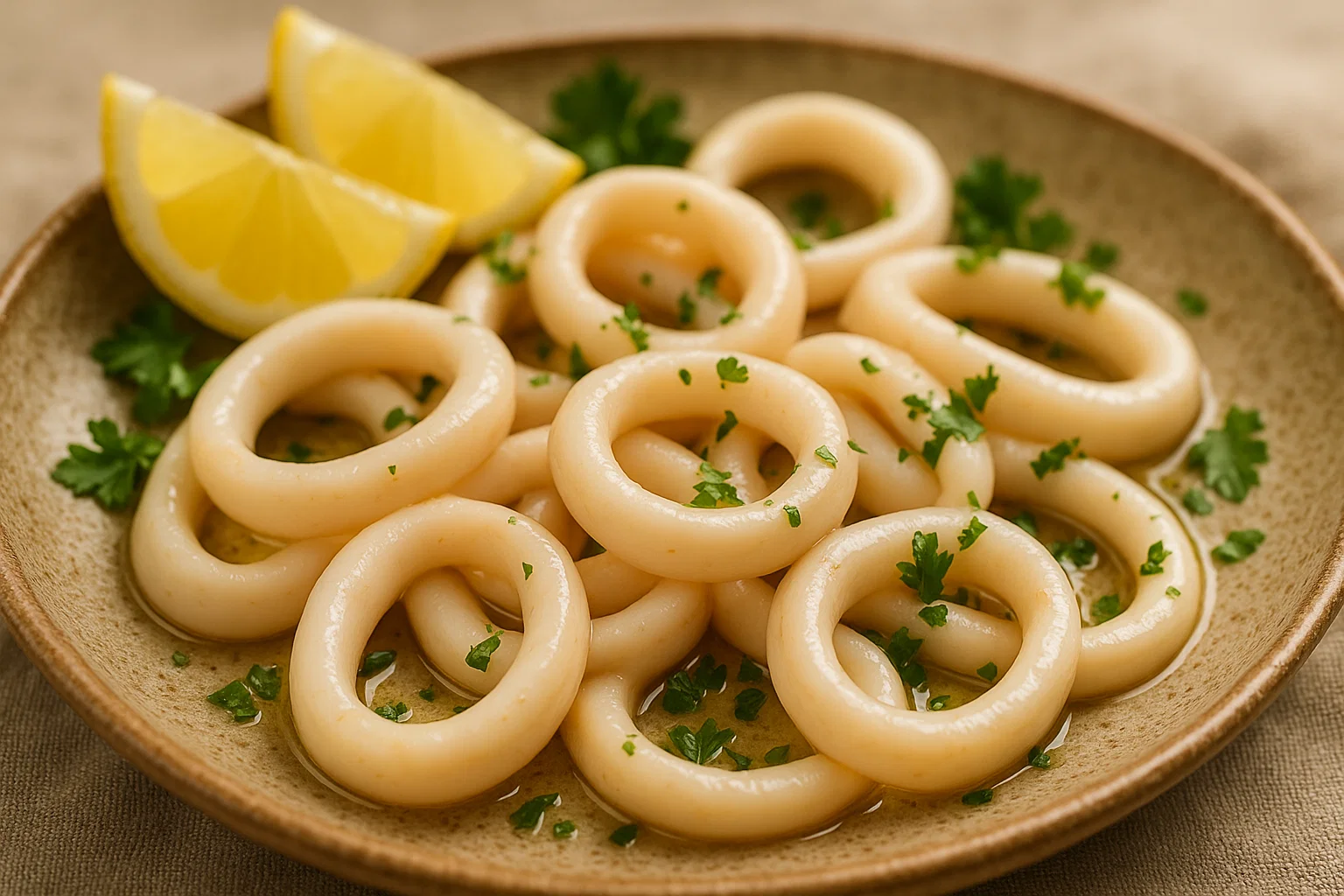
Recipe card
Tender Squid with Lemon, Garlic and Fresh Herbs
Timing depends on batch size and actual doneness; thawing and optional chilling are additional.
Equipment: Wide pot of at least 4 litres; kitchen tongs or slotted spoon; clean knife and cutting board; thin-tip food thermometer; colander; serving bowl
Ingredients
Squid
Cooking liquid
Dressing
Instructions
Check and prepare the squid
Thaw frozen squid in a covered container in the refrigerator. Check cleaned bodies and tentacles for any remaining quill, innards and hard beak; remove them. If rinsing is necessary, minimise splashes and clean the sink afterwards. Pat dry with disposable towels.
Bring the cooking liquid to a boil
Add water, bay leaves, peppercorns, half a lemon and salt to a wide pot. Bring to a full boil, leaving enough headroom for the seafood.
Cook small batches
Lower in a few squid pieces at a time using tongs. Once the water returns to a boil, start checking small bodies after about 1–2 minutes. The flesh should be opaque and firm; check the thickest part with a thin-tip thermometer for at least 63°C (145°F). Larger pieces may need longer. Remove each batch promptly when cooked.
Drain and slice
Transfer cooked squid to a clean plate or colander, never the raw seafood plate. Let drain and slice the bodies into rings when safe to handle. Leave small cooked tentacles whole or cut into manageable pieces.
Toss with fresh dressing
Combine olive oil, finely minced garlic, chopped parsley or dill and white pepper. Toss with the drained squid. Serve warm immediately or transfer to shallow containers and refrigerate promptly for a cold starter.
Why cook in small batches?
Adding an entire kilogram at once can sharply cool the water. Use a few similarly sized pieces per batch so the pot returns to a boil promptly. Start with smaller bodies, checking after a minute or two once the boil returns. Larger or thicker bodies need more time. The goal is cooked, opaque flesh with a firm but not excessively rubbery texture. Follow FoodSafety.gov seafood handling guidance and confirm the thickest pieces reach 63°C (145°F). A timer alone cannot establish safe doneness.
Getting the dressing right
The lemon, bay and peppercorns season the cooking liquid, which is discarded. The dressing is separate and uses only two tablespoons of olive oil, two garlic cloves, fresh herbs and white pepper. Drain the cooked squid before adding it, since water left on the plate dilutes the dressing. Mince the garlic finely to distribute its sharp flavour. Add fresh parsley or dill according to preference. Serve the dressing immediately rather than storing fresh garlic in oil separately.
Troubleshooting
If squid is rubbery, check batch size and avoid continuing to boil after it has reached safe doneness. If the thickest pieces remain translucent, return them to the hot water and check again; do not serve undercooked squid to preserve tenderness. If the dressing looks watery, drain the squid thoroughly before tossing. If garlic overwhelms the seafood, use a smaller amount in a future batch or serve with plain potatoes.
Serving, substitutions and allergens
Serve warm with boiled potatoes or a crisp salad such as fresh cucumber salad with garlic and dill. For a different cooking technique, try pan-fried squid tentacles with garlic and lemon. This is not the same method as seafood spaghetti, which combines several seafood types. Squid is a mollusc and can cause allergic reactions. Do not assume it is safe for someone with a seafood allergy. Keep raw seafood separate from herbs and cooked food, and wash utensils and hands before handling the finished dish.
Storage and make ahead
Refrigerate cooked squid in shallow covered containers within two hours (one hour above 32°C/90°F) at 4°C (40°F) or colder. Use within two days. Serve chilled or reheat to 74°C (165°F) throughout if serving hot; reheating may toughen the squid. Freezing the dressed dish is not recommended for texture.
Drain well and toss the cooked squid with the fresh dressing just before serving. Batch size and actual doneness matter more than a fixed number of seconds.
Frequently asked questions
Can I use frozen squid?
Yes. Thaw it in the refrigerator and check that it is fully cleaned.
Do I cook the squid whole?
Cook the cleaned bodies and tentacles in manageable batches, then slice the cooked bodies into rings.
How long should squid boil?
Start checking small bodies after one to two minutes once the water returns to a boil. Size affects timing; confirm 63°C (145°F) in the thickest part.
Why is squid tough?
Prolonged cooking after doneness or uneven piece sizes can produce a rubbery texture.
Can I serve this cold?
Yes. Cool promptly in shallow containers, refrigerate and serve chilled.
Can I use the cooking water as dressing?
No. Drain the squid; the olive oil and garlic mixture is the separate dressing.
More recipes to try






Spotted a detail that needs correcting? Contact the FeastDelights editors.