Creamy Chicken Hearts with Onion and Herbs
These creamy chicken hearts simmer with golden onions in a mild sauce of heavy cream, sour cream and parsley. Trim the hearts and brown their cut surfaces before adding broth and cooking gently until tender. A thermometer check is important because browning alone does not establish safe poultry doneness. Optional Dijon mustard gives the sauce a little sharpness, while sour cream added off the heat keeps its tang. The recipe makes four servings in about 75 minutes and pairs well with mashed potatoes or rice.
Creamy chicken hearts are small pieces of poultry offal simmered with softened onion in a mild cream and sour cream sauce. They have a firmer, meatier bite than chicken breast, with a rich savoury flavour balanced by parsley and optional Dijon mustard. This Eastern European-inspired skillet dish serves four. Allow about 75 minutes for trimming, browning and gentle simmering.
Recipe card
Creamy Chicken Hearts with Onion and Herbs
Allow 6–8 minutes for onion, 5 minutes browning, 25–35 minutes simmering and about 3 minutes for finishing sauce, plus heating and handling. Extra batches may take longer.
Equipment: Small sharp knife, cutting board, paper towels, wide lidded skillet, spatula, measuring jug, thin-probe food thermometer
Ingredients
Instructions
Trim and halve the hearts
Trim tough vessels and excessive fat from hearts and halve lengthwise if needed. Remove visible clots without rinsing. Pat dry and clean utensils and surfaces.
Soften the onion
Heat neutral oil in a wide skillet over medium heat. Cook sliced onion 6–8 minutes until soft and lightly golden.
Brown the hearts
Add hearts and cook about 5 minutes, turning to brown cut surfaces. Work in batches if crowded.
Cover and simmer until tender
Add broth, salt and pepper. Cover and simmer gently 25–35 minutes initially, until tender and several of the thickest pieces reach 74°C (165°F). Add a little water if needed and cook longer if still chewy.
Finish the cream sauce
Stir in cream and optional mustard. Simmer uncovered about 3 minutes. Remove from heat and stir in sour cream and chopped parsley. Serve hot.
How to select and trim chicken hearts
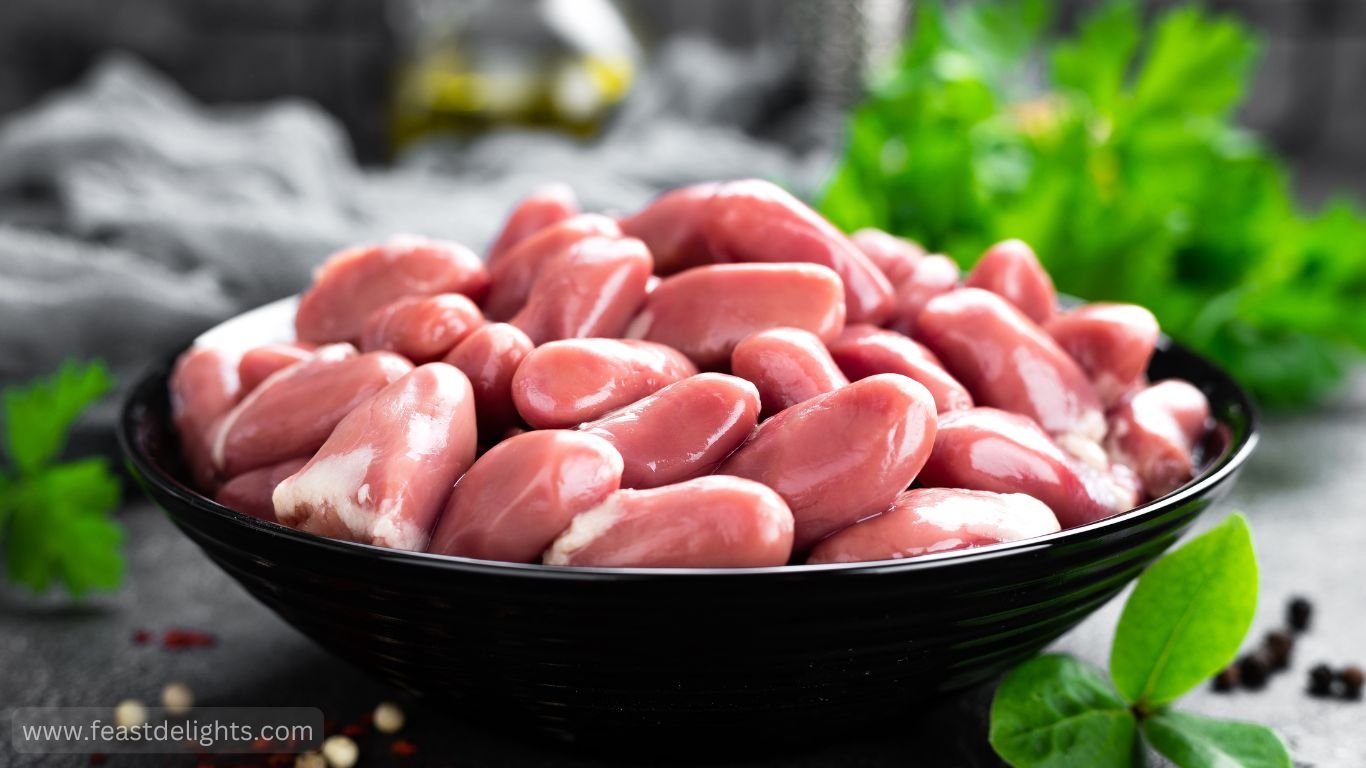
Use 500 g (about 1.1 lb) of trimmed, halved chicken hearts. Look for fresh refrigerated or properly frozen hearts from a reliable supplier. Thaw frozen hearts in the refrigerator. Trim visible tough vessels and excessive external fat with a small sharp knife; split lengthwise if not already halved and remove any visible clots with the knife or disposable paper. Do not rinse raw poultry, because splashing can contaminate the kitchen. Wash hands, knife and board before handling other ingredients. Pat dry with paper towels before browning. Hearts are muscle meat with a naturally springy texture; they will not become identical to soft chicken breast.
Building the creamy onion sauce
Use a large onion sliced thinly, one tablespoon of neutral oil and 150 ml (about ⅝ US cup) chicken broth or water. Broth gives a fuller savoury base; choose a lower-salt variety if desired. The 100 ml (about ⅓ cup plus 1 tablespoon) heavy cream provides richness, while two tablespoons of sour cream contribute acidity. Dijon mustard is optional and adds a sharper note. Taste the cooked sauce before adding extra salt, especially when using salted broth and mustard.
Browning and covered simmering
Heat a wide skillet over medium heat and cook the onion for six to eight minutes until soft and lightly golden. Add the prepared hearts and turn them for about five minutes to colour the cut surfaces. If the pan is crowded, brown in batches and allow additional time. Browning develops flavour but does not establish safe doneness. Pour in the broth, add salt and pepper and cover. Keep the liquid at a gentle simmer for 25–35 minutes initially. Stir occasionally and add a splash of water if the pan becomes dry. Check several of the largest pieces with a thin-probe food thermometer inserted into the centre. Poultry giblets must reach 74°C (165°F), consistent with FoodSafety.gov guidance. Continue simmering if the hearts are still excessively chewy even after reaching temperature.
Stir in heavy cream and optional mustard and simmer uncovered about three minutes. Remove the skillet from the heat before incorporating sour cream and parsley. Avoid a rolling boil after adding sour cream; the sauce is more likely to separate. The finished sauce should lightly coat a spoon, not become a thick paste.
Common problems and practical alternatives
Chewy hearts: Trim tough vessels carefully and extend the gentle covered simmer, checking liquid level. Watery sauce: Reduce the broth slightly before adding dairy. Split sauce: Lower the heat and stir sour cream in off the burner. Onion burns: Use medium heat and stir before adding hearts. Sliced mushrooms can be sautéed with the onion, allowing excess liquid to evaporate. A pinch of paprika or thyme adds a different aroma. This recipe contains milk and optional mustard; check the broth and other packaged ingredients for additional allergens.
Serving and make ahead
Serve over mashed potatoes, rice or bread to catch the sauce. A bright cucumber salad with garlic and dill provides a crisp contrast. For another creamy poultry dish, try chicken Florentine pasta. A related sauce technique appears in mushrooms in sour cream sauce. Prepare the trimmed hearts shortly before cooking, or keep them covered and refrigerated until needed. Refrigerate in shallow covered containers at 4°C (40°F) or below within 2 hours (1 hour above 32°C/90°F). Use within 3 days. Reheat gently to 74°C (165°F), stirring and adding a little water if needed. Freezing can cause the cream sauce to separate; freeze cooked hearts in broth before adding dairy for better texture. See official cooling and handling guidance.
Frequently asked questions
Do chicken hearts need to be rinsed?
No. Trim them with a knife and pat dry; rinsing raw poultry can spread bacteria.
What temperature should chicken hearts reach?
Check the centre of several of the largest pieces with a thermometer; poultry giblets must reach 74°C (165°F).
Why are the hearts still chewy?
They have a naturally firm texture but may need longer gentle simmering to become tender.
How do I prevent the sauce splitting?
Avoid vigorous boiling and stir in sour cream after removing the skillet from the heat.
Can I freeze the dish?
Yes, although cream sauces may separate. For better texture, freeze the cooked hearts in broth before adding dairy.
More recipes to try






Spotted a detail that needs correcting? Contact the FeastDelights editors.