Oven-Baked Hake Patties with Carrot and Semolina
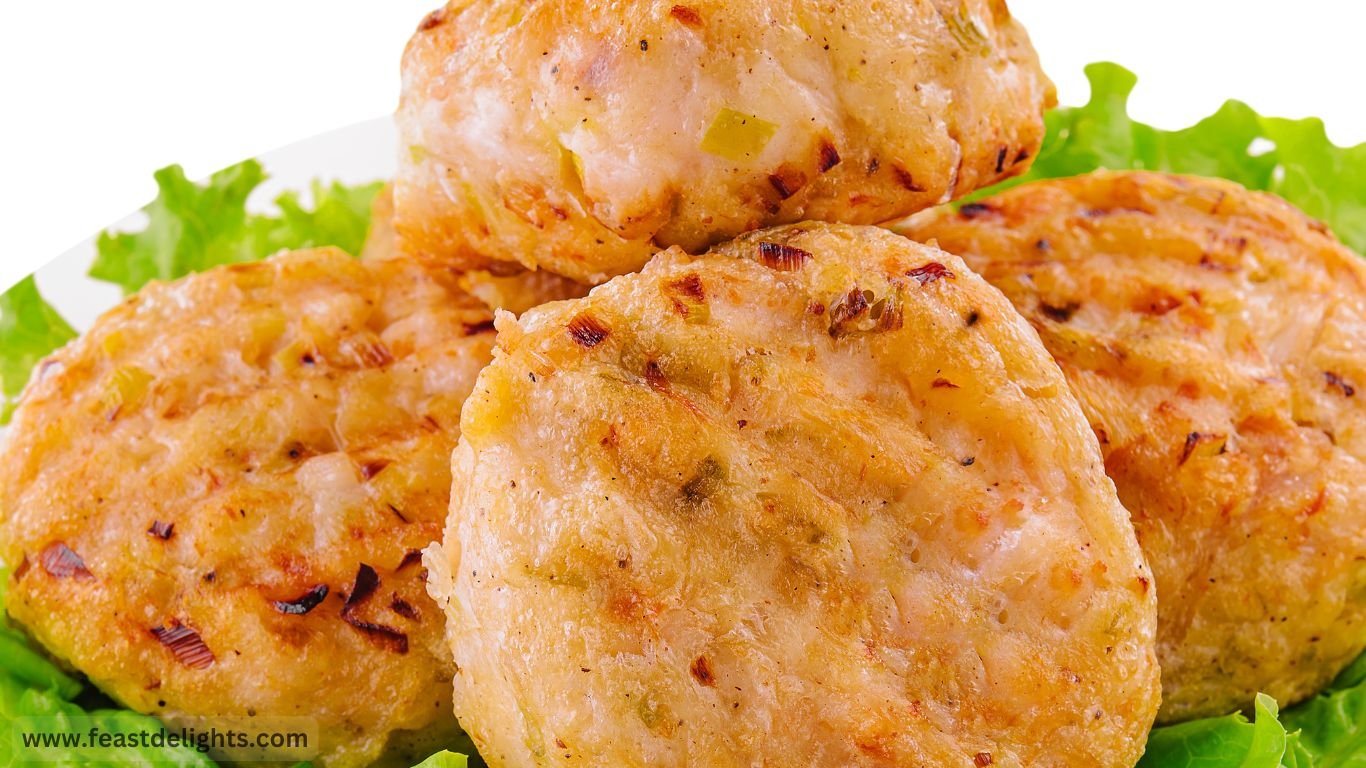
These oven-baked hake patties have a tender, lightly flaky fish centre and a thin breadcrumb crust. Finely chopped onion and carrot add moisture and sweetness, while eggs and semolina hold the mixture together without masking the mild fish flavour. The recipe makes ten small patties, enough for four servings, in about an hour including a short resting period. Drain the fish well, chill the mixture while the semolina hydrates and bake until the centres are safely cooked. Serve with potatoes, a crisp salad or lemon.
Oven-baked hake patties are small fish cakes made with raw boneless white fish, carrot, onion, eggs and semolina rather than mashed potato. Hake has a mild flavour and a delicate texture, so these patties work particularly well with a thin crumb coating and a fresh, sharp accompaniment. This recipe makes ten patties for four people. Allow 25 minutes of preparation, 10 minutes for the semolina to hydrate and about 25 minutes in the oven; thawing frozen fish is extra.
Choosing hake and the binder
Fresh or frozen boneless hake works. If buying frozen fillets, the useful weight is the fish after thawing and draining, not the ice glaze. Run your fingers along each fillet to check for small bones. A firm white fish such as cod or pollock can replace hake, but some fillets release more liquid than others.
Semolina is made from wheat and is used dry here. Unlike a cooked potato binder, it absorbs some of the moisture released by fish and vegetables as it rests. The eggs help set the patties as they bake. Fine or medium semolina is easier to distribute than coarse grains; do not add water. Keep the carrot finely grated and the onion minced rather than in large pieces, which can make the mixture split.
Shaping and baking the patties
Divide the mixture before coating so the pieces finish at roughly the same time. Press gently with clean hands; packing the fish into dense discs is unnecessary. Add the breadcrumbs just before baking rather than mixing the coating into the fish. Use a lightly oiled tray, leaving enough room to turn each piece without disturbing its neighbours.
Preheat the oven fully. Slide a thin spatula under a patty to test whether it is ready to turn. If the base tears, let it cook a few minutes longer. Because the fish is chopped and mixed with raw eggs, this version uses a conservative centre temperature of 71°C (160°F), rather than the 63°C target commonly used for intact fish fillets. Test more than one patty if sizes differ.
Recipe card
Oven-Baked Hake Patties with Carrot and Semolina
25 minutes prep, 10 minutes refrigerated resting and about 25 minutes baking; thawing is extra.
Equipment: Sharp knife, chopping board, box grater, mixing bowl, large baking tray, thin spatula, kitchen thermometer
Ingredients
Fish mixture
Coating and baking
Fish mixture
Coating and baking
Instructions
Drain and chop the fish
Thaw frozen hake in the refrigerator, following package instructions for vacuum-packed fish. Pat dry, check for pin bones and finely chop the fish. Mince onion and garlic and finely grate carrot. Keep fish cold; wash hands and utensils after contact with raw fish.
Mix and rest the binder
Combine fish, onion, carrot, garlic, eggs, semolina, salt and pepper in a bowl. Stir until evenly distributed. Cover and refrigerate for 10 minutes so the semolina absorbs moisture. The mixture should hold a mound on a spoon.
Shape and coat
Preheat the oven to 180°C (350°F). Oil a large baking tray with the tablespoon of olive oil. Divide the mixture into ten portions and gently shape into patties about 1.5–2 cm (½–¾ inch) thick. Coat lightly in breadcrumbs and space them apart on the tray.
Bake until cooked through
Bake about 20–25 minutes, turning carefully once the underside is set. The crumbs should be lightly golden and the centre firm and opaque. Check the thickest patties from the side with a thermometer and continue cooking until they reach 71°C (160°F), a conservative target for chopped fish bound with egg. Oven times vary.
Serve warm
Rest briefly while arranging the side dishes. Serve with lemon and vegetables or potatoes. Refrigerate leftovers promptly.
What to do if the mixture is too wet
First give the semolina time to hydrate in the refrigerator. A sticky mixture is normal, but it should not spread into a puddle. If the fish was particularly watery and the mixture remains loose, add a little extra semolina a teaspoon at a time, allow it to absorb moisture and note the change in quantity. Adding a large handful of dry binder can make the patties tough. The original formula uses two eggs and three tablespoons of semolina; the binding and yield still need a practical kitchen trial.
Make ahead and allergens
Prepare the dry coating and vegetables ahead, keeping them covered in the refrigerator where appropriate. Mix raw fish with egg shortly before baking rather than leaving shaped raw patties at room temperature. This recipe contains fish, egg and wheat (semolina and breadcrumbs). Check packaged crumbs and sauces for additional allergens. Wash raw fish utensils before using them on cooked patties.
Side dishes and related recipes
The mild fish pairs well with buttered red potatoes with dill and cauliflower, cucumber and tomato salad. For a different fish cake, see the salmon cakes with lemon and dill. These hake patties are designed for oven baking, so there is no need to shallow-fry the coating.
Frequently asked questions
Can I use frozen hake?
Yes. Thaw in the refrigerator, drain well and weigh out 500 g of prepared fillets. Follow package instructions for vacuum-packed fish.
Why are my patties falling apart?
Excess liquid, coarse onion or insufficient hydration can weaken the mixture. Chill longer and turn only when the underside is set.
Can I use flour instead of semolina?
Semolina absorbs liquid gradually. A little flour may bind the mixture but can make the result denser; this substitution still needs a kitchen test.
Do I need a food processor?
No. Use a sharp knife or pulse briefly in a food processor rather than puréeing the fish.
Can I skip the breadcrumbs?
Yes, but the outside will be softer and may stick. Use a well-oiled tray and turn only when set.
How do I know the patties are cooked?
Check that the thickest centre reaches 71°C (160°F). Browned crumbs alone do not establish that the fish and egg are cooked.
More recipes to try






Spotted a detail that needs correcting? Contact the FeastDelights editors.