Chicken Kyiv Recipe with Chilled Parsley Butter
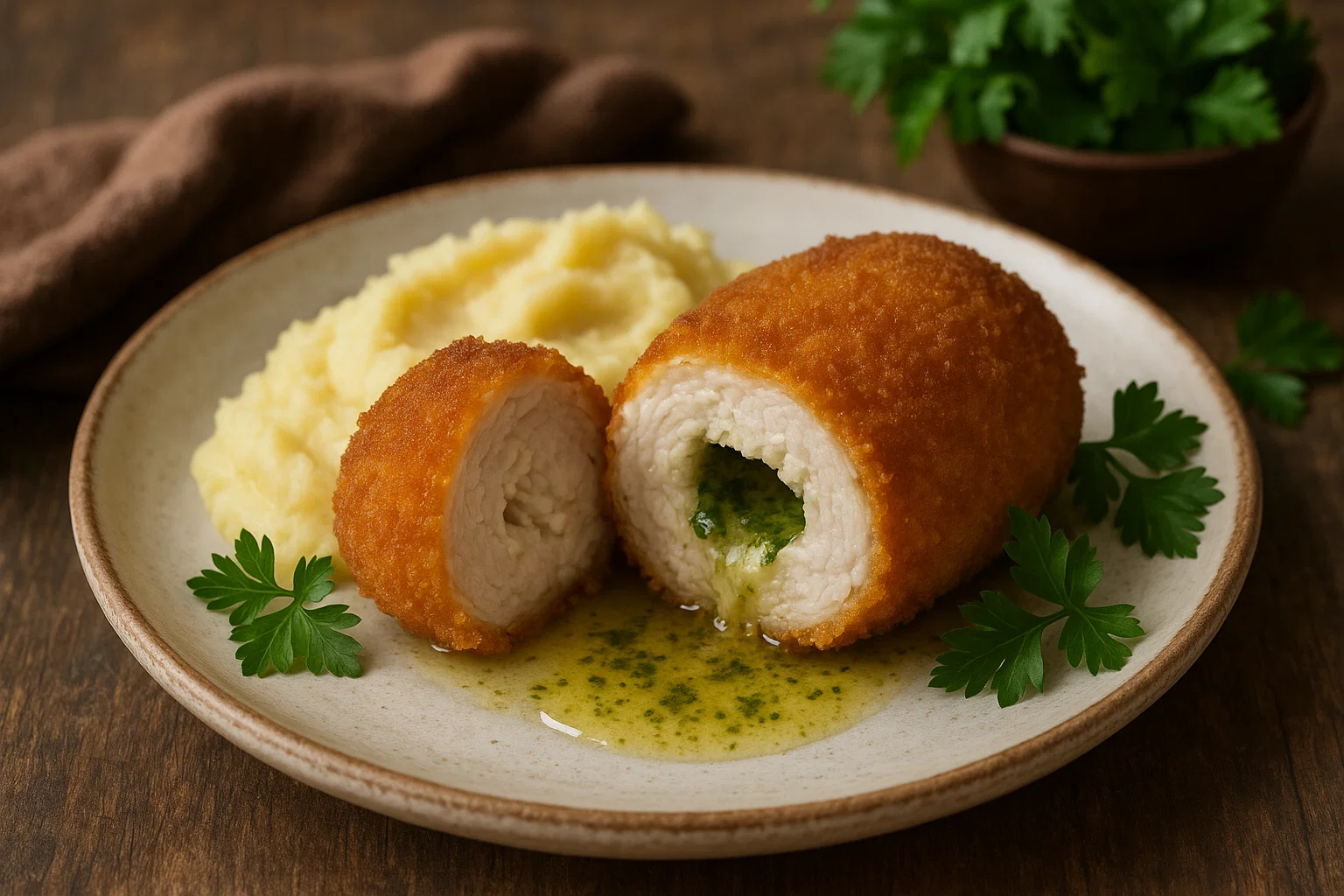
Chicken Kyiv is a golden, crisp breaded chicken breast wrapped around chilled parsley butter. Cutting into the cooked fillet releases the savoury herb filling, so careful sealing matters as much as the coating. This version makes two large portions using a double breadcrumb layer, a short fry and an oven finish. Allow time to firm the butter and rest the cooked chicken. Use a thermometer in the thickest chicken meat, not the melted butter pocket, to confirm that each portion is fully cooked.
Chicken Kyiv with parsley butter is a breaded, rolled chicken breast with a melting herb-butter centre. This Ukrainian-associated dish is made here with two large fillets, 100 g butter and a double breadcrumb coating. Allow 35 minutes active preparation, 20 minutes cooking and 25 minutes chilling and resting, with extra time if the chicken is thick.
Prepare a firm butter filling
Use softened butter so chopped parsley and seasoning distribute evenly. Shape two equal pieces before freezing briefly; the firm butter is easier to wrap than a soft spoonful. The original recipe has no garlic, so it is a parsley-butter version. Choose two large skinless, boneless breasts of similar size. Pat them dry and keep refrigerated until needed. Do not rinse raw poultry, as splashes can contaminate nearby surfaces.
Butterfly, flatten and seal the fillets
Lay each breast flat and cut horizontally through the thick side, stopping short of the opposite edge. Open like a book and gently flatten between sheets of parchment until reasonably even, without tearing. Put one cold piece of butter in the middle, fold the sides inward and roll snugly to enclose it completely. Inspect seams for gaps. If necessary secure with toothpicks and count them so all can be removed after cooking. Wash hands and clean surfaces and utensils that touched raw chicken before proceeding.
Double-bread and cook Chicken Kyiv
Arrange flour, beaten egg and breadcrumbs in three separate shallow dishes. Coat each roll in flour, egg and crumbs, then repeat the egg and crumbs, pressing gently around the seams. Avoid leaving bare patches. Discard leftover egg, flour or crumbs contaminated by raw chicken. Heat the oven before frying. Use a heavy deep-sided pan and add only enough of the measured oil to leave generous headspace. A frying thermometer helps maintain 170–180°C (338–356°F); never leave hot oil unattended.
Recipe card
Chicken Kyiv Recipe with Chilled Parsley Butter
Allow 20 minutes butter chilling and 5 minutes resting, in addition to estimated preparation and cooking; some chilling may overlap preparation.
Equipment: Knife, chopping board, parchment, meat mallet, bowls, deep-sided skillet, frying thermometer, oven tray, instant-read food thermometer, tongs.
Ingredients
Chicken
Herb butter
Seasoning
Coating
Frying
Instructions
Chill the parsley butter
Mix butter, parsley, salt and pepper. Shape into two equal logs and freeze at least 20 minutes until firm.
Fill and seal the chicken
Butterfly breasts, flatten gently without tearing and wrap one firm butter portion in each. Fold sides in and seal; use counted toothpicks if needed.
Apply a double crumb coating
Coat each roll in flour, beaten egg and breadcrumbs; repeat egg and crumbs, covering seams. Discard contaminated coating leftovers.
Fry, bake and check temperature
Heat oven to 180°C (350°F). Fry in a deep-sided pan at 170–180°C oil about 3–4 minutes until golden, then transfer to an ovenproof tray and bake about 15 minutes or longer. Verify each thickest meat portion reaches 74°C/165°F, avoiding the butter pocket.
Rest and serve
Rest 5 minutes, remove all toothpicks or string and serve carefully; the butter centre will be hot.
How to tell when the chicken is cooked
The fry sets the golden coating but does not establish that the centre is safe. Transfer to a rack or lined ovenproof tray and bake at 180°C (350°F). Use a clean instant-read thermometer in the thickest meat of each roll, inserting from the side and avoiding the butter pocket. Both fillets must reach at least 74°C (165°F), as specified by official poultry guidance. If needed bake longer; colour and melted butter are not reliable safety indicators. Rest five minutes and remove all toothpicks before serving. Warn diners that hot butter can escape when cut.
Troubleshooting
Butter leaks: small tears, loose seams or warm butter allow leakage. Seal carefully and use firm filling. A leak does not mean the chicken is cooked. Coating falls off: pat the meat dry and coat evenly before frying. Crust browns too fast: check oil temperature and finish in the oven, tenting loosely if necessary. Chicken remains under temperature: continue baking and check again, rather than increasing oil heat. Oil splatters: avoid wet surfaces and overcrowding; lower each roll carefully away from you.
Serving, variations and allergens
Serve with mashed potatoes, steamed vegetables and a crisp salad. Fresh dill or a little minced garlic can be mixed into the butter as variations without changing the filling weight. The coating contains wheat and eggs, and the filling contains milk. Gluten-free flour and breadcrumbs may work but their adhesion and browning can differ. Do not substitute a watery spread for butter without testing. For a different breaded poultry dish, try chicken and mushroom kotlety; the chicken and mushroom kurnik pie is another substantial meal.
Make ahead, storage and reheating
Prepare the butter in advance and refrigerate or freeze it covered. Assemble raw rolls shortly before cooking and keep chilled. Refrigerate cooked leftovers within two hours (one hour above 32°C/90°F) at 4°C/40°F or colder, and use within three days. Reheat in an oven to 74°C/165°F; the crust will soften somewhat after refrigeration. Freeze cooked cooled portions for up to two months for best quality and thaw in the refrigerator before reheating. Do not reuse coating ingredients that contacted raw chicken.
Frequently asked questions
Why is the butter escaping?
The filling may have softened or the seam may be open. Chill the butter and seal without tearing the meat.
Can I bake without frying?
An oven-only version needs separate testing; the crust will brown differently. Always confirm 74°C/165°F in the meat.
Can I add garlic?
Yes, a little minced garlic may be added to the parsley butter.
How do I check temperature without piercing the filling?
Insert the probe sideways into thick chicken meat and check more than one spot if needed.
Can I use chicken thighs?
Their shape and thickness differ, making sealing and timing less predictable; kitchen review is needed.
Why double bread?
The second coating helps cover seams and creates a thicker crisp crust.
Can I prepare the butter the day before?
Yes, keep covered and chilled or frozen, then portion before filling.
More recipes to try






Spotted a detail that needs correcting? Contact the FeastDelights editors.