Vanilla Mug Cake in the Microwave
This single-serving vanilla mug cake is mixed and cooked in the same microwave-safe mug. Flour, sugar, baking powder, milk and a little neutral oil create a soft cake without added egg. Optional chocolate chips provide a sweeter finish. Use a roomy 350 ml mug, cook at 800 watts in short intervals and check that the centre is set without wet batter. Let the cake stand for a minute before eating. It takes about eight minutes from measuring the ingredients to serving.
Vanilla microwave mug cake is a small, eggless dessert made in a single mug. The measured flour and milk create a soft batter that rises with baking powder. Allow five minutes for mixing, up to two minutes of microwave cooking and a minute of standing. The actual cooking time depends on your microwave and mug shape.
Why this recipe works without an egg
The flour supplies structure, baking powder creates lift and the small amount of oil helps keep the cake tender. Leaving out eggs also avoids the rubbery texture that can occur when a whole egg is used in a tiny microwave cake. The original 32 g flour and 60 ml milk produce a fairly fluid batter; weigh the flour rather than adding extra just because it looks loose.
Equipment and timing
Microwave-safe 350 ml (12 US fl oz) mug without metal decoration; kitchen scale; measuring spoons; fork; microwave. Allow 5 minutes for preparation and up to 2 minutes for cooking, plus 1 minutes initial resting.
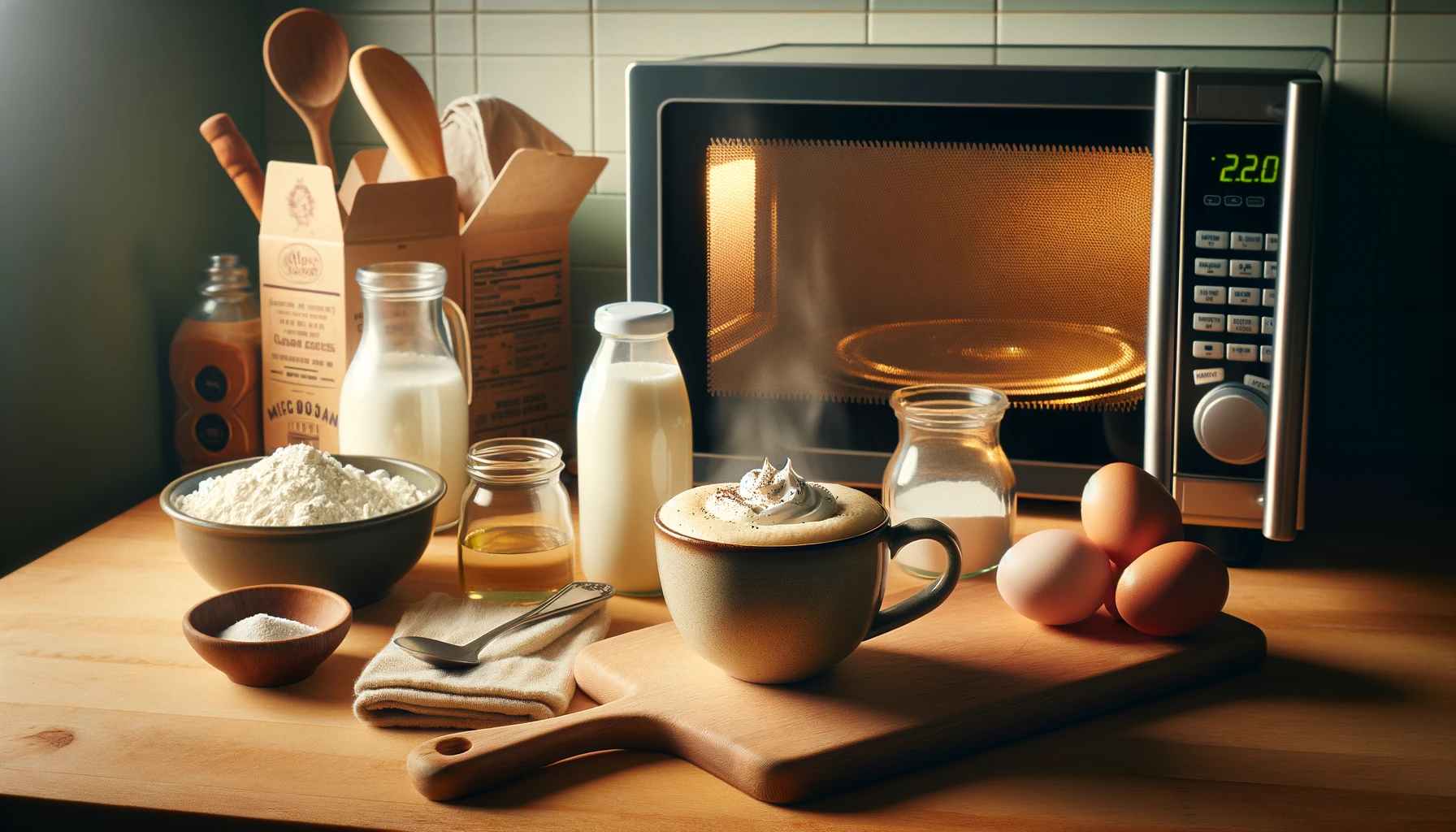
Recipe card
Vanilla Mug Cake in the Microwave
Begin with 60 seconds at 800 watts; add 10-second bursts until fully set. Allow one minute standing. Microwave power and mug shape affect cooking time.
Equipment: Microwave-safe 350 ml (12 US fl oz) mug without metal decoration; kitchen scale; measuring spoons; fork; microwave
Ingredients
Dry ingredients
Wet ingredients
Optional addition
Instructions
Mix dry ingredients in the mug
Use a clean microwave-safe 350 ml (12 US fl oz) mug with no metallic decoration. Stir flour, sugar, baking powder and salt together thoroughly, reaching the bottom edges.
Stir in the liquids
Add milk or unsweetened plant milk, oil and vanilla. Stir with a fork until no dry pockets remain. Scrape the bottom and sides, but avoid beating the batter for longer than necessary.
Add optional chocolate chips
Fold in the optional chips. The mug should be no more than half full; use a larger microwave-safe mug if necessary.
Microwave until fully set
Microwave at 800 watts for 60 seconds. Check the centre and continue in 10-second bursts until the cake is fully set with no wet flour batter. Time varies by appliance and mug; stop if it threatens to overflow. Handle the hot mug carefully.
Stand and serve
Let stand for one minute so heat distributes through the cake. Check again for any wet batter in the centre before eating; if necessary, cook further in short bursts. Serve warm directly from the mug, taking care with hot chocolate pockets.
Choosing the right mug
A microwave-safe ceramic or glass mug of at least 350 ml gives the batter space to expand. Avoid narrow mugs with a very deep pool of batter, as the centre may take longer to cook. Do not use metal-rimmed or metallic-decorated mugs. If batter fills more than half the mug, transfer it to a larger microwave-safe vessel before cooking. The handle and base can become hot.
Adjusting for microwave power
Use the 800-watt setting as the starting point. Different ovens deliver heat differently, and higher wattage can cook the surface before the centre is ready. Start with a short interval and check between additional ten-second bursts. The top should look set and a small opening in the middle should show cooked crumb, not liquid batter. Raw flour is not ready to eat even though this recipe has no added egg; see FDA guidance on flour safety.
Troubleshooting
If the cake has dry pockets, scrape the bottom thoroughly while mixing next time. If it overflows, use a larger mug rather than reducing the measured ingredients randomly. If it becomes rubbery, shorten the cooking intervals on your next attempt, while still cooking the entire centre. A dense cake may result from old baking powder or incorrect flour measurement.
Serving and variations
Serve plain or scatter the optional chocolate chips through the batter. A little finely grated citrus zest is a possible flavour variation. For a larger oven-baked dessert, see vanilla kefir pound cake or vanilla kefir cupcakes. Milk and wheat are present in the dairy version; plant milk and chocolate may introduce soy, nuts or other allergens. No egg is added to the base recipe, but check packaged ingredients and shared equipment for cross-contact.
Storage and make ahead
Best eaten freshly cooked. If saving leftovers, refrigerate covered at 4°C (40°F) or colder within two hours and use by the next day. Reheat to 74°C (165°F) if serving hot. Freezing this small microwave cake is not recommended for texture.
Eat the cake warm after the short standing period. It is meant to be a small, soft microwave dessert rather than a tall oven-baked sponge.
Frequently asked questions
Can I make it without an egg?
Yes. The base recipe contains no added egg and uses baking powder for lift.
Why does the middle remain wet?
Microwave power and mug depth affect cooking. Continue in ten-second bursts until the centre is fully set.
Can I use plant milk?
Yes, the original recipe allows unsweetened plant milk. Texture and flavour may vary.
Can I double the recipe in one mug?
Make two separate cakes instead; doubling changes depth and cooking behaviour.
Why is the cake rubbery?
Excess cooking or overmixing can make the small cake tough.
Can I eat the batter uncooked?
No. Raw flour can contain harmful bacteria. Cook the batter thoroughly.
More recipes to try






Spotted a detail that needs correcting? Contact the FeastDelights editors.