Adyghe-Style Fresh Cheese from Pasteurized Milk
Adyghe-style fresh cheese is a mild, tender cow's milk cheese made by adding lemon juice or food-grade vinegar to heated pasteurised whole milk. The soft curds are drained, lightly salted and pressed in the refrigerator until they hold their shape. This home adaptation requires no rennet or starter culture. Two litres of milk may yield approximately 350–500 g of cheese, depending on the milk and drainage. Allow about two and a half hours for heating, draining and chilling; keep the finished cheese refrigerated and use promptly.
This Caucasus-inspired home recipe uses direct acid coagulation rather than a traditional cultured-whey method. The milk separates into white curds and yellowish whey, and gentle pressing produces a tender round of fresh cheese.
Milk and acid selection
Choose fresh, commercially pasteurised whole cow’s milk. Two litres equal approximately 8½ US cups. Avoid raw milk and use ordinary refrigerated pasteurised milk rather than ultra-high-temperature (UHT) milk where possible, as heat treatment can alter curd formation. The measured four tablespoons of lemon juice or food-grade white vinegar (5% acidity) are a starting quantity; the amount needed depends on the milk and acid. Add it gradually and stop once separation is clear. One teaspoon of salt flavours the curds but does not preserve them.
Equipment and hygiene
Use a heavy stainless steel pot, accurate thermometer, spoon, colander, clean food-grade cheesecloth, bowl to catch the whey, small mould or plate and a clean weight. Wash hands and clean and sanitise food-contact equipment before beginning. Keep the cloth and curds away from raw foods. Guidance on making heat-acid cheeses is available from New Mexico State University Extension. This recipe is a home adaptation, not a validated commercial process.
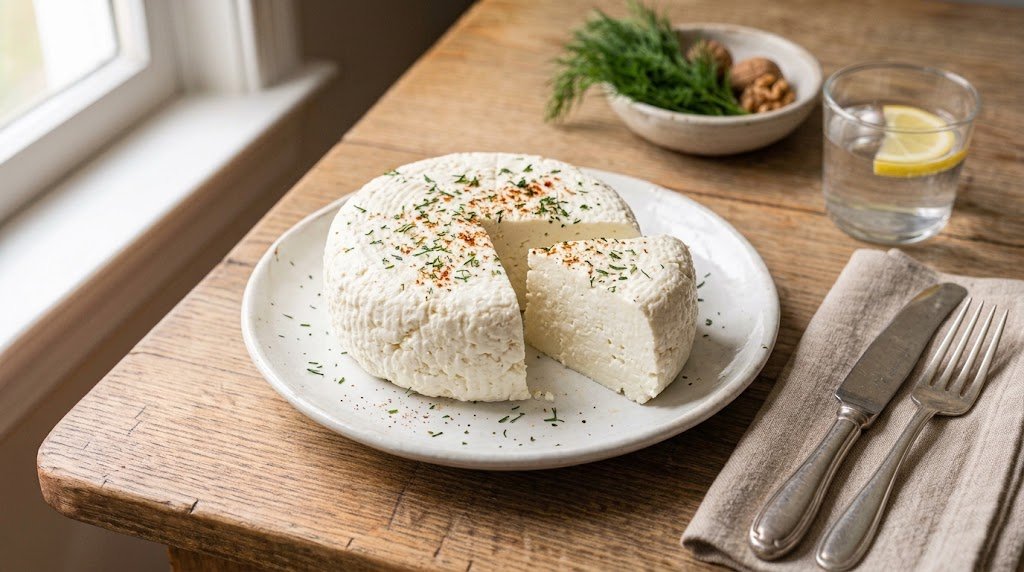
Recipe card
Adyghe-Style Fresh Cheese from Pasteurized Milk
Allow 30 minutes draining and about 60 minutes pressing; longer refrigerated pressing may be needed.
Equipment: Heavy pot, thermometer, spoon, colander, sanitised cheesecloth, bowl, small mould and clean weight
Ingredients
Milk and acid
Finishing
Instructions
Heat pasteurised milk
Using sanitised equipment, heat the pasteurised milk gently in a heavy pot to approximately 85°C (185°F), stirring the bottom to avoid scorching.
Add acid until curds separate
Reduce heat and add lemon juice or vinegar gradually, stirring gently until distinct curds separate from clearer whey. Wait 3–5 minutes. If needed, add a little more acid at a time.
Drain the curds
Carefully strain through a clean cheesecloth-lined colander. Allow initial hot whey to drain, then finish draining in the refrigerator for about 20–30 minutes. If desired rinse briefly with cold potable water and drain again.
Salt and press in the refrigerator
Sprinkle salt over the curds. Gather the cloth into a round and press lightly under a clean plate or weight in the refrigerator for approximately one hour, or until cohesive.
Chill and store
Transfer to a clean covered container and keep refrigerated at 4°C (40°F) or below; use within two days. People at increased risk of listeriosis should avoid eating unheated fresh cheese of this type or heat it to 74°C (165°F).
Heating and separating the curds
Heat milk gently to about 85°C (185°F), stirring along the base to prevent scorching. Reduce the heat before adding the acid. Stir gently as white curds form; avoid vigorous agitation, which can break them into particles small enough to escape through the cloth. When the surrounding whey turns more translucent, stop adding acid and allow the mixture to settle briefly. If it remains milky, check temperature and add acid a teaspoon at a time as necessary. Do not use spoiled milk or try to rescue an unexpectedly sour batch.
Draining and pressing
Set the lined colander over a stable bowl. Carefully ladle or pour the hot curds into it, keeping hands clear of hot whey. Let the initial hot liquid drain, then move the supported curds into a clean shallow container in the refrigerator to finish draining for about 20–30 minutes. If an acidic taste is especially pronounced, a brief optional rinse with cold potable water can soften it; drain thoroughly again. Distribute salt gently, gather the cloth and press lightly under a clean plate or small weight in the refrigerator. Allow approximately an hour for the cheese to hold its shape; longer refrigerated pressing gives a firmer texture. Actual yield and firmness require kitchen confirmation.
Troubleshooting
No curds: verify the thermometer reading and acid strength, then add a little more acid gradually. Rubbery cheese: avoid excessive acid, vigorous boiling or heavy pressing. Crumbly cheese: reduce stirring and press gently while curds are still cohesive. Low yield: milk protein and fat vary; drain less aggressively if a tender cheese is desired. Scorched flavour: heat over medium-low heat and stir the bottom regularly.
Serving ideas
Slice or crumble this mild cheese beside tomatoes, herbs or homemade rye bread. Firm pieces can be gently pan-seared and used in a variation of paneer tikka masala. For a different fresh dairy preparation, see homemade farmer’s cheese.
Storage, allergens and food safety
Drain and press under refrigeration after initial straining; refrigerate the cheese at 4°C (40°F) or colder within two hours of heating, or one hour above 32°C (90°F). Keep covered and use within two days. Freezing is not recommended for best texture. This is a highly perishable fresh cheese, not a preserved or aged product. This cheese contains milk and is not dairy-free. Pasteurised milk reduces risk but contamination after heating remains possible. The CDC’s guidance on similar fresh soft cheeses advises people at increased risk of listeriosis to avoid unheated fresh cheeses of this type or heat them to 74°C (165°F) before eating. Salt and lemon do not make this cheese shelf-stable. Do not age it at room temperature, vacuum-pack it for prolonged storage or use it for canning.
Handle the finished cheese with clean utensils, keep it cold and enjoy it promptly. Light pressing produces a softer texture than a heavily weighted mould.
Frequently asked questions
Does this recipe require rennet?
No. Heat and direct food acid coagulate the milk proteins.
Can I use low-fat milk?
It may form curds, but yield and texture will differ; whole milk is specified.
What is the yellow liquid?
It is whey, the liquid separated from the curds. Handle and refrigerate it promptly if keeping it.
Can I use UHT milk?
Ordinary pasteurised milk is preferred because UHT processing can alter the curd.
Will this cheese melt like mozzarella?
No. Heat-acid-set cheese generally holds its shape when heated.
Can I press it overnight?
Only under refrigeration using clean equipment; firmer curds may result. Count storage time from preparation.
Can I make it from raw milk?
No. Use commercially pasteurised milk and sanitised utensils.
More recipes to try


Spotted a detail that needs correcting? Contact the FeastDelights editors.