Cottage Cheese Goose-Foot Cookies
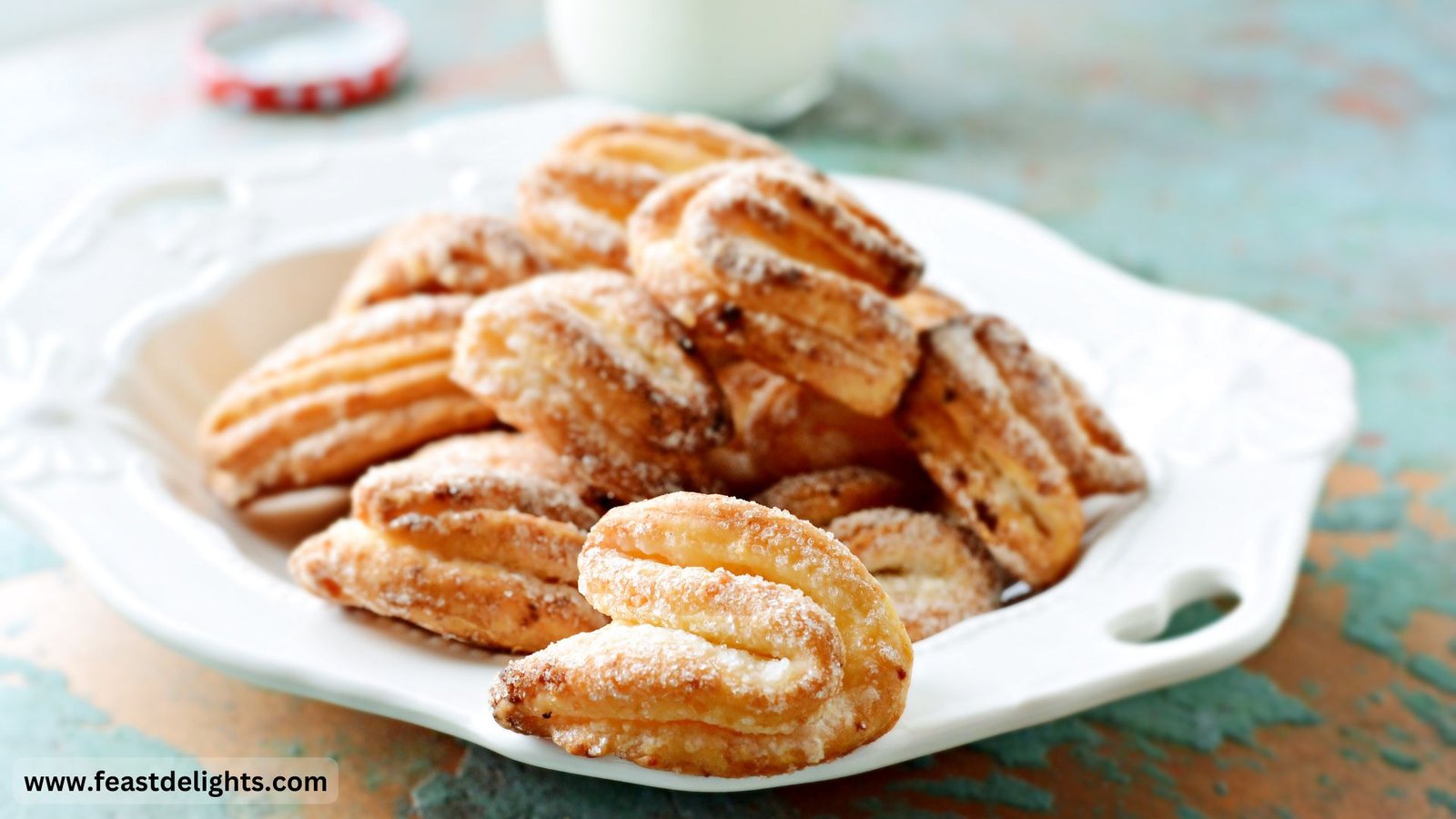
Cottage cheese goose-foot cookies are tender folded pastries with a lightly crisp, sugary exterior and soft cheese-enriched layers inside. Roll the chilled dough into rounds, press one side into granulated sugar and fold twice to form the distinctive fan shape. A small cut along the rounded edge can suggest a goose foot. This recipe makes about 24 cookies, with 30 minutes of preparation, a half-hour dough chill and up to 40 minutes of batch baking. Choose well-drained cottage cheese or farmer cheese.
Cottage cheese goose-foot cookies are small Eastern European-inspired pastries made from a soft cheese-and-butter dough, folded with sugar into a quarter-circle shape. They have a lightly caramelised exterior and tender inner folds. The recipe makes about 24 cookies, depending on rolling thickness and cutter size. Allow about 30 minutes to prepare, 30 minutes to chill, up to 40 minutes to bake two trays separately and about 20 minutes to cool.
Choose the right cottage cheese
Dry cottage cheese or farmer cheese is the foundation of this dough. The original recipe specifies 200 g, so drain excess whey before weighing if the curds are wet. Mash the cheese with softened butter to distribute it evenly. Small curds may remain; there is no need to turn the mixture into a liquid. Very wet cheese can make the dough difficult to roll, and adding large amounts of flour to compensate can toughen the cookies.
Use softened butter rather than hot melted butter. The egg helps bind the dough, while baking powder supplies a little lift. The sugar belongs on the rounds and inside the folds rather than in the dough itself. This gives the pastries a sweet, lightly crisp exterior and a less sweet interior. The original proportions are retained and need a kitchen trial to confirm the final yield.
Mix, chill and roll
Add flour gradually and stop mixing when the dough is cohesive. Cover and refrigerate for 30 minutes. Roll to about 4 mm thick and cut 8 cm rounds. Lightly flour the worktop and cutter only as needed. Gather scraps without kneading them repeatedly. If the butter softens and the dough starts to stick, return it to the refrigerator briefly.
How to form goose-foot cookies
Press one side of each circle into a shallow dish of granulated sugar. Fold it in half with the sugar inside, then dip one side of the semicircle into sugar and fold once more with that sugared surface inside. The resulting quarter-circle should have layered folds and a rounded outer edge. Press the top lightly into sugar if you prefer a sweeter crust. Cut a short, shallow slit into the rounded edge for a more pronounced goose-foot shape; avoid cutting so deeply that the layers separate.
Recipe card
Cottage Cheese Goose-Foot Cookies
Includes 30 minutes dough chilling and about 20 minutes cooling. Allows two 15–20 minute batches; actual tray capacity varies.
Equipment: Digital scale, sieve, mixing bowl, fork or masher, rolling pin, 8 cm round cutter, shallow sugar dish, baking trays, parchment, cooling rack
Ingredients
Dough
Sugar coating
Dough
Instructions
Make the cottage cheese dough
Drain wet cottage cheese in a fine sieve, then weigh 200 g. Mash with softened butter until mostly smooth. Mix in egg, vanilla and salt. Stir in flour and baking powder gradually until a soft dough forms. Avoid prolonged kneading and do not taste the raw dough.
Chill and prepare the trays
Cover and refrigerate the dough for 30 minutes. Preheat oven to 180°C (350°F) and line baking trays with parchment.
Roll and cut rounds
Roll chilled dough to about 4 mm (⅙ inch) on a lightly floured worktop. Cut rounds about 8 cm (3 inches) across. Gather scraps gently and reroll; chill again if sticky.
Dip in sugar and fold twice
Put sugar in a shallow dish. Press one face of each round into sugar, fold with sugar inside, dip one side of the semicircle into sugar and fold that side inward again. Press the upper face lightly into sugar if desired. Set the quarter-circle flat on the tray and make a small shallow slit along the curved edge if desired. Leave space between cookies.
Bake until golden and cool
Bake one tray at a time for 15–20 minutes, until set, lightly golden underneath and cooked through at the folds. Cool briefly on the tray and transfer to a rack. Repeat with remaining dough, keeping it chilled between batches.
Bake without drying the folds
Arrange the folded pastries with space between them on lined trays. Bake at 180°C (350°F) for about 15–20 minutes per tray. The base and edges should be lightly golden, and the thicker folds should be cooked through rather than wet or doughy. Keep a second batch chilled while the first bakes. Let the cookies firm briefly on the tray before transferring to a wire rack.
Make ahead and allergens
Mix the dough a day ahead if useful, keep it covered in the refrigerator and shape just before baking. Do not eat raw dough. The recipe contains wheat, milk and egg. Check the cheese and any additional flavourings for other allergens. Serve with tea or fresh berries. For another cheese-based pastry, see soft cottage cheese cookies with butter and vanilla. For a chilled cheese dessert, try no-bake cottage cheese cheesecake.
Frequently asked questions
Which cottage cheese is best?
Dry cottage cheese, farmer cheese or well-drained curds are easiest to handle. Very wet cottage cheese makes the dough sticky.
Can I use cream cheese instead?
Not as a direct substitution; cream cheese has a different moisture and fat balance. Use the listed cheese for this formula.
Why does my dough stick to the cutter?
It may be warm or too moist. Chill again and dust the cutter and worktop very lightly with flour.
Do I mix the sugar into the dough?
No. The measured sugar is intended for coating the rounds and their folds, not for mixing into the dough.
Why do the cookies unfold in the oven?
The dough may be too thick or the folds too loose. Roll evenly, press the layers together gently and bake from cool dough.
Can I make the dough in advance?
Yes. Keep it covered in the refrigerator and use by the following day.
Why are the cookies tough?
Too much extra flour, repeated kneading or overbaking can make them firm. Keep the dough soft and handle it gently.
Can I freeze the baked cookies?
Yes. Cool completely and freeze in an airtight container. Thaw in the refrigerator.
More recipes to try






Spotted a detail that needs correcting? Contact the FeastDelights editors.