Oven-Braised Pork and Peppers without Potatoes
Chunks of pork shoulder or neck are browned, then braised with onions, carrot, bell peppers, garlic and tomato paste in a covered oven dish. The vegetables soften into a savoury sauce with a little white wine or broth, while the pork becomes tender enough to cut with a fork. This potato-free roast makes four servings and takes about two hours, including a short rest. Serve it with rice, buckwheat or crusty bread. Check the meat for both safe temperature and tenderness before serving.
Pork shoulder and neck are well suited to covered braising because their connective tissue softens during cooking. Unlike a quick pork chop, this dish needs time for the meat to become tender and the onions and peppers to release their juices.
Oven-braised pork at a glance
Allow 25 minutes for preparation, about 85 minutes for browning and braising, then 10 minutes resting. The 700 g pork batch serves four with a side. A heavy lidded casserole about 3 litres in capacity is a reasonable starting point; the meat and vegetables should fit snugly without filling it to the rim.
Choosing the ingredients
Use 700 g (1 lb 9 oz) boneless pork shoulder or neck, trimmed of excessive surface fat but not all marbling. Lean loin is not an equivalent substitute because it dries more easily during braising. Cut into roughly 3 cm (1¼ inch) pieces. Prepare two medium onions, one large carrot, one or two bell peppers and three to four garlic cloves. Cut the vegetables evenly so they soften without disappearing completely.
Measure 1½ tablespoons tomato paste, 50 ml dry white wine or broth (about 3 tablespoons plus 1 teaspoon), two tablespoons vegetable oil, a pinch each of paprika and thyme, one bay leaf and salt and pepper to taste. The original amount of added liquid is small, so a well-fitting lid and the moisture from the vegetables matter. Keep extra hot broth available only if the pan threatens to dry out. Wine adds acidity; broth is the original alcohol-free ingredient alternative if you choose an alcohol-free broth.
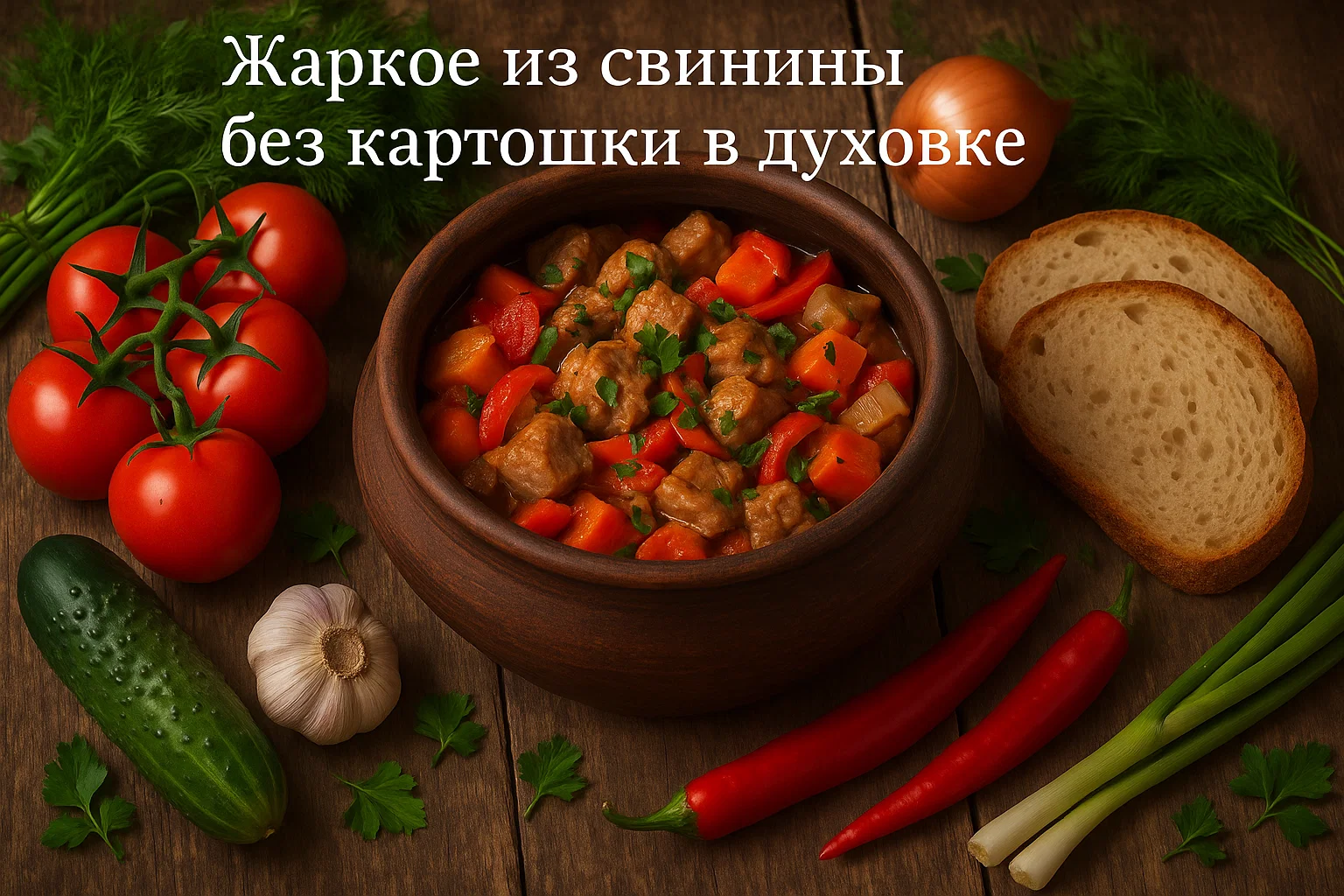
Recipe card
Oven-Braised Pork and Peppers without Potatoes
25 minutes preparation + about 85 minutes browning, vegetable cooking and oven braising + 10 minutes rest. Shoulder tenderness may require additional oven time.
Equipment: Heavy skillet or Dutch oven, oven-safe lidded casserole, knife, separate cutting boards, tongs, measuring spoons and food thermometer.
Ingredients
Pork and vegetables
Sauce and seasoning
Instructions
Prepare
Preheat oven to 180°C (350°F). Cut 700 g pork into even 3 cm pieces, pat dry and slice onions, carrot and peppers. Keep raw meat separate from ready-to-eat ingredients.

Brown
Heat part of the 2 tbsp oil over medium-high heat. Brown pork in small batches on several sides; transfer to a separate plate.
Build the sauce
Reduce heat to medium; soften onions and carrot in remaining oil about 5 minutes. Add peppers and garlic. Mix tomato paste, wine or broth, paprika, thyme, salt and pepper and scrape browned juices into the sauce.
Bake covered
Combine pork, vegetables, sauce and bay leaf in a covered oven dish. Braise about 60 minutes until fork-tender. Check thickest pieces reach at least 63°C (145°F); if still tough, continue covered cooking with a little hot broth if needed.
Rest and serve
Discard bay leaf. Rest covered 10 minutes, then serve with the sauce.
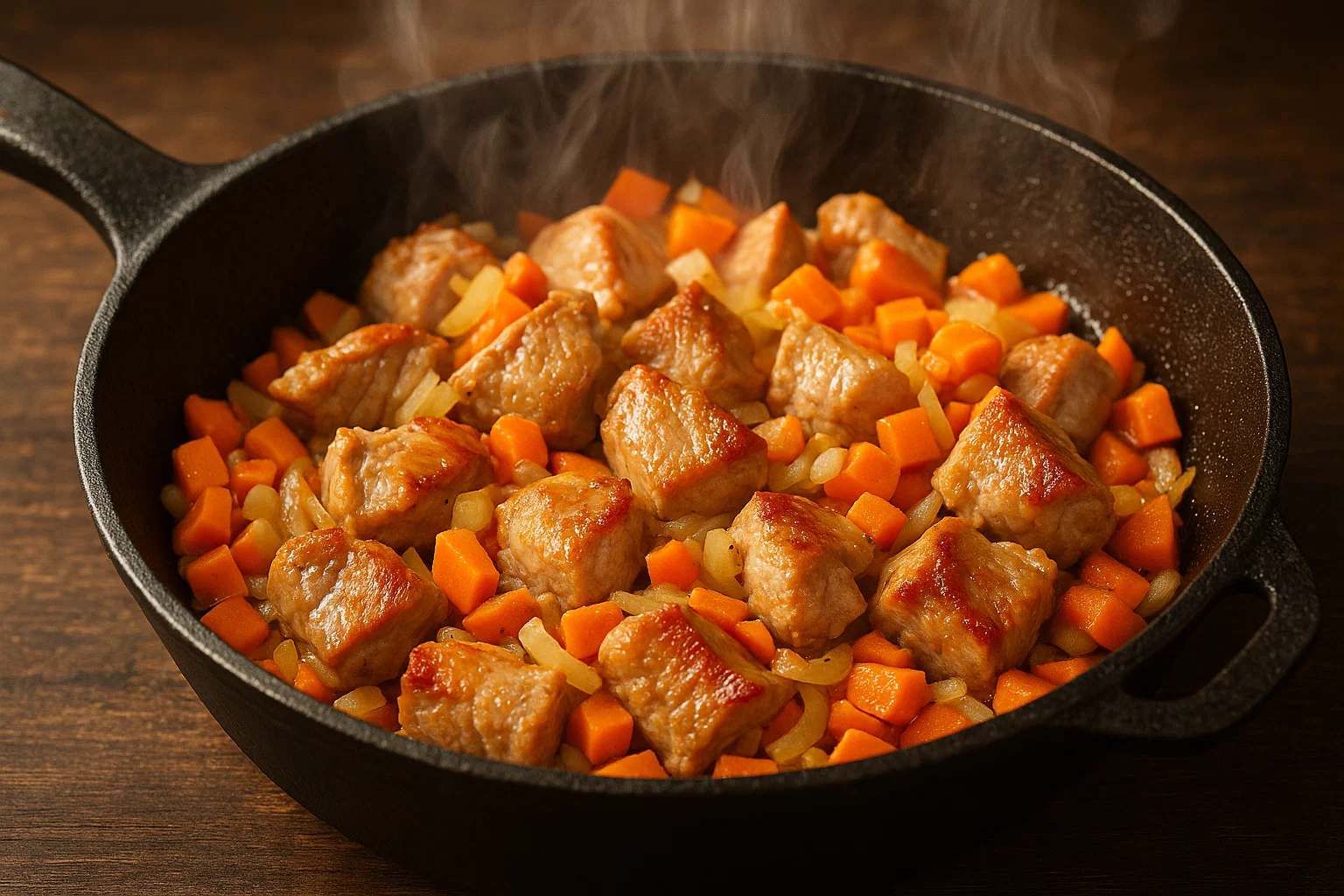
Brown the meat before braising
Preheat the conventional oven to 180°C (350°F). Pat the meat dry, then heat part of the oil over medium-high heat. Brown in small batches, turning to colour several sides. Do not try to cook the centres through yet. Transfer to a plate reserved for partially cooked meat. Reduce heat to medium and soften onions and carrot in the remaining oil for about five minutes. Add peppers and garlic and stir until fragrant. Keep the browned residue if it is golden, but remove any blackened material.
Build the sauce and cook covered
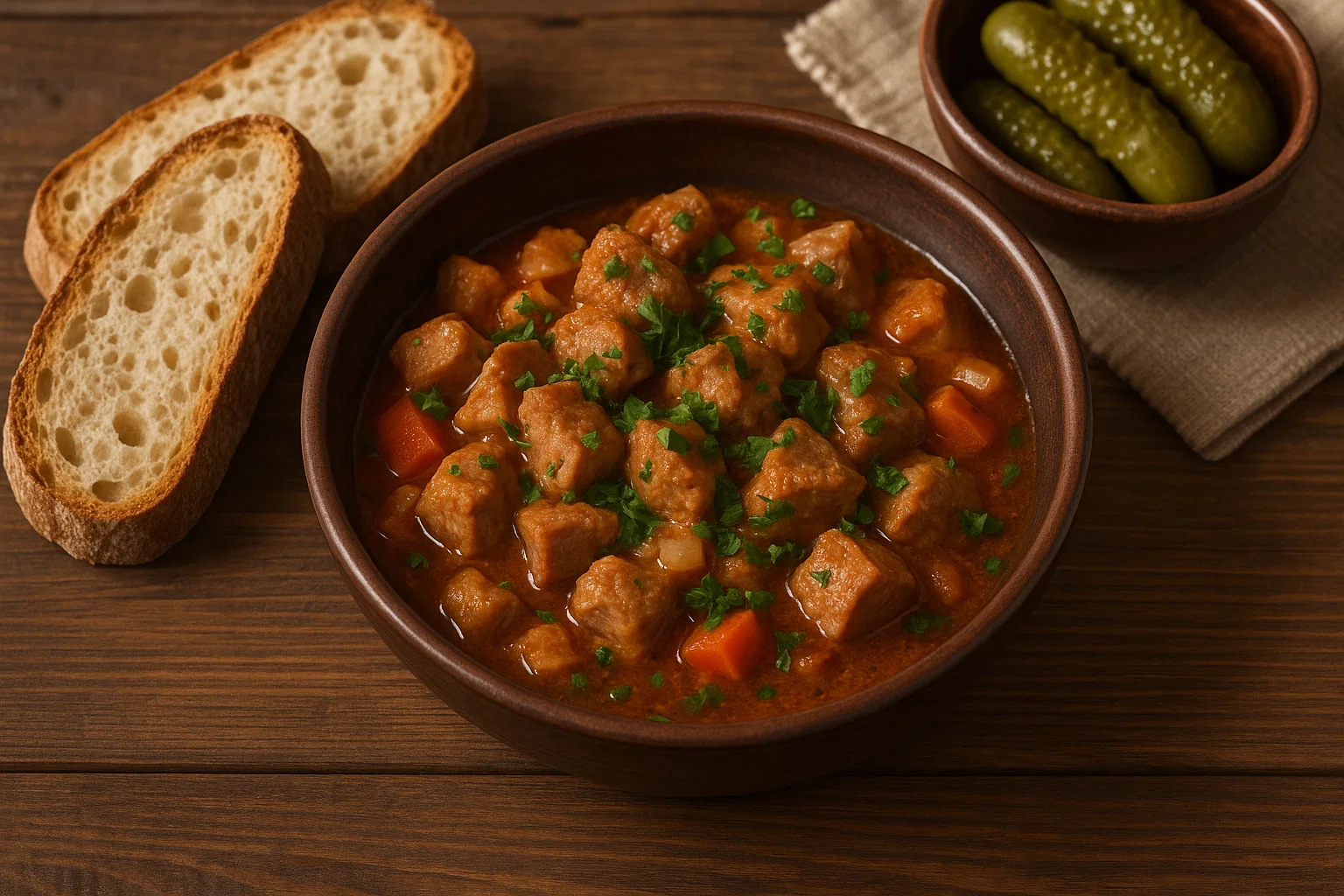
Stir tomato paste into the measured wine or broth with paprika, thyme and seasoning. Scrape the browned residue into the liquid. Combine with pork, vegetables and bay leaf in the covered oven dish. Braise for about 60 minutes, then check a representative piece. The minimum safe temperature for whole-muscle pork is 63°C (145°F) followed by at least three minutes of rest; the recipe provides ten minutes. See FDA food handling guidance. Shoulder typically needs more cooking beyond that minimum to become fork-tender. If it remains chewy, add a little hot broth if the dish is dry, cover again and continue in 15-minute intervals.
Troubleshooting
Meat is tough: continue covered cooking until connective tissue softens. Dry sauce: check the lid fits and add a small splash of hot broth. Watery sauce: once meat is tender, transfer it briefly and reduce the liquid gently on the stovetop. Bitter sauce: avoid burning tomato paste or garlic. Taste before adding more salt, especially when using broth.
Serving and variations
Serve with rice, buckwheat, crusty bread or boiled potatoes on the side if desired. For a vegetable accompaniment try king oyster mushrooms in sour cream sauce. For another main course see chicken cutlets or chicken in garlic sour cream sauce. Red and yellow peppers lend sweetness; green peppers give a more savoury flavour. Keep the original shoulder cut and covered method for the most comparable result.
Make ahead, storage and allergens
Chop vegetables ahead and keep chilled. Do not partially cook pork for finishing much later. Fully cook the braise, cool promptly and refrigerate if making ahead. Wine may contain sulphites and broth may contain celery, wheat or other allergens; check labels.
Refrigerate within 2 hours (1 hour above 32°C/90°F) in shallow covered containers at 4°C/40°F or colder for up to 3 days. Reheat to 74°C/165°F. Freeze portions with sauce for up to 2 months for best quality; thaw in the refrigerator.
Discard the bay leaf and spoon the tender pork and vegetables over your chosen side, with plenty of the cooking juices.
Frequently asked questions
Can I use pork loin?
Shoulder or neck is preferable; loin has less connective tissue and may dry during a long braise.
Can I omit wine?
Yes. Use 50 ml broth as the original alternative.
Why is pork still tough after an hour?
Shoulder needs time for connective tissue to soften. Continue gentle covered cooking and check moisture.
Can I add potatoes?
They can be served separately. Adding them to the casserole changes liquid requirements and timing.
Can I cook this ahead?
Yes. Fully cook, cool promptly and refrigerate; reheat thoroughly before serving.
More recipes to try






Spotted a detail that needs correcting? Contact the FeastDelights editors.