Crispy Khvorost Fried Pastry Twists
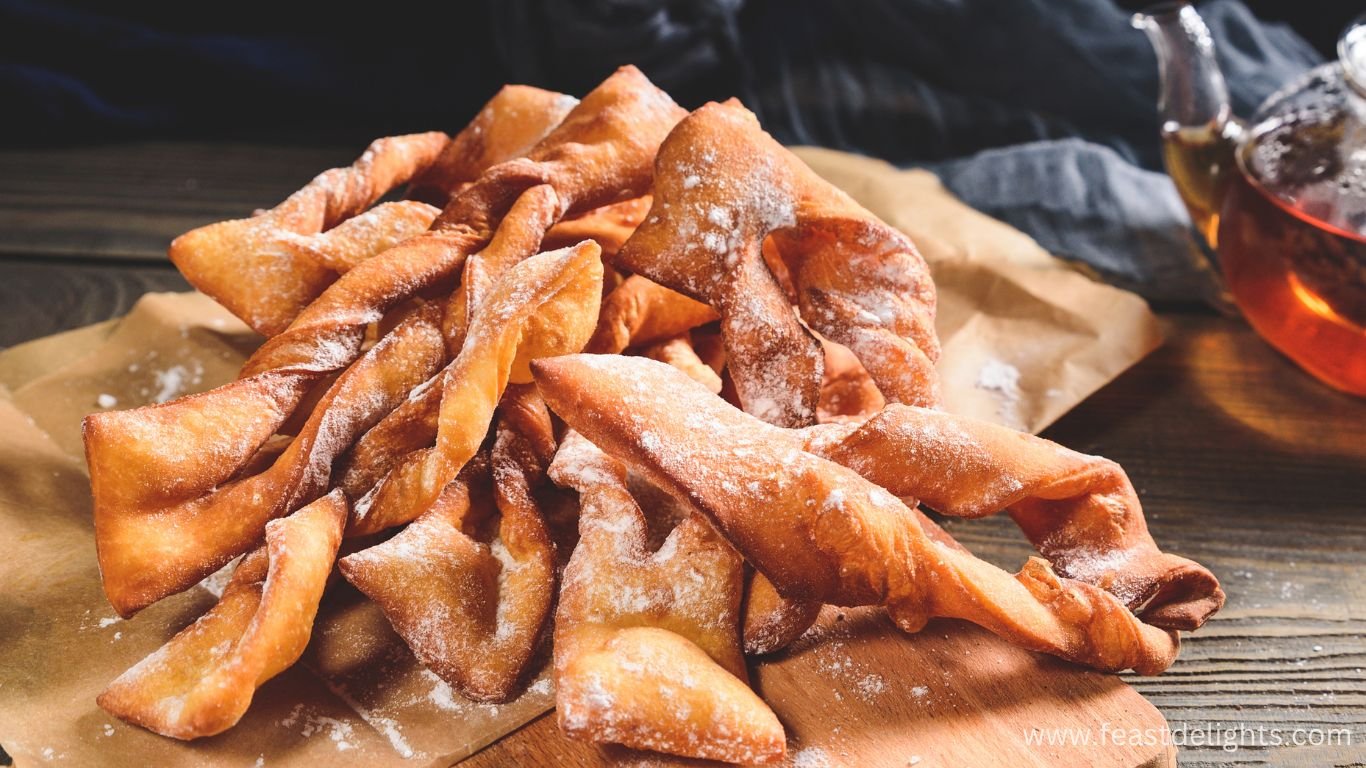
These crispy khvorost pastries are thin Eastern European fried dough twists with a lightly sweet vanilla flavour and delicate golden edges. Whole eggs and sour cream form the dough, which rests before rolling so the strips are easier to shape. Fry only a few twists at a time in oil near 175°C, then drain and dust with icing sugar. The recipe makes about 30 pieces in approximately 90 minutes, including resting. Serve with tea or coffee while the pastries are crisp.
Khvorost is an Eastern European fried pastry made from thin strips of dough twisted into ribbons or knots. These crispy khvorost fried pastries use whole eggs, sour cream and vanilla sugar for a lightly sweet flavour, with icing sugar added after frying. The recipe makes approximately 30 twists in 90 minutes, including a 30-minute dough rest. Exact yield and frying time depend on how thinly the dough is rolled and the size of each strip.
Recipe card
Crispy Khvorost Fried Pastry Twists
Allow 30 minutes for resting and approximately 25 minutes for frying in batches; larger batches or slower oil recovery may take longer.
Equipment: Digital scale, mixing bowl, whisk, rolling pin, pastry cutter or knife, deep heavy saucepan, frying thermometer, long-handled slotted spoon, paper towels, wire rack
Ingredients
Instructions
Whisk eggs and sour cream
Beat whole eggs with granulated sugar and vanilla sugar. Stir in sour cream and salt.
Make and rest the dough
Add flour gradually to form a firm workable dough. Knead briefly, cover and refrigerate for 30 minutes.
Roll thinly and shape twists
Roll portions to about 2 mm thickness on a lightly floured surface. Cut narrow strips and twist loosely or pass an end through a slit in the centre.
Fry in small batches
Heat vegetable oil to about 175°C (350°F) in a deep heavy pan, no more than half full. Fry a few at a time for about 1–2 minutes per side until pale gold and cooked through. Let oil temperature recover between batches.
Drain and dust
Remove with a slotted spoon and drain on paper towels, then transfer to a rack. Cool slightly before dusting with icing sugar.
Ingredients and dough consistency
Use 500 g (17.6 oz) plain or all-purpose flour, five eggs, 100 g (3.5 oz) sugar, 10 g vanilla sugar, a pinch of salt and 100 ml (about 6¾ US tablespoons) sour cream. Add flour gradually rather than forcing all of it in at once: egg size and flour absorbency affect the dough. It should be firm enough to roll thinly but not dry or crumbly. Reserve any unused flour for rolling. If the dough remains very sticky after resting, work in a little reserved flour. Whole eggs are used in this formula, so no separate egg-white step is needed. The 750 ml (about 3¼ US cups) vegetable oil is the frying medium, not the quantity absorbed by the pastries.
Roll and shape the twists
Whisk the eggs with both sugars, then mix in sour cream and salt. Gradually incorporate the flour and knead briefly until the dough is cohesive. Cover and rest for 30 minutes in the refrigerator to relax the dough. Work with one portion at a time, leaving the remainder covered so the surface does not dry. Roll to about 2 mm (roughly 1/16–1/8 inch) on a lightly floured surface. Cut narrow strips of similar size. To make a twist, cut a short lengthwise slit in the centre of each strip, pass one end through and straighten gently. Loose knots or plain ribbons also work; avoid thick folds that take longer to cook.
Fry until crisp without burning
Use a deep, stable, heavy saucepan with plenty of space above the oil. Do not fill it more than halfway; choose a larger pan if needed. Heat the oil to approximately 175°C (350°F) and monitor it with a frying thermometer. Carefully lower a few pieces at a time using a long-handled slotted spoon. The pastries should bubble and gradually turn pale gold. Turn once and fry about one to two minutes per side, checking sooner for thin pieces. Let the temperature recover between batches. The first piece is useful for checking whether the middle is fully cooked and crisp after cooling. Never leave hot oil unattended or add water to it. Keep children away from the stove and keep a suitable lid nearby in case of fire.
Lift the twists out with a slotted spoon, drain on paper towels and move to a rack. Dust with the measured icing sugar once the surface is no longer oily and the pastries are slightly cooled.
Troubleshooting and variations
Greasy twists: Check that the oil has recovered to temperature before frying the next batch. Dark outside, soft centre: Roll thinner, avoid thick knots and reduce the heat if needed. Dough springs back: Let it rest covered a little longer. Pastries lose crispness: Cool fully before packing and avoid stacking while warm. Thick plain yoghurt can replace sour cream, but moisture differences may require adjustment. Lemon zest can add fragrance. This formula does not require vodka. It contains wheat, eggs and milk; check the frying oil for cross-contact if necessary.
Serving and storage
Serve with tea or coffee or arrange on a dessert platter. For a related Ukrainian fried pastry, see kefir verguny; for a different fried dough, try cinnamon sugar churros. For baked sweet shapes, see vanilla butter cut-out cookies. Cool completely on a rack before storing in an airtight container in a cool, dry place. Use within 2 days for best texture. Refrigeration tends to soften plain twists. Freezing cooked twists is not recommended for crispness; dust with icing sugar just before serving. Keep raw egg dough refrigerated and avoid tasting it before cooking.
Frequently asked questions
Do I need vodka to make khvorost?
No. This recipe relies on thin rolling and controlled frying temperature rather than alcohol.
Why do my twists turn greasy?
The oil may be too cool or the pan crowded. Fry smaller batches and check the temperature.
Can I make ribbons rather than knots?
Yes. Keep the strips thin and similarly sized so they cook evenly.
Why is my dough hard to roll?
Rest it covered to relax the dough. A firm but pliable consistency is the goal.
How much frying oil is absorbed?
That depends on the size, temperature and draining of the pastries. The listed oil quantity is the frying medium, not a nutrition estimate.
Can I store the finished twists overnight?
Yes. Cool completely and keep plain twists airtight in a cool, dry place. They are best within two days.
More recipes to try






Spotted a detail that needs correcting? Contact the FeastDelights editors.