Ukrainian Potato Deruny with Grated Onion
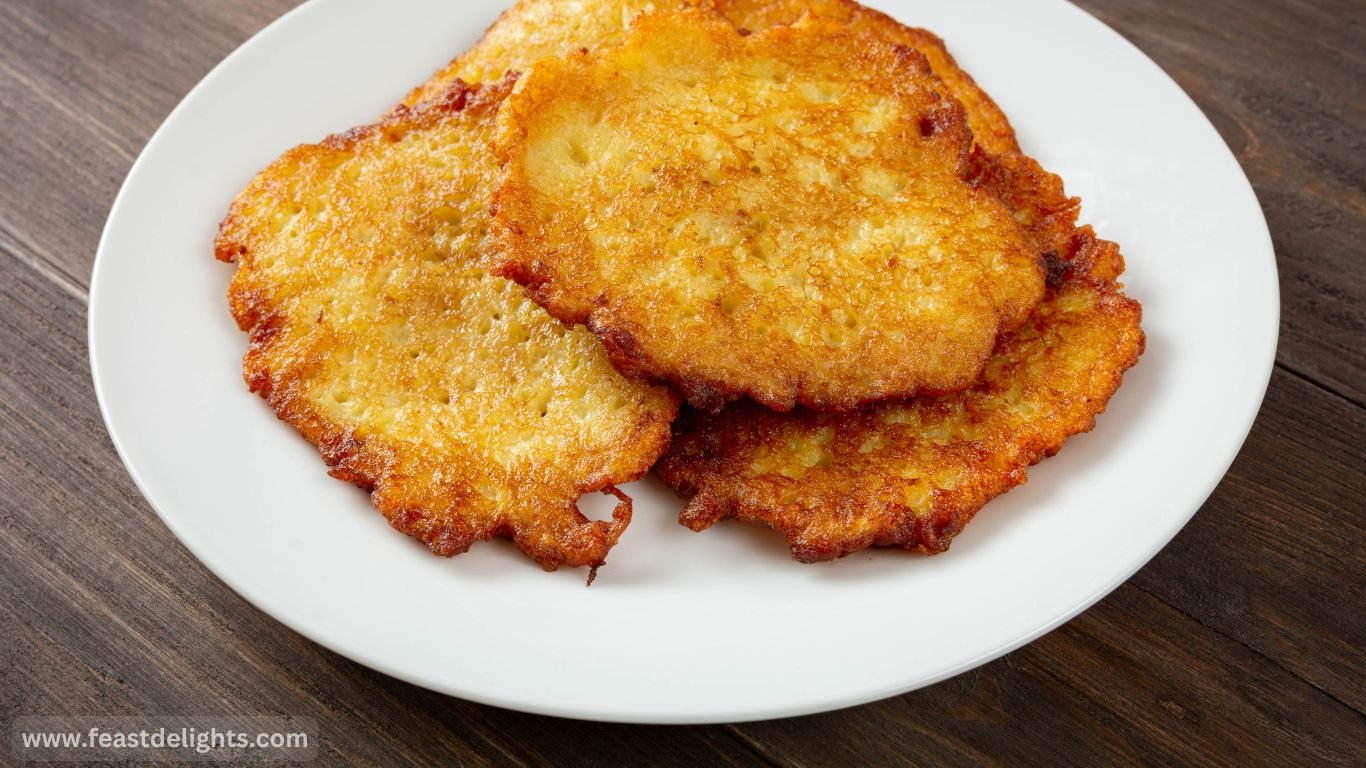
Finely grated potatoes and onion form the base of these classic Ukrainian deruny, with just one egg and two tablespoons of flour to help the mixture hold together. Frying thin spoonfuls in sunflower oil produces golden edges and tender centres without making the pancakes heavy. The recipe makes about 16 small pancakes, with preparation and frying taking approximately 55 minutes. Serve them hot, traditionally with sour cream, or alongside a salad or soup for a simple meal.
Ukrainian potato deruny are small, thin pancakes made from finely grated raw potato and onion, bound with egg and a little flour. They fry to a golden, crisp edge with a soft, fully cooked centre. This recipe makes about 16 small pancakes from one kilogram of potatoes, in roughly 55 minutes depending on the number of batches. Serve hot with sour cream if desired.
Choosing potatoes and preparing the batter
Use 1 kg (2.2 lb) potatoes. All-purpose or starchy varieties tend to form a cohesive batter because their natural starch helps bind the grated flesh. A fine grater produces the soft centre characteristic of this version; coarser shreds give a more textured pancake. Grate the onion alongside the potatoes to distribute its juices and slow browning. If liquid collects at the bottom of the bowl, drain some away. Do not squeeze the potatoes completely dry, as the mixture still needs moisture and starch to hold together.
One egg and two tablespoons of flour support the potato mixture without turning it into a thick flour batter. Season with the measured salt and pepper. The 120 ml of sunflower oil is the amount available for frying, not an estimate of how much the pancakes absorb. Use a little at a time.
Recipe card
Ukrainian Potato Deruny with Grated Onion
Allow about 35 minutes for four to five batches of thin pancakes; time depends on skillet size and the number fried at once.
Equipment: Vegetable peeler, box grater, large mixing bowl, fine-mesh colander, spoon, wide heavy skillet (about 28–30 cm), thin spatula, rack or paper towels
Ingredients
Potato batter
For frying
Instructions
Grate potatoes and onion
Peel the potatoes and onion. Finely grate them into a bowl, alternating potato and onion to distribute the onion juice. If the mixture releases a large amount of liquid, drain or gently squeeze away the excess. Work promptly to limit darkening.
Mix the batter
Stir in egg, flour, salt and black pepper until evenly combined. The mixture should be wet enough to spoon but should not sit in a pool of liquid. Do not taste raw egg batter.
Heat the oil
Heat a thin layer of sunflower oil in a wide heavy skillet over medium heat. Test a small drop of batter; it should sizzle gently without smoking. Add more of the measured oil as needed between batches.
Fry thin pancakes in batches
Spoon small portions into the skillet, flattening to about 5–8 mm (¼ inch) thick. Fry without crowding for around 3–4 minutes per side, until both sides are golden and the centre is tender, with no raw potato or egg batter. The centre should reach at least 71°C (160°F). Lower the heat if browning too quickly.
35 minDrain and serve
Lift cooked pancakes onto a rack or paper towels, replenish oil carefully between batches and serve hot with sour cream if desired.
How to fry crisp deruny with tender centres
Preheat a heavy skillet over medium heat. A small amount of batter should sizzle as it touches the oil; smoking oil is too hot. Spoon in evenly sized portions and flatten them to about 5–8 mm thick. Leave enough room to slide a spatula underneath each. Avoid pressing the pancakes repeatedly while frying. Turn once the underside is set and golden, then cook the other side until the potato is tender. Check a representative pancake for a cooked centre and no wet raw batter. The egg-containing mixture should reach 71°C (160°F). If the exterior darkens before the centre cooks, reduce the heat rather than making thicker pancakes.
As you work through the batches, the batter may release more liquid. Stir briefly before scooping and drain excessive liquid if needed. Transfer cooked pancakes to a rack to allow steam to escape; stacking them while hot makes the crust soften.
Troubleshooting and substitutions
If a test pancake falls apart, check whether the grated potato has released too much juice and whether the egg and flour are evenly mixed. Drain excess liquid rather than adding large amounts of flour. A little cornstarch can replace part of the flour for a different crust, although this changes the binding and needs a test pancake. Neutral frying oils such as canola can replace sunflower oil. The recipe contains egg and wheat; sour cream contains milk. Check alternatives and prevent cross-contact if preparing for diners with allergies.
Serving Ukrainian potato pancakes
Deruny are a familiar Ukrainian potato dish, often served with sour cream. They also work with applesauce or a fresh salad. For a different tradition, see potato latkes with grated onion; for a stuffed variation, try mashed potato pancakes with beef filling. A bowl of vegetarian Ukrainian borscht makes a satisfying pairing.
Make ahead and storage
Grate the potatoes close to frying time. For a meal prepared in advance, cook the pancakes first and store them safely rather than leaving raw batter on the counter. Cool cooked deruny briefly on a rack and refrigerate in shallow covered containers at 4°C (40°F) or colder within two hours, or one hour above 32°C (90°F). Use within two days. Reheat on a baking tray at about 190°C (375°F) until crisp and the centre reaches 74°C (165°F). Freeze cooled cooked pancakes in layers separated by parchment for up to two months for best quality; thaw in the refrigerator before reheating.
Serve the deruny as soon as possible, with sour cream alongside rather than poured over the whole batch. A little grated onion and a thin, evenly fried pancake are all this simple potato dish needs.
Frequently asked questions
Which potatoes are best for deruny?
Starchy or all-purpose potatoes usually bind well and brown nicely. Very waxy potatoes may release less starch and make a looser mixture.
Why do grated potatoes turn grey?
Exposure to air causes browning. Grate the onion with the potato and mix and fry promptly. Some discolouration is normal.
Why are the pancakes raw in the middle?
They may be too thick or the skillet too hot. Flatten the batter into thinner pancakes, lower the heat and cook until tender and fully set.
Why do deruny fall apart?
Too much liquid or insufficient binding can cause this. Drain excess juice, stir the batter and make a small test pancake before frying the rest.
Can I make deruny without wheat flour?
You can try a suitable gluten-free flour or replace some flour with cornstarch. The texture and binding may change; test one pancake first.
Are deruny the same as latkes?
They share the technique of frying grated potato, but belong to different culinary traditions and can differ in grating, binders and serving customs.
More recipes to try


Spotted a detail that needs correcting? Contact the FeastDelights editors.