Gata Recipe with Buttery Khoriz Filling
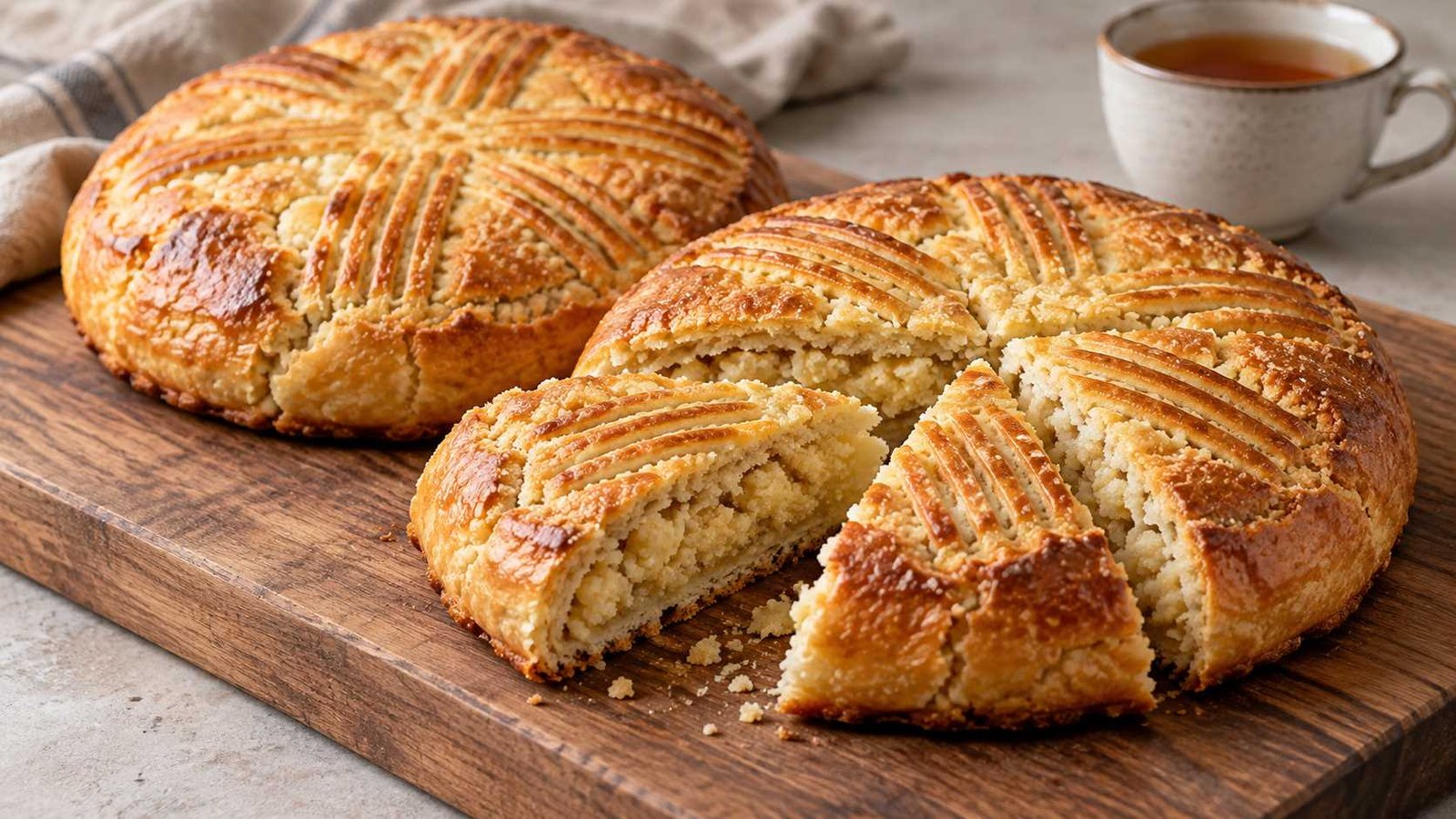
This gata recipe makes two Armenian-style pastry rounds filled with khoriz, a crumbly mixture of flour, butter and sugar.
This gata recipe makes two Armenian-style pastry rounds filled with khoriz, a crumbly mixture of flour, butter and sugar. The sour-cream dough is tender rather than breadlike, with a golden egg-washed surface and a sweet layered center. There are many regional gata shapes; these sealed rounds are sized for an ordinary baking tray. Allow the dough to chill before rolling and let the baked pastry settle before cutting, so the filling stays inside each wedge.
What matters for gata
Keep dough butter cold and filling butter soft: they do different jobs. Cold butter makes the dough tender; soft butter binds the sweet crumbs. The filling flour cooks inside the sealed pastry, so avoid tasting it raw. Roll evenly and leave a bare border for sealing. Decorative fork lines should mark the surface without tearing through to the filling.
Recipe at a glance
Yield: 2 filled rounds; 12 wedges. Preparation: about 35 minutes. Cooking: about 35 minutes. Total elapsed time: about 145 minutes. Includes about 75 minutes for the resting, rising, cooling or chilling described below.
How to make gata
Recipe card
Gata Recipe with Buttery Khoriz Filling
Equipment: Bowl; rolling pin; baking tray; parchment; pastry brush; cooling rack.
Ingredients
Dough
Khoriz
Finish
Instructions
Mix and chill dough
Mix 350 g flour, baking powder and salt. Rub in cold butter until coarse crumbs remain. Stir in sour cream and the whole egg until a soft dough forms; add no extra flour unless it is impossible to handle. Divide in half, flatten, wrap and refrigerate 45 minutes.
Make khoriz
Rub 120 g flour, sugar, soft butter and vanilla together until moist sandy crumbs form. Keep covered while rolling the dough.
Fill the rounds
Heat oven to 180°C/350°F conventional and line a tray. Roll each dough piece into a 25 cm disc. Spread half the filling over its center, leaving a 4 cm border. Gather the border over the filling and pinch closed. Turn seam down and gently flatten into an 18–20 cm round.
Glaze and bake
Set rounds apart on the tray. Mix yolk and milk; brush tops. Mark shallow lines with a fork and prick three small steam holes in each. Bake 30–35 minutes until evenly golden and the bases are browned.
Cool and cut
Rest on the tray 10 minutes, then move to a rack for 20 minutes before slicing each round into six wedges. Cut gently so the filling remains enclosed.
How to tell when it is ready
Golden crust surrounds baked crumbly filling, with no wet raw dough at the seam.
Tips
- Chill sticky dough instead of loading it with flour.
- Seal every opening before flattening.
- Keep both rounds the same thickness.
- Use shallow decorative marks.
Troubleshooting
- Filling leaks: avoid flour on the sealing edge and pinch firmly.
- Dry dough: measure flour by weight.
- Dark top and pale base: move the tray lower for the final minutes.
Substitutions
- Plain full-fat yogurt can replace sour cream, but wetter yogurt may need slightly more flour.
- Use orange zest instead of vanilla for a different aroma.
Variations
- Add 30 g finely chopped walnuts to the khoriz; this changes the classic plain filling.
Serving suggestions
- Serve wedges with black tea.
- Offer alongside coffee.
- Let cool slightly before wrapping for gifts.
- Serve plain to appreciate the filling.
Make ahead
Chill dough overnight. Let it soften just enough to roll before filling.
Storage
Store fully cooled pastry airtight for up to 2 days in a cool room, or refrigerate for up to 4 days. Freeze wrapped wedges up to 2 months for quality; thaw and warm at 160°C/320°F.
Food safety
Keep perishable ingredients at 4°C/40°F or below. Refrigerate perishable leftovers within 2 hours, or within 1 hour above 32°C/90°F. Use clean equipment and separate raw animal ingredients from ready-to-eat food.
Frequently asked questions
Is gata the same as nazook?
They overlap in ingredients and some shapes, but Armenian gata has several regional forms. This recipe specifically makes filled rounds.
Why is the filling crumbly?
Khoriz is a flour, butter and sugar mixture rather than jam or custard. Its sandy texture is expected.
More recipes to try


Spotted a detail that needs correcting? Contact the FeastDelights editors.