Refrigerator Strawberry Jam Recipe with Lemon
This refrigerator strawberry jam combines a kilogram of ripe strawberries with sugar and lemon juice to make a soft-set, fruity spread without added commercial pectin. The berries rest with sugar in the refrigerator before simmering, releasing juice and reducing the need for extra water. A chilled saucer helps you judge the final consistency. Expect approximately three small jars, depending on evaporation. Allow 25 minutes of preparation, four to five hours of refrigerated maceration, and about 40 minutes of cooking, plus cooling. Store cold rather than in the pantry.
Refrigerator strawberry jam with lemon has a soft, spoonable set and visible pieces of fruit. The original ratio of one kilogram of strawberries to 800 g sugar is retained, and lemon juice brings a bright finish. Macerating the berries with sugar before cooking draws out their juices so the jam starts with little or no added water. This recipe is not a tested shelf-stable canning formula. Allow about 25 minutes of preparation, 4–5 hours of refrigerated maceration and around 40 minutes of cooking. Cooling takes additional time. The original yield of approximately three small jars is an estimate; actual volume depends on the fruit and final evaporation.
Choose strawberries, sugar and lemon
Look for fully coloured, aromatic berries without mould or bruised, leaking areas. Rinse before removing their green tops so they absorb less water. Weigh the fruit after hulling. Keep small berries whole and halve larger ones if you like chunks in the finished spread. A mixture of ripe and slightly firmer berries can give a pleasant balance of flavour and texture.
Granulated sugar draws juice out of the fruit and helps the jam thicken as water evaporates. The original 800 g quantity is retained rather than presenting a lower-sugar version without testing. Lemon juice balances sweetness and contributes acidity, but the measured two tablespoons do not establish a safe canning process. The optional water is only to help start heating when the berries have not released enough juice. Adding it unnecessarily lengthens the cooking time.
Why maceration happens in the refrigerator
Resting strawberries with sugar for four to five hours draws liquid into the pan without cooking the berries. Cover the mixture and keep it at 4°C (40°F) or below throughout this stage. Stir gently if some sugar collects at the bottom. Do not leave the fruit on the counter for the entire waiting period. Use all the syrup that develops rather than draining it away.
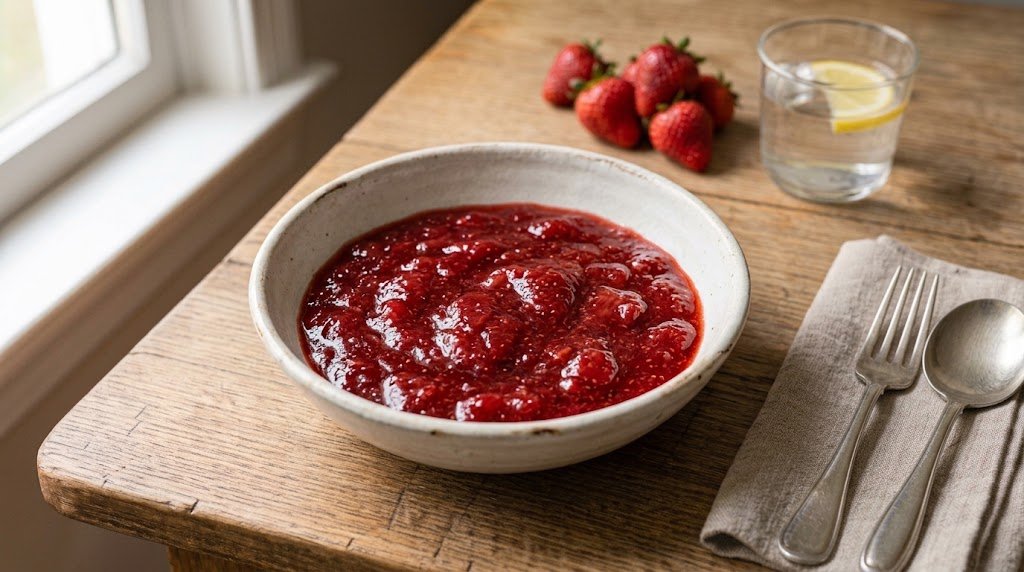
Recipe card
Refrigerator Strawberry Jam Recipe with Lemon
25 minutes preparation, approximately 40 minutes cooking, at least 4 hours refrigerated maceration and about 30 minutes initial cooling. Allow longer for a 5-hour maceration or full chilling.
Equipment: Kitchen scales, non-reactive bowl, wide heavy saucepan, heat-resistant spoon, chilled saucer, ladle, small clean heatproof containers
Ingredients
Instructions
Prepare and weigh the berries
Rinse sound ripe strawberries under running water, remove the hulls and weigh 1 kg of prepared fruit. Halve larger berries; leave some small ones whole for texture. Discard mouldy or damaged berries.
Macerate in the refrigerator
Toss the berries with 800 g sugar in a clean non-reactive bowl or pan. Cover and refrigerate at 4°C (40°F) or below for 4–5 hours, until juice collects around the fruit.
Bring the mixture to a boil
Transfer berries and all released juice to a wide heavy non-reactive saucepan. Stir in 2 tablespoons lemon juice. Add a little of the optional water only if needed to prevent sticking as the mixture starts heating. Bring to a boil over medium heat, stirring until the sugar dissolves.
Simmer and check the set
Reduce the heat to maintain an active simmer, stirring often and more frequently as the mixture thickens. Cook for around 30–40 minutes. Remove the pan from heat while testing a small spoonful on a chilled saucer. After cooling, the drop should mound slightly or wrinkle softly when pushed, rather than spreading like juice. Return to heat briefly if necessary.
40 minPortion, cool and refrigerate
Carefully ladle into clean, small heatproof jars or containers. Allow steam to escape briefly and refrigerate promptly within 2 hours of cooking, or 1 hour above 32°C (90°F). Close securely once cooled. Label with the date and keep refrigerated. Freeze extra portions in appropriate containers with room for expansion; do not treat a sealed lid as proof of safe canning.
Get a soft set without overcooking
Use a wide, heavy saucepan with plenty of room for bubbling. A narrow pan slows evaporation, while a thin base makes scorching more likely. Stir until the sugar dissolves and keep the mixture at a steady active simmer. As it thickens, scrape along the bottom more frequently using a heat-resistant spoon. If foam gathers, skim it carefully if you prefer a clearer appearance; it is not necessary to remove every bubble.
Chill a small saucer before cooking. When the jam looks glossy and the liquid coats a spoon, take the pan off the heat. Put a small drop onto the cold saucer and allow it to cool. Push the edge gently: a soft wrinkle or slight mound suggests a spoonable set. If it spreads like thin juice, return the saucepan to heat for a few minutes and retest. This follows the general cold-plate method described by the National Center for Home Food Preservation. The test indicates texture, not microbial safety.
Common problems
Jam too thin: wait until fully cold before judging it. If it remains loose, use it as a fruit sauce or briefly cook again in a clean pan and refrigerate promptly. Jam too firm: the mixture may have reduced too far; use smaller amounts as a topping rather than adding water to stored jars. Scorched taste: use a heavy pan and stir more often as the mixture thickens. Do not scrape burnt material into the finished jam. Whole fruit becomes tough: avoid prolonged boiling after the mixture reaches a soft set.
Serving and variations
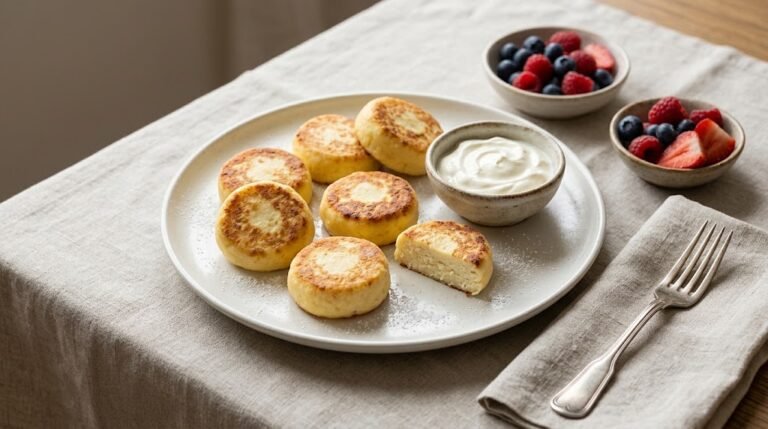
Spread on toast or serve with Greek yogurt pancakes, Ukrainian syrniki or thin milk blini. A spoonful also works over plain yoghurt. For a smoother texture, crush some fruit with the back of a spoon while cooking. A little finely grated lemon zest is an optional flavour adjustment, not a preservative treatment.
Cooling, freezing and storage
Use clean small heatproof containers and refrigerate promptly within two hours of cooking. Keep the jam at 4°C (40°F) or below and use within two weeks as a conservative limit. The exact formula has not been validated for a specific shelf life. Follow the National Center for Home Food Preservation storage guidance for the distinction between refrigerated spreads and tested home-canned products. Never store this batch in the pantry, even if the lid seems to seal. Scoop servings with a clean spoon and return the jar to the refrigerator. Discard the entire jar if you notice mould, yeast or other spoilage. Freeze surplus in freezer-safe containers, leaving room for expansion, and thaw in the refrigerator. No nutrition values are provided because the finished weight and jar yield have not been measured. The listed ingredients have no intentionally added major allergens; check labels and avoid cross-contact if needed.
Frequently asked questions
Do I need commercial pectin?
No. This recipe relies on the fruit, sugar, acidity and evaporation for a soft set. It may not become as firm as a jam made with added pectin.
Can I reduce the sugar?
Reducing sugar changes the set, flavour and storage behaviour. Use a separately developed lower-sugar refrigerator or freezer jam recipe rather than assuming the same outcome.
Why is my jam still runny when hot?
Hot jam is naturally looser. Test a cooled spoonful and let the jar chill before deciding whether the consistency is too thin.
Can I use frozen strawberries?
Yes, thaw covered in the refrigerator and retain the released juice. Frozen fruit can release more water, so cooking time may change.
What if the jam develops mould?
Discard the whole container. Do not scrape the mould off and eat the remainder.
Can I double the batch?
Cook in separate batches instead. A larger volume evaporates differently and may take much longer to set.
Is the jam safe to store in a cupboard?
No. The recipe has no validated canning process. Keep it refrigerated or frozen.
More recipes to try



Spotted a detail that needs correcting? Contact the FeastDelights editors.