Georgian Satsebeli with Tomato, Garlic and Cilantro
Georgian satsebeli is a thick, tangy tomato sauce with garlic, red chilli, fresh coriander and khmeli-suneli, a fragrant Georgian spice blend. This cooked version uses one kilogram of ripe tomatoes and makes approximately three cups in 70 minutes. Simmer uncovered until the tomato juices reduce, then add the seasonings and finish with fresh herbs. Serve as a dip or spoon over grilled meat, roast potatoes and vegetables. Keep this fresh sauce refrigerated or frozen; it is not a tested canning recipe.
Georgian satsebeli combines ripe tomatoes with garlic, chilli, coriander and khmeli-suneli for a bright, mildly spicy sauce. This version makes about three cups in 70 minutes. The tomato base is reduced before the herbs and spices are added, giving a thick but spoonable sauce. Serve it with grilled dishes or bread, and refrigerate or freeze any leftovers.
What makes this tomato satsebeli distinctive?
Satsebeli is a Georgian sauce name, and recipes can differ considerably in their ingredients and thickness. This version is cooked from fresh tomatoes rather than made from tomato paste. Garlic and chilli bring savoury warmth, vinegar adds a sharp finish and fresh coriander contributes a green herbal aroma. Khmeli-suneli gives the sauce a recognisably Georgian seasoning profile. It is not the same as Georgian tkemali plum sauce, which uses plums as its main ingredient.
Choose tomatoes and seasonings
Use one kilogram (about 2.2 lb) of ripe tomatoes. A fleshy variety reduces more readily, while very juicy tomatoes may require additional simmering time. Select sound tomatoes with no mould or spoilage. Wash them under running water before scoring the skins. Peeling makes the sauce smoother without requiring a blender.
Five cloves of garlic give a pronounced savoury flavour. Mince rather than leave large pieces, so the garlic disperses through the tomato base. The recipe calls for a seeded red chilli; heat varies substantially between varieties, so start with a portion if you are unfamiliar with its strength. Wash hands and utensils after handling hot peppers, and avoid touching your eyes. Fresh cilantro is the same herb known as coriander leaf in many countries. Use the leaves and tender stems, washed and drained, and chop finely.
Khmeli-suneli is a dry Georgian spice mixture, not one particular herb. Ingredients vary by producer and may include coriander, fenugreek and dried herbs. Check the label for allergens. Use the measured teaspoon as a starting point rather than adding a large quantity of an unfamiliar blend. Dried basil and black pepper round out the seasoning. Red wine vinegar is included for flavour, not as a guarantee of safe preservation. Sugar balances sharp tomatoes; adjust only after reduction and tasting.
Peel and reduce the tomatoes
Score a shallow cross at the base of each tomato. Lower them carefully into boiling water in batches for about 30 seconds, then transfer to cold water. When cool enough to handle, loosen the skin at the score and peel. If a particularly firm tomato resists, give it another brief blanch rather than cutting away large amounts of flesh. Remove the hard stem area and chop the flesh.
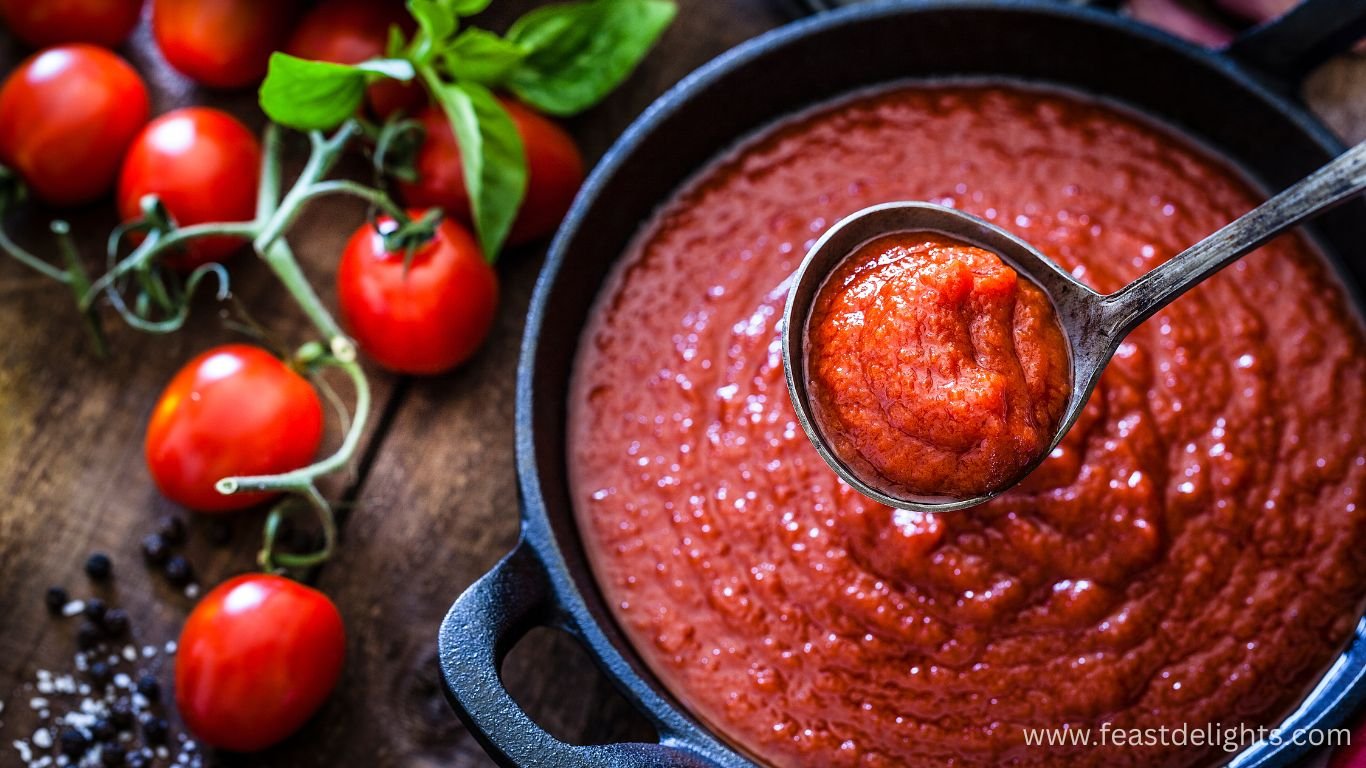
Place the chopped tomatoes in a wide saucepan over medium heat. Bring to a gentle simmer and leave uncovered, stirring periodically. Allow 30–40 minutes for reduction. A wide pan gives moisture more surface area to escape. Reduce the heat as the mixture thickens, and scrape the bottom with a wooden spoon to prevent catching. The mixture should coat the spoon and look like sauce rather than thin tomato juice; the precise yield depends on the tomatoes.
Season in stages
Stir in the minced garlic, chilli, sugar, salt, red wine vinegar, basil, khmeli-suneli and black pepper. Simmer gently for about eight minutes, stirring as needed. Add the chopped fresh coriander for the final two minutes. Adding it late retains more of its fresh aroma than simmering it from the beginning. Taste a small cooled spoonful and adjust salt, vinegar or sugar only if necessary. If you prefer a smooth sauce, blend carefully after cooling slightly, following your blender’s instructions for hot liquids.
Recipe card
Georgian Satsebeli with Tomato, Garlic and Cilantro
20 minutes preparation and about 50 minutes cooking including blanching and simmering; juicy tomatoes may take longer. Cooling for storage is additional.
Equipment: Knife, cutting board, large blanching pot, slotted spoon, bowl of cold water, wide saucepan, spoon and shallow storage containers.
Ingredients
Tomato base
Seasoning
Fresh herb finish
Seasoning
Instructions
Blanch and peel tomatoes
Wash tomatoes, score skins and blanch about 30 seconds in boiling water. Transfer to cold water, peel, remove hard stem areas and chop.
Reduce tomato base
Bring tomatoes to a gentle simmer in a wide saucepan. Cook uncovered 30–40 minutes, stirring and lowering heat as needed, until thick and spoonable.
Add garlic and spices
Stir in minced garlic, seeded chilli, sugar, salt, vinegar, basil, khmeli-suneli and black pepper. Simmer 8 minutes, stirring.
Finish with coriander
Add chopped cilantro (coriander leaf) and simmer 2 minutes. Taste a cooled spoonful and adjust seasoning if needed.
Cool and refrigerate
Serve, or transfer promptly to shallow clean containers and refrigerate or freeze. This sauce is not for shelf-stable canning.
Fix the consistency and flavour
Too thin: simmer uncovered longer before making final seasoning adjustments. Too thick: stir in a small splash of drinking water and return to a simmer. Too sharp: taste after cooling a spoonful, then add a little sugar if needed. Too hot: add more reduced unseasoned tomato rather than trying to disguise the chilli with extra sugar. Bitter or burnt: lower the heat as the sauce reduces and stir more often; do not scrape a scorched layer into the finished sauce.
Serving and variations
Serve with grilled meat, roast vegetables, potatoes or Georgian shoti bread. Offer it alongside pressed Georgian-style chicken or red bean lobio. Replace a small portion of coriander leaf with parsley for a milder herbal flavour. A little ground coriander can reinforce the spice blend. Lemon juice may replace vinegar to taste for fresh serving only. The base recipe contains no intentionally added milk, eggs or wheat, but check the spice blend and vinegar labels and avoid cross-contact.
Make ahead, refrigerate or freeze
The sauce is convenient to make ahead because it can be served cold, at a cool serving temperature or warmed. Cool promptly in shallow clean containers and refrigerate at 4°C (40°F) or colder within 2 hours (1 hour above 32°C/90°F). Use within 4 days. Freeze in small portions for up to 3 months for best quality; thaw in the refrigerator. This is not a shelf-stable canning recipe. Use a clean spoon each time, and do not return sauce from a shared dipping bowl to the main container. Follow safe cooling guidance. The small vinegar addition and boiling process do not make the recipe suitable for room-temperature storage in sealed jars. Use a separate tested canning formulation if preserving tomatoes for the pantry.
Serve the finished sauce in a small bowl, with its tomato, garlic and coriander flavours in balance.
Frequently asked questions
Can I leave tomato skins on?
Yes, if you prefer a rustic sauce. Peeling is recommended for the smoother texture intended here.
Can I use canned tomatoes?
Plain canned tomatoes can be a practical substitute by weight, but reduction time, salt and final yield may differ.
Is khmeli-suneli the same as ground coriander?
No. It is a blend of herbs and spices. Ground coriander alone will not give the same seasoning profile.
Can I make it less spicy?
Yes. Start with part of the seeded chilli, then taste and adjust.
Can I can this satsebeli for winter?
No. The recipe has not been established as a tested canning process. Refrigerate or freeze it.
Should satsebeli be smooth or chunky?
This version is naturally slightly textured. Blend carefully if you prefer it smooth.
More recipes to try





Spotted a detail that needs correcting? Contact the FeastDelights editors.