Quick Refrigerator Salted Tomatoes with Garlic
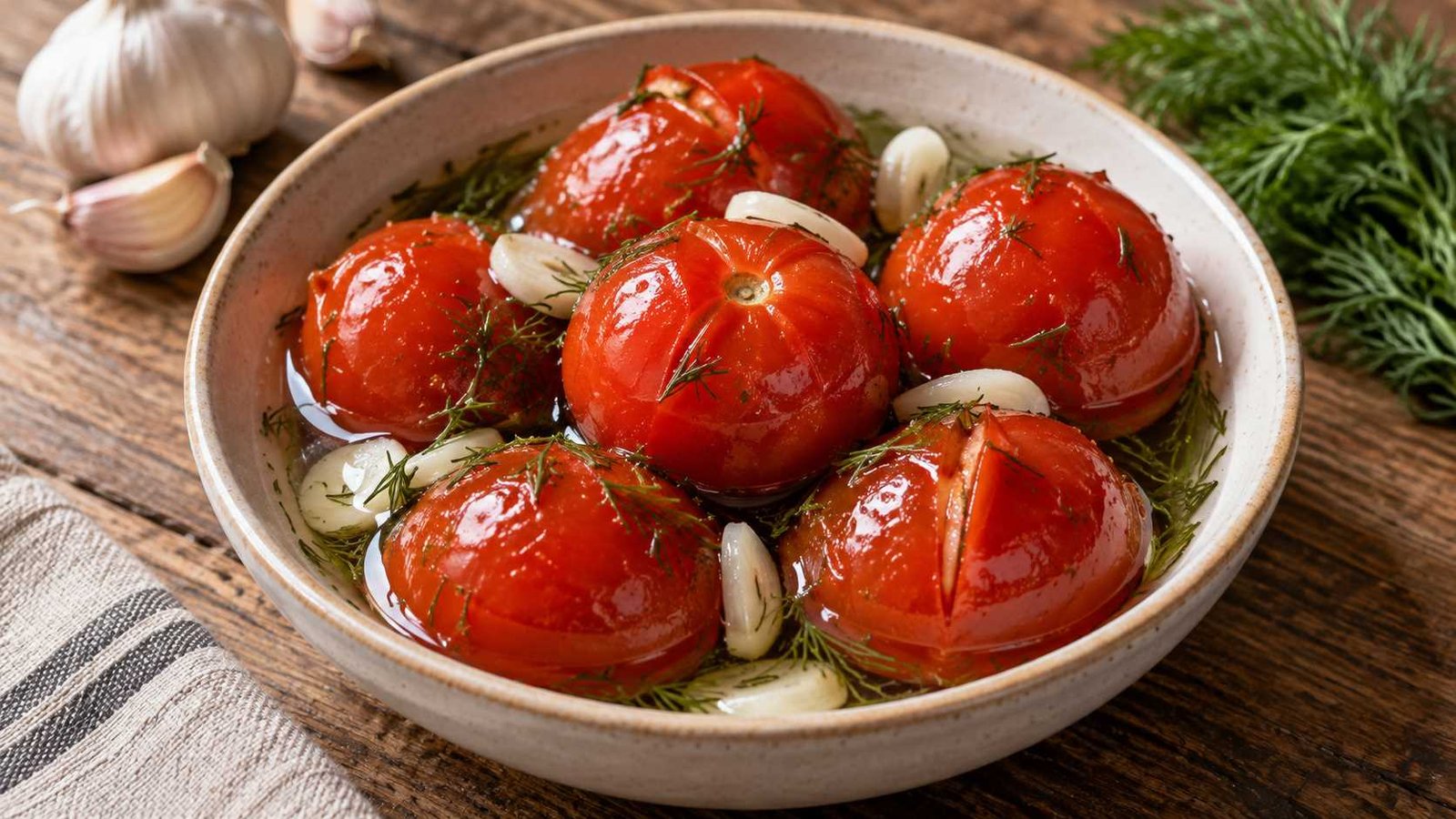
These quick refrigerator salted tomatoes are small, ripe tomatoes steeped in a cooled salt-and-sugar brine with sliced garlic, fresh dill or parsley, bay leaves and peppercorns. Their skins stay intact while the flesh becomes lightly seasoned and juicy. Prepare about a kilogram of tomatoes in 20 minutes, heat the brine briefly and allow time for cooling and overnight refrigeration. Serve them cold with potatoes, grilled meat or rye bread. This is a fresh refrigerated side dish, not a preservation or fermentation method.
A cold salt brine brings out the savoury sweetness of ripe tomatoes without cooking their flesh. This Ukrainian-style preparation keeps the tomatoes whole apart from a small slit beside each stem, so they retain their shape on a platter. Unlike fermented tomatoes, these are intended to be eaten fresh from the refrigerator. The recipe makes about 1 kg (2.2 lb), with 20 minutes of preparation, around 5 minutes of brine heating, approximately 30 minutes for rapid cooling and at least 24 hours in the fridge.
Choosing tomatoes for a cold brine
Look for tomatoes that smell ripe but resist gentle pressure. Small plum and cocktail varieties have a useful balance of firm skin and juicy flesh. Very ripe fruit can collapse when pierced, while underripe fruit may stay hard and taste grassy. Use tomatoes of similar size so they absorb seasoning at a comparable rate. A shallow slit near the stem is enough; cutting deep into the fruit releases juice and dilutes the brine.
What each ingredient contributes
Fine salt seasons the tomato flesh; the small amount of sugar rounds out its taste. Neither makes this recipe shelf-stable. Garlic adds pungency, especially when sliced thinly. Whole peppercorns and bay leaves give the liquid a gentle spice aroma without leaving gritty seasoning. Dill provides a distinctive fresh fragrance, while parsley is a milder alternative. Use potable water and a clean glass or food-grade plastic container. Avoid aluminium or damaged metal containers.
Recipe card
Quick Refrigerator Salted Tomatoes with Garlic
Allow approximately 30 minutes to cool the brine rapidly, plus at least 24 hours in the refrigerator. Cooling may take longer.
Equipment: Saucepan, knife, cutting board, ice-water bath, clean food-grade lidded container, food-safe weight if needed
Ingredients
Tomatoes
Instructions
Wash and slit the tomatoes
Wash the tomatoes and herbs under running water. Discard damaged or mouldy fruit. With a clean small knife, make a shallow slit next to each stem scar without cutting the tomato in half.
Dissolve and cool the brine
Bring the water, salt, sugar, bay leaves and peppercorns to a boil in a saucepan, stirring to dissolve. Remove from the heat after about 5 minutes of heating. Cool rapidly by standing the pan in an ice-water bath, keeping bath water out of the brine; refrigerate until cold if necessary.
5 minPack the tomatoes and herbs
Put the tomatoes in a clean food-grade lidded container, distributing the sliced garlic and herb sprigs between layers. Pour the cold brine over them. Use a clean food-safe weight if needed to hold the fruit below the liquid.
Refrigerate for 24 hours
Cover and immediately refrigerate at 4°C (40°F) or below. Allow 24 hours for a light seasoning or up to 48 hours for a stronger flavour. Do not leave the container at room temperature to ferment.
Drain and serve
Lift out only the tomatoes you intend to eat using a clean utensil. Serve cold, whole or halved. Return the remainder to the refrigerator promptly.
How to keep the tomatoes firm
The most important technique is cooling the brine before it touches the fruit. Hot liquid can split the skin and soften the flesh. An ice-water bath cools the saucepan more quickly than leaving it on a counter. Pack the fruit without pressing it down hard, and use a container just large enough to keep the tomatoes submerged. If a litre of brine does not cover the fruit, divide it among smaller containers or prepare another portion in the same proportions.
After the overnight wait, cut one tomato and check its flavour. A larger tomato may taste milder in the centre. Give it another day in the fridge rather than adding salt directly to the stored liquid. If a serving tastes too salty, pair it with plain potatoes or unsalted bread instead of diluting the brine. Do not rely on taste, smell or appearance alone to establish safety.
Serving ideas and variations
Serve a few tomatoes beside Ukrainian potato deruny, honey-glazed chicken drumsticks or a chilled vegetable platter. Rye bread and a mild cheese also work well. For a mustard-flavoured alternative, see the separate garlic and mustard refrigerator tomatoes. For this version, use dill or parsley and a few slices of washed chilli if you like heat. Keep the plain salt brine as the defining feature rather than adding oil.
Make ahead, storage and food safety
Prepare the day before serving and keep the container covered at 4°C (40°F) or below. The salt concentration is not validated for preservation, and this recipe has no added acid. Treat the tomatoes as perishable prepared produce, not a ferment or pantry pickle. Follow FoodSafety.gov’s refrigeration guidance: do not leave perishable food out for more than two hours, or one hour above 32°C (90°F). As a conservative editorial change, use within three days of preparation rather than the earlier five-day recommendation. No precise shelf life has been established for this formula. Freezing is unsuitable for the intended fresh texture.
The ingredients contain no intentionally added common major allergens, but check packaged seasonings and avoid cross-contact. Nutrition is not estimated because salt uptake into the tomatoes is unknown.
Frequently asked questions
Which tomatoes work best?
Small firm plum or cocktail tomatoes work well. Very large tomatoes season unevenly and soft ones split easily.
Why slit the tomatoes?
A shallow opening allows the brine to reach the flesh while preserving the shape. It is not necessary to peel the tomatoes.
Is the brine meant to bubble?
No. This is not an intentional fermentation. Discard the batch if unexpected bubbling, mould or spoilage is observed; do not taste to assess safety.
Can I use parsley instead of dill?
Yes. Parsley gives a milder, greener flavour; dill is more aromatic.
Can I use the leftover brine again?
No. Once it has held raw vegetables, discard it rather than making a new batch with it.
Can I make these without sugar?
For this short refrigerated preparation the sugar balances salt rather than providing preservation. Omitting it gives a more savoury flavour; refrigeration is still essential.
More recipes to try





Spotted a detail that needs correcting? Contact the FeastDelights editors.