Smetannik Layer Cake with Vanilla Sour Cream
Smetannik is a soft sour cream sponge layered with a sweet, tangy vanilla sour cream filling. This version bakes one round cake, then splits it horizontally after cooling and spreads the cream between the layers and over the outside. Thick sour cream is important for a filling that holds its shape, while a long refrigerated rest allows the sponge to soften slightly. The recipe makes ten slices in about six hours and fifteen minutes, including cooling and at least four hours of chilling.
Smetannik is an Eastern European-style sour cream cake with a tender sponge and tangy, sweetened sour cream between the layers. This version bakes a single 23 cm (9 inch) round cake, which is split horizontally and coated with vanilla cream. It makes ten slices. Allow about 6 hours 15 minutes including cooling and at least four hours of refrigeration before serving.
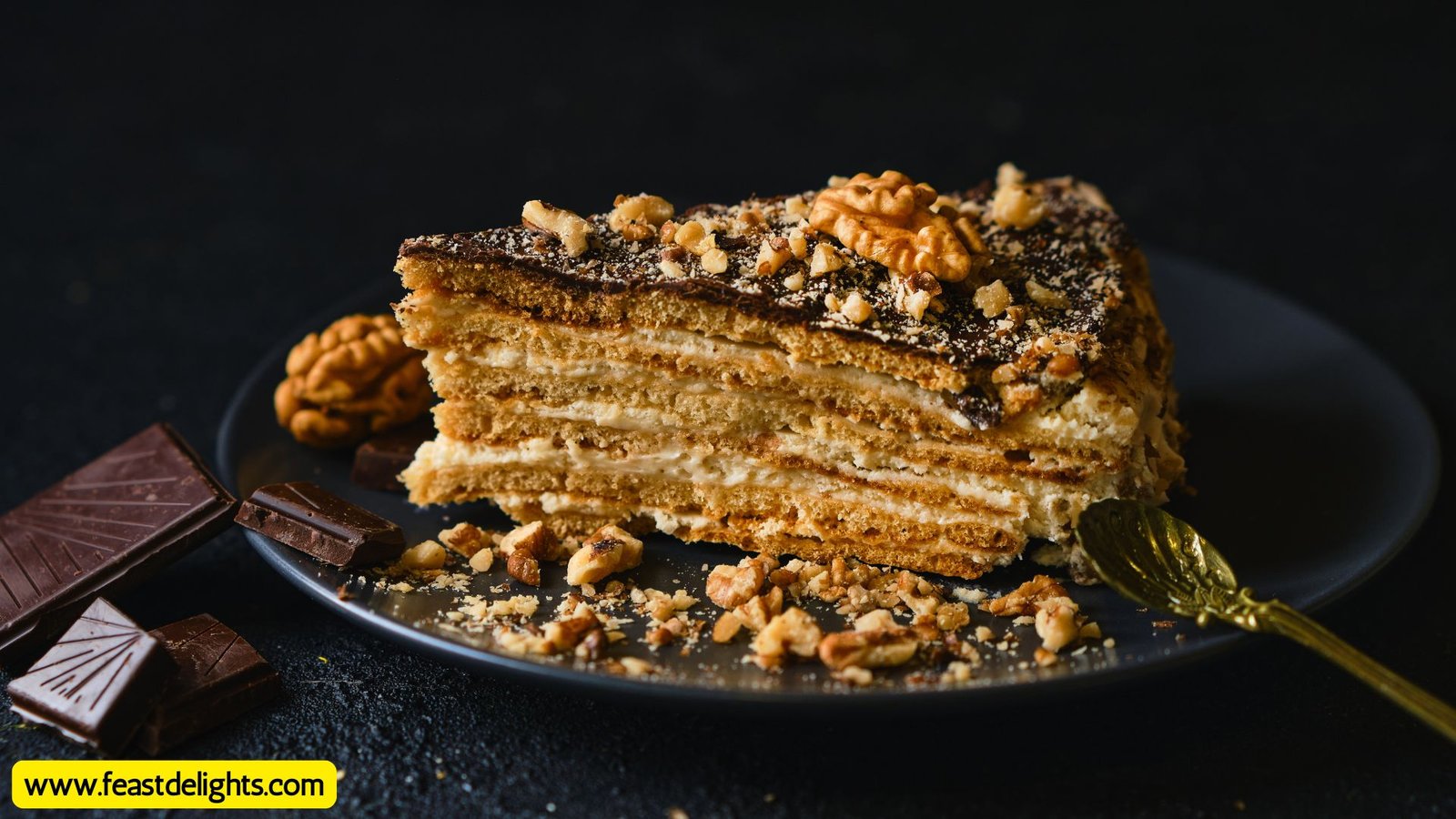
Recipe card
Smetannik Layer Cake with Vanilla Sour Cream
Allow about 70 minutes for sponge cooling and at least 240 minutes chilling; the filling's 15-minute chill overlaps cooling. Drain thin sour cream separately if necessary.
Equipment: Digital scale, mixing bowls, mixer, whisk, spatula, 23 cm round cake tin, parchment, skewer, wire rack, serrated knife, serving plate
Ingredients
Sponge
Vanilla sour cream filling
Instructions
Prepare the cake tin
Preheat conventional oven to 180°C (350°F). Grease a 23 cm (9 inch) round cake tin and line its base.
Beat eggs and add wet ingredients
Beat eggs and granulated sugar until pale and thickened. Mix in 400 g sour cream, cooled melted butter and vanilla sugar or extract.
Fold in the flour
Whisk flour with baking powder and fold into the wet mixture just until evenly combined.
Bake and cool completely
Pour into tin and bake 35–40 minutes initially, until the centre is set and a skewer comes out without wet batter. Cool briefly in the tin, then completely on a rack.
Mix and chill the filling
Stir thick chilled sour cream with icing sugar and vanilla until smooth. Refrigerate 15 minutes. If the sour cream is watery, drain before mixing.
Split, fill and refrigerate
Cut the cooled sponge horizontally into two layers. Spread half the filling over the bottom layer, add the top layer and coat with the remaining cream. Refrigerate covered for at least 4 hours.
Choosing the sour cream and other ingredients
The recipe uses 400 g (14 oz) sour cream in the sponge and a separate 500 g (1.1 lb) for the filling. Choose thick, full-fat sour cream for the frosting; a thin product will run down the sides. If there is visible whey, drain it in a fine sieve in the refrigerator before weighing the filling portion. Extra draining time is not included in the recipe timing. The sponge uses three eggs, 200 g (7 oz) granulated sugar, 100 g (3.5 oz) melted unsalted butter and 300 g (10.6 oz) plain or all-purpose flour. The teaspoon of baking powder provides lift along with the air beaten into the eggs. Vanilla sugar or vanilla extract flavours the sponge; use the stated alternative rather than adding both. Sift the 120 g (4.2 oz) icing sugar for the filling if it is lumpy.
How to bake an even sponge
Grease the round tin and line its base with baking parchment. Use a tin deep enough for the batter to rise without overflowing. Beat eggs and granulated sugar until pale and thicker, then gently incorporate the sour cream, cooled melted butter and vanilla. Whisk baking powder through the flour before folding it into the wet mixture. Stop when the batter is evenly combined; vigorous mixing at this point can toughen the sponge and knock out air.
Transfer the batter to the tin and level the surface. Bake in a fully preheated conventional oven at 180°C (350°F) for 35–40 minutes initially. The centre should spring back lightly and a skewer should emerge without wet batter. If needed, extend the baking in short intervals. Cool briefly in the tin until stable enough to turn out, then cool completely on a wire rack. A warm sponge is more likely to tear and will soften the filling.
Filling and assembling the layers
Stir or whisk the thick chilled sour cream with icing sugar and vanilla only until smooth. Sour cream is not whipped cream; prolonged beating can make it thinner rather than thicker. Refrigerate for 15 minutes while preparing the sponge. If the cream is still too loose, use a spoon to assess whether it can hold a layer rather than expecting refrigeration to fix a watery product. A thicker sour cream is the best starting point.
Use a long serrated knife to mark an even line around the cooled cake and cut horizontally into two layers. Place the lower layer on a serving plate and spread about half the cream over it, stopping just short of the edge. Set the second layer on top without pressing hard and distribute the remaining cream over the top and sides. Chill covered for at least four hours. The sponge will absorb some moisture, and the layers become easier to slice. The coating is naturally softer than buttercream.
Troubleshooting and substitutions
Sunken sponge: Check that the centre has baked through before removing it, and avoid opening the oven early. Crumbly layers: Cool completely, use a serrated knife and support each layer with a wide spatula or board. Runny frosting: Choose thick sour cream and drain excess whey while refrigerated. Uneven frosting: Chill the assembled cake before smoothing or slicing. Lactose-free sour cream may be suitable if it has similar fat content and consistency. Add lemon zest to the filling or a thin spread of berry jam between layers for a variation. This recipe contains wheat, milk and eggs.
Serving, make ahead and storage
Serve chilled with tea, fresh berries or a little grated chocolate. For another sour cream dessert, try vanilla sour cream pound cake or layered honey cake with sour cream frosting. The separate thick sour cream frosting recipe offers another approach. Smetannik can be assembled a day ahead and refrigerated overnight. Keep the assembled cake covered at 4°C (40°F) or below and use within 4 days. Refrigerate within 2 hours of serving (1 hour above 32°C/90°F). Freeze the unfrosted sponge well wrapped for up to 2 months for quality; thaw covered in the refrigerator. Freezing the assembled cake may cause the cream to separate. See FoodSafety.gov for safe refrigeration and handling.
Frequently asked questions
What is Smetannik?
An Eastern European-style sour cream cake; this version uses sour cream in the sponge and vanilla-flavoured sour cream in the filling.
Can I make it the day before?
Yes. Assemble, cover and refrigerate overnight; the sponge absorbs some moisture from the filling.
Can I whip sour cream like heavy cream?
Not in the same way. Stir thick sour cream only until smooth, since excessive beating can loosen it.
Can I bake in two separate tins?
Yes, but thinner layers bake faster. The original timing is for one 23 cm tin and needs adjustment.
Why does the frosting slide off?
The cream may be too thin or the sponge too warm. Use thick chilled sour cream and a completely cooled sponge.
Can I freeze Smetannik?
Freeze the unfrosted sponge for best results. Sour cream frosting may separate after freezing.
More recipes to try






Spotted a detail that needs correcting? Contact the FeastDelights editors.