Raspberry and Lemon Sorbet with or without a Machine
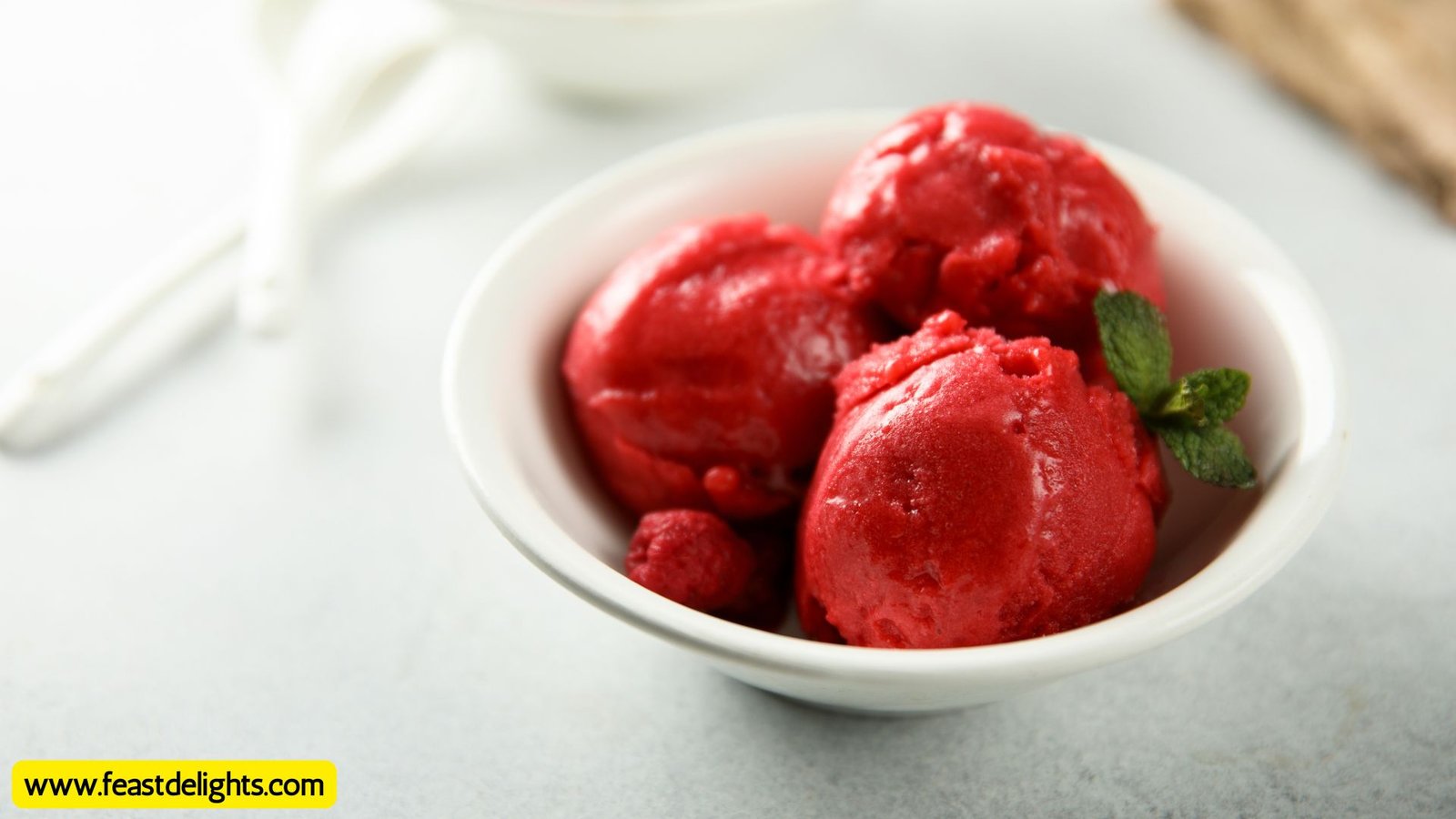
This raspberry and lemon sorbet is a bright, dairy-free frozen dessert made with berries, sugar syrup and fresh lemon juice. Straining the fruit gives a smoother texture, while chilling the base thoroughly helps limit large ice crystals. Churn it in an ice-cream maker or use a shallow freezer-safe container and stir it regularly as it freezes. The recipe makes about six servings. Allow several hours for cooling, chilling and freezing, and soften briefly before scooping.
Make raspberry sorbet with four ingredients: raspberries, granulated sugar, water and lemon juice. The recipe works with an ice-cream maker or a no-machine freezer method. Allow about seven hours for the latter, with extra freezing time if needed. The sugar is retained because it contributes both sweetness and scoopability.
Choosing raspberries and balancing sugar
Use 500 g (about 1.1 lb) raspberries. Fresh ripe berries give a lively flavour. Wash fresh berries gently under running water and drain well before blending. Frozen berries are also suitable, but observe package instructions and local food-safety advice. The Food Safety Authority of Ireland recommends boiling imported frozen berries for one minute before eating; if using those or berries of uncertain origin, bring the fruit to a full boil for at least one minute, stir gently, then cool promptly before blending. Use a little of the measured water if needed to prevent scorching. Freezing alone does not reliably eliminate viruses.
The 200 g sugar (about one US cup) and 250 ml water (roughly one US cup plus a tablespoon) form a syrup. Sugar lowers the freezing point, helping the sorbet stay scoopable. Reducing the amount substantially can produce a hard, icy block; do not assume a sugar substitute behaves the same way. The measured two tablespoons lemon juice add acidity and balance the sweetness.
Recipe card
Raspberry and Lemon Sorbet with or without a Machine
Planning estimate for freezer method: about 30 minutes cooling, 120 minutes chilling, up to 240 minutes freezing with periodic stirring, and 10 minutes softening. Machine churning and subsequent hardening depend on the appliance; allow longer if necessary. Frozen berries requiring boiling may extend cooking and cooling.
Equipment: Saucepan, blender, fine sieve, heatproof bowl, shallow freezer-safe container and fork or ice-cream maker, covered storage container
Ingredients
Fruit base
Sugar syrup
Fruit base
Instructions
Dissolve the sugar and cool
Heat sugar and measured water gently, stirring until dissolved. Cool promptly in a shallow container or cold-water bath.
Prepare and blend berries
Wash and drain fresh raspberries. For imported or uncertain-origin frozen berries, boil the fruit for at least 1 minute (using a little of the measured water if needed), then cool promptly. Blend berries with cooled syrup and lemon juice; strain if desired.
Chill the base
Cover and refrigerate at 4°C (40°F) or below for at least 2 hours until thoroughly cold.
Churn or stir-freeze
Churn following ice-cream maker instructions and transfer to a covered container to harden. Alternatively freeze in a shallow dish, scraping and stirring thoroughly every 30 minutes for 3–4 hours.
Set, soften and serve
Continue freezing until evenly firm and scoopable. Let stand briefly for 5–10 minutes before serving; return unused portions promptly to the freezer.
Blending and chilling the base
Heat the sugar and water just until the crystals dissolve; prolonged boiling is unnecessary and changes the water content. Cool the syrup in a shallow heatproof container, using a cold-water bath if needed. Blend the berries, cooled syrup and lemon juice until smooth. Press through a fine sieve if you prefer fewer seeds. Taste the cold mixture with a clean spoon; flavours become less pronounced once frozen. Cover and refrigerate for at least two hours until thoroughly chilled.
Two freezing methods
For a machine, pre-freeze the bowl if required by the manufacturer, then churn the cold mixture according to its instructions until thick and softly frozen. Transfer to a covered freezer container and harden until scoopable. Do not overfill the machine.
Without a machine, pour the chilled base into a shallow freezer-safe dish. Freeze and scrape the edges and stir thoroughly every 30 minutes for three to four hours, breaking up forming crystals. Once evenly frozen, cover tightly and continue freezing if necessary. This method may produce a slightly coarser texture than churning.
Serving and troubleshooting
If the sorbet is too firm, let it soften briefly rather than microwaving or repeatedly thawing the entire batch. If it is icy, use a well-chilled base and smaller freezer container next time. Serve in chilled bowls with fresh berries if desired. For a creamy frozen dessert, see pistachio kulfi; for other raspberry or fruit desserts, try raspberry swirl cheesecake or Linzer torte. The listed ingredients are plant-based and dairy-free; check equipment and ingredients for cross-contact if serving someone with allergies.
Frequently asked questions
Can I reduce the sugar?
A large reduction changes freezing behaviour and can make sorbet very hard. Adjustments need separate testing.
Can I leave the raspberry seeds in?
Yes. Straining is optional and gives a smoother texture.
Can I use frozen berries?
Yes. Follow the label and relevant safety guidance; boil imported or uncertain-origin frozen berries for at least one minute before cooling and blending.
Do I need an ice-cream maker?
No. Stir regularly during freezing in a shallow dish; expect a slightly coarser texture.
Why is the sorbet too hard?
It may be very cold or contain too little sugar. Allow a brief softening period.
Can I make it ahead?
Yes, freeze covered and use within two weeks for best texture.
More recipes to try






Spotted a detail that needs correcting? Contact the FeastDelights editors.