Immersion Blender Mayonnaise with Lemon and Mustard
This immersion blender mayonnaise combines a pasteurised whole egg, neutral oil, mustard and lemon juice or vinegar into a smooth, thick condiment. A narrow blending jar helps the egg emulsify the oil from the bottom upward, without slowly whisking in every drop. Allow about five minutes to measure and blend the ingredients, with no cooking required. The recipe makes approximately 250–300 ml, depending on the oil used. Refrigerate it immediately after blending and use a pasteurised egg because the sauce remains uncooked.
Immersion blender mayonnaise is a thick egg-and-oil condiment that can be prepared in about five minutes without cooking. This version uses a pasteurised whole egg, mustard, lemon juice or vinegar and 200–250 ml neutral oil. It yields roughly 250–300 ml depending on how much oil is used. The key is a narrow jar and starting the blender at the bottom.
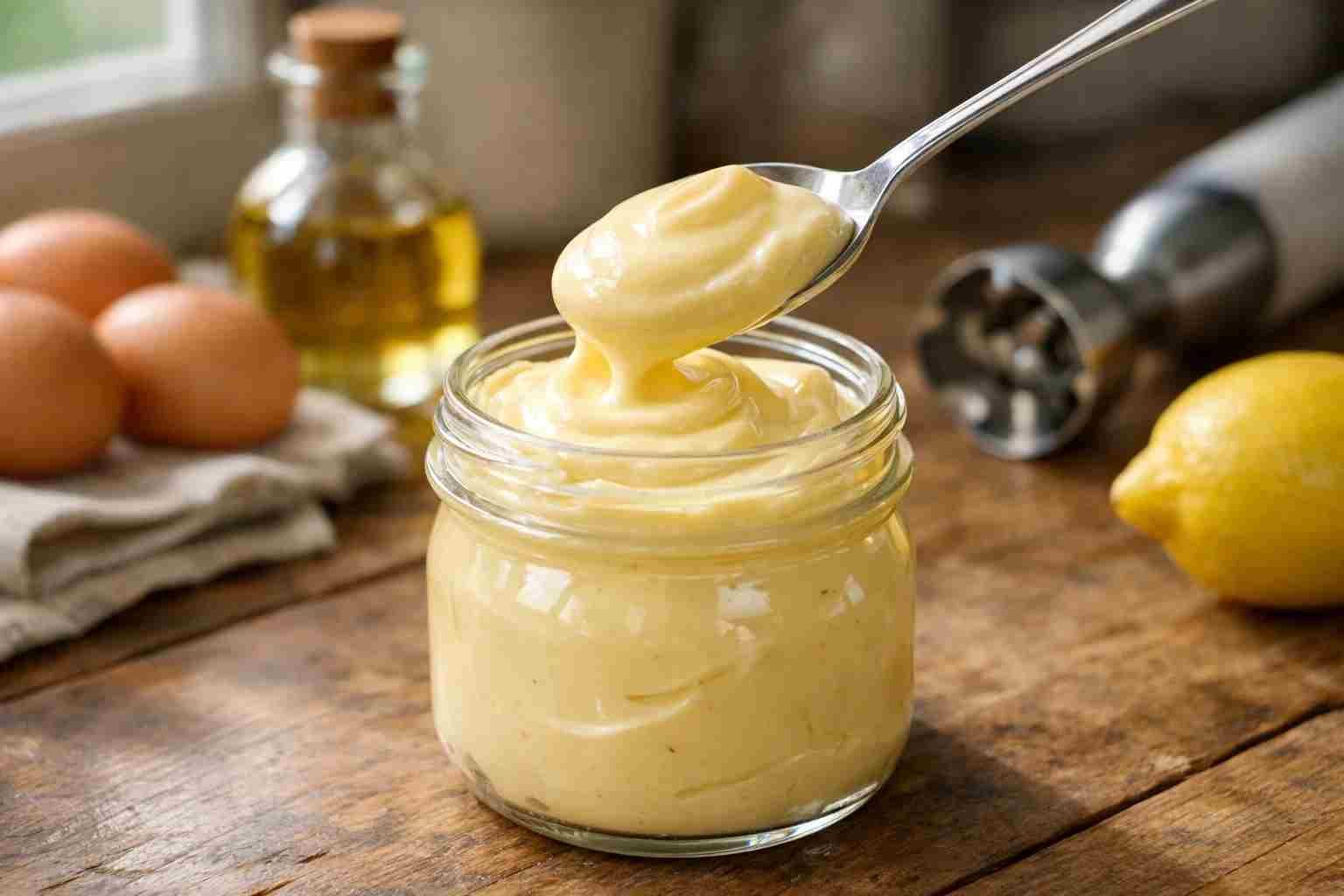
Recipe card
Immersion Blender Mayonnaise with Lemon and Mustard
About 5 minutes including measuring; actual blending usually takes under a minute. No cooking is needed.
Equipment: Immersion blender, tall narrow food-safe blending jar, measuring jug and spoons, clean spatula and covered storage container.
Ingredients
Mayonnaise
Instructions
Choose a narrow jar and add the egg
Choose a clean tall jar just wider than the blender head. Add the pasteurised egg, salt, sugar, mustard and lemon juice or vinegar. Keep the egg refrigerated until preparing the sauce; no prolonged warming is necessary.
Add the oil without stirring
Pour in 200 ml neutral oil gently without stirring. Allow the ingredients to settle. Reserve any additional oil for adjusting the thickness after the emulsion forms.
Blend at the base
Place the blender head flat on the base, covering the egg. Switch on and hold still for 10–15 seconds, or until a thick pale layer forms and rises around the head.
1 minLift slowly and refrigerate
Lift the blender slowly through the remaining oil, keeping the blade submerged. Once smooth, blend in extra oil gradually, up to the listed 250 ml total, only if needed. Taste, transfer to a clean container and refrigerate immediately.
1 min
Choose the right egg, oil and jar
Use a commercially pasteurised egg or equivalent pasteurised whole egg product. The egg remains uncooked, and adding lemon juice or vinegar does not reliably destroy harmful bacteria in ordinary raw eggs. The FDA recommends pasteurised egg for uncooked mayonnaise. Keep the egg cold until you begin preparing the sauce; there is no need to leave it warming on the counter.
Neutral vegetable oil keeps the flavour mild. Mustard contributes flavour and helps the mixture emulsify. Lemon juice gives a fresh tang, while vinegar provides a sharper note. Use a tall, narrow blending jar just wider than the blender head; a wide bowl spreads the egg too thinly for the bottom-up technique.
How to build a stable emulsion
Add the egg and seasonings first, then gently pour in the lower amount of oil. Do not stir the layers before blending. Set the blender head flat against the bottom, switch it on and keep it still. Watch for a thick pale mixture rising around the blade. Only then lift the head slowly, drawing the oil into the emulsion. Keep the blade submerged to prevent splashing.
Once the mixture is smooth, assess its consistency. Extra oil can thicken a stable mayonnaise, but add it gradually rather than pouring it all in at once. The sauce should cling to a spoon without a separate oily layer.
Troubleshooting a thin or split sauce
If the base never thickens, check the jar width and whether the head covers the egg. If the sauce has split but has been handled safely, use a fresh pasteurised yolk in a clean narrow jar and blend the failed mixture into it gradually. This rescue adds an egg yolk beyond the original recipe. Never rescue a mixture that has been left out too long. If mayonnaise is thicker than you want, stir in a teaspoon of cold potable water at a time.
Serving ideas and alternatives
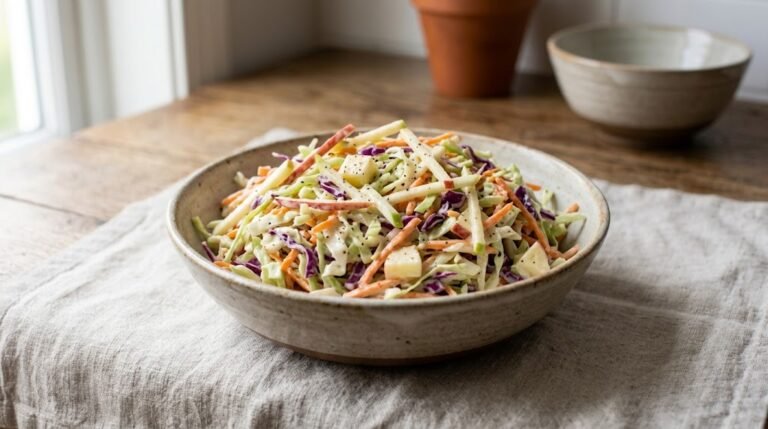
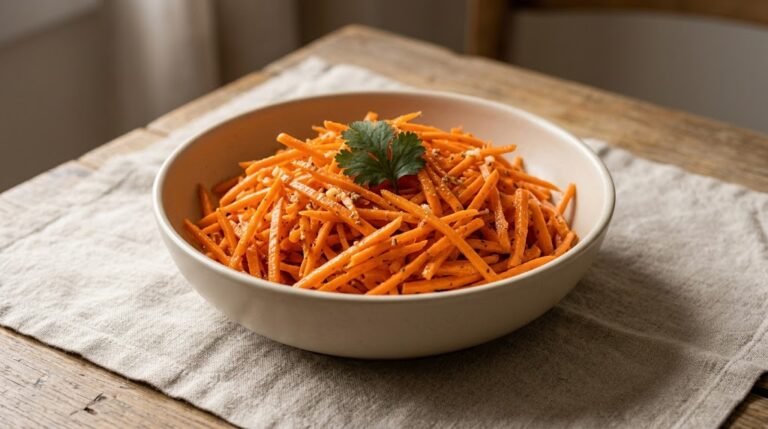
Spread on sandwiches or add to a chilled salad. Try it in mushroom and egg salad with dill or creamy carrot apple salad where a mayonnaise-style dressing is appropriate. For an egg-free option, use the separate aquafaba mayonnaise recipe rather than simply omitting the egg.
Storage and allergens
Transfer immediately to a clean covered container and refrigerate at 4°C (40°F) or colder. Use within three days as a conservative home storage limit, or sooner if the egg product requires it. Use a clean spoon and serve small portions rather than leaving the whole jar on the table. Discard after two hours at room temperature, or one hour above 32°C (90°F). Homemade mayonnaise is not shelf-stable and may separate if frozen. It contains egg and mustard; check packaged ingredients for other allergens.
Frequently asked questions
Why does my mayonnaise stay liquid?
The jar may be too wide or the blender may have been lifted before the base emulsified. Use a narrow vessel and hold the head still until the bottom thickens.
Can I rescue split mayonnaise?
If it has been handled safely, start with a fresh pasteurised egg yolk in a clean jar and gradually blend the failed mixture into it. Discard any mixture that has been stored unsafely.
Can I use olive oil?
A mild olive oil can work, but strongly flavoured extra-virgin oil may taste bitter after blending. Neutral oil gives a milder result.
Can I use an ordinary raw egg?
Use commercially pasteurised egg or egg product for this uncooked recipe. Lemon or vinegar does not reliably eliminate Salmonella.
Why is my mayonnaise too thick?
Blend or stir in a teaspoon of cold potable water at a time until it reaches the desired consistency, then refrigerate.
Can I make egg-free mayonnaise?
Use a separate aquafaba-based formula. Omitting the egg from this recipe without replacing its emulsifying function may cause the sauce to split.
More recipes to try


Spotted a detail that needs correcting? Contact the FeastDelights editors.