Baked Lemon Tart with a Buttery Pastry Crust
This French-inspired lemon tart combines a crisp, buttery short pastry shell with a smooth baked filling made from fresh lemon juice, zest, eggs, sugar and butter. Blind-baking the pastry helps keep the base dry, while gentle baking sets the citrus custard without making it rubbery. A 23 cm tart tin yields eight slices with a bright, tangy flavour and a delicate sweet crust. Allow about four and a half hours including pastry chilling, cooling and refrigeration, and serve chilled with berries or a light dusting of icing sugar.
Baked lemon tart is a French-inspired dessert with a crisp butter pastry shell and a tangy egg-based lemon filling. This version makes eight slices in a 23 cm tart tin. The pastry is blind-baked before the filling goes in, and the finished tart is chilled before slicing. Allow about four hours and thirty-five minutes, most of which is waiting time.
Choosing lemons, butter and flour
Use fresh lemons with fragrant peel. Zest the fruit before juicing and avoid the bitter white pith. The recipe calls for four lemons, but their juice yield varies, so measure 150 ml rather than relying on the number alone. Sugar balances the acidity, and whole eggs plus extra yolks give the custard its structure. A small amount of flour in the filling helps it thicken. Keep the two flour quantities separate: 190 g is for the pastry and 25 g is for the filling. Cold butter belongs in the pastry; the filling uses melted butter that has cooled slightly.
Equipment and pastry preparation
A 23 cm tart tin with a removable base makes serving easier. Use a rolling pin, parchment and baking weights or dry beans reserved for that purpose. Rub the cold butter into flour and icing sugar until crumbly, then add yolk and just enough cold water for the dough to hold when pressed. Do not knead smooth. Chill the disc, then roll and ease it into the corners of the tin without stretching.
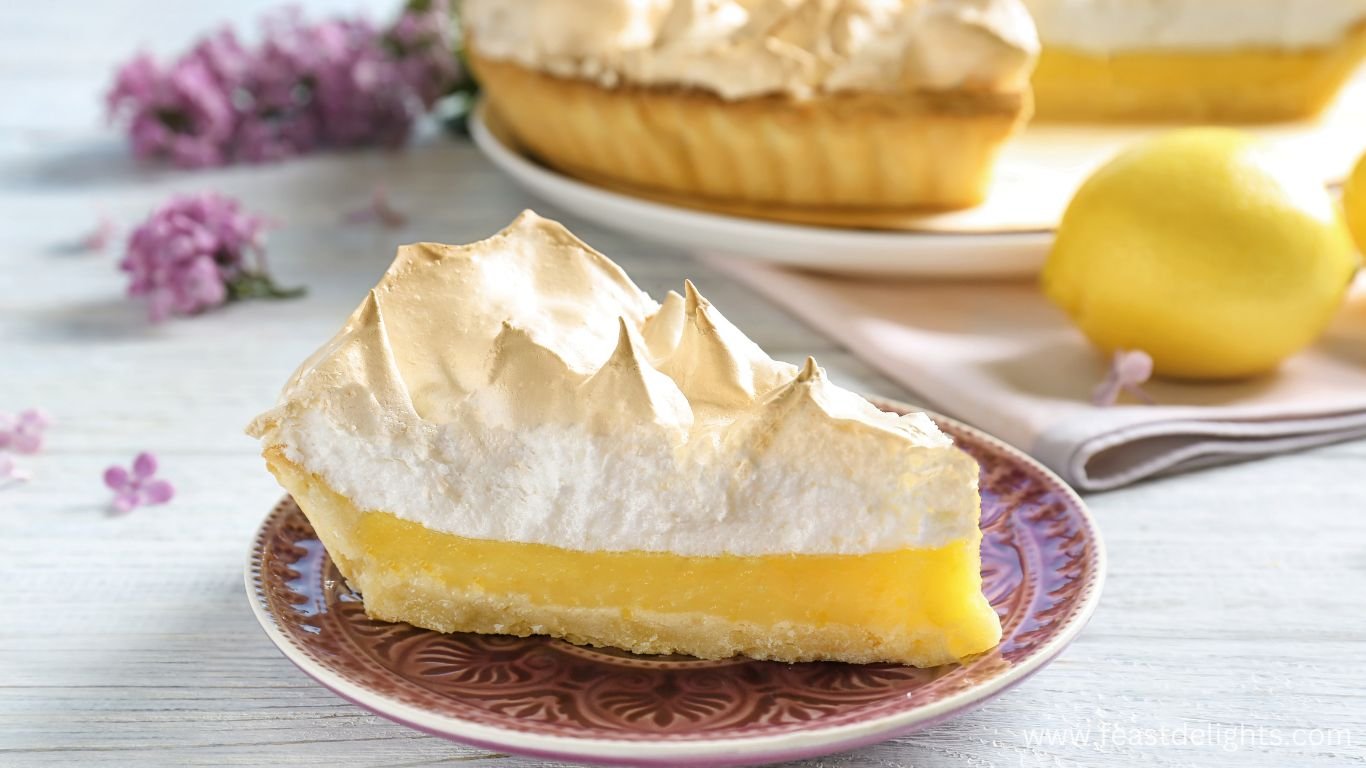
Recipe card
Baked Lemon Tart with a Buttery Pastry Crust
Includes 30 minutes dough chilling, up to 45 minutes cooling, 120 minutes chilling after baking, 20 minutes blind baking and 20–25 minutes filling baking. Extra time may be needed if pastry softens or the filling has not set.
Equipment: 23 cm (9-inch) tart tin with removable base, mixing bowls, scale, rolling pin, parchment, baking weights, fine zester, juicer, whisk, baking tray, wire rack and instant-read thermometer.
Ingredients
Short pastry
Lemon filling
To finish
Instructions
Make and chill the pastry
Combine 190 g flour and 45 g icing sugar. Rub in 100 g cold cubed butter until fine crumbs form. Mix in one egg yolk and enough of the measured tablespoon of cold water for the dough to hold together. Press into a disc without prolonged kneading, wrap and refrigerate 30 minutes.
Blind-bake the shell
Preheat a conventional oven to 180°C (350°F). Roll the pastry into a circle large enough for a 23 cm (9-inch) tart tin, about 3 mm thick. Ease into the tin without stretching, trim and prick the base. Chill again briefly if soft. Line with parchment and fill with baking weights to support the sides. Bake 15 minutes, carefully remove paper and weights, then bake another 5 minutes or until the base looks dry and lightly coloured.
Mix the lemon filling
Zest the lemons before juicing, avoiding the white pith. Measure 150 ml juice. Whisk sugar and the separate 25 g flour, then add eggs, yolks, zest and juice. Stir until smooth without beating in excessive air. Whisk in melted butter that has cooled to warm, not hot. Strain if desired.
Bake until set
Place the tart shell on a tray, pour in the filling without overfilling and bake at 180°C (350°F) for 20–25 minutes or longer if needed. The edges should be set and the centre should tremble gently as one mass, not slosh. Check the centre reaches at least 71°C (160°F) with a clean thermometer.
Cool and chill
Cool on a rack for about 30–45 minutes, then transfer to the refrigerator within 2 hours of baking (1 hour in hot conditions above 32°C/90°F). Chill at least 2 hours until firm. Remove the tin carefully and dust with icing sugar just before slicing.
How to blind-bake a crisp shell
Prick the base and fit parchment inside the pastry. Add weights high enough to support the sides as the butter melts. Bake until the edges begin to set, lift the hot weights out carefully and return the empty shell to the oven until the base is dry. See King Arthur Baking’s blind-baking guidance for the general technique. If the pastry is unusually soft after rolling, chill it briefly in the tin before baking.
How to set the lemon filling
Mix the filling flour with sugar before whisking in the eggs and lemon juice to reduce lumps. Add warm melted butter and mix only until smooth. Excess beating can create foam on the surface. Pour into the baked shell without filling beyond its rim. Bake until the filling is set at the edges and moves gently in the centre as a single mass. Check the centre reaches at least 71°C (160°F), following FDA egg safety guidance. A similar visual cue is described in King Arthur Baking’s lemon tart recipe, which uses a different filling formula.
Troubleshooting
The pastry shrinks
Chill the dough adequately, avoid stretching it and fill the lined shell with enough weights to support the sides. Overworking pastry can also cause shrinkage.
The filling is grainy or cracked
Mix gently and avoid overbaking. Use the specified oven temperature and check the filling once the edges set.
The tart is difficult to slice
Chill at least two hours after the initial cooling period. Use a clean sharp knife, wiping it between cuts. If the filling was still liquid before refrigeration, chilling alone may not correct an underbaked custard.
Serving and related desserts
Serve chilled with berries or unsweetened cream. For portable portions, try our lemon bars with shortbread crust. Our vanilla custard tart offers a gentler flavour, while raspberry puff pastry tart uses a different pastry and fruit topping. For a lime variation, measure the juice as carefully as for lemon.
Make ahead, storage and allergens
Prepare the pastry ahead or bake the whole tart the day before serving. Cool briefly on a rack, then refrigerate rather than leaving the custard at room temperature for an extended period. Refrigerate the tart at 4°C (40°F) or below within 2 hours of baking, or 1 hour above 32°C (90°F). Cover once chilled and use within 3 days. Serve chilled. Freezing is not recommended for best texture because the filling may weep and the pastry soften. Contains wheat, milk and eggs. Refrigerate any cream toppings separately and do not taste uncooked pastry or filling.
Frequently asked questions
Can I use bottled lemon juice?
Fresh juice and zest are preferred for the fragrance. Bottled juice can be used if necessary, but measure 150 ml and check for added sweeteners.
Why blind-bake the tart shell?
Baking the pastry before adding the liquid filling sets its structure and helps reduce a soggy base.
Can I make the shell ahead?
Yes. Chill wrapped dough overnight or blind-bake the shell ahead and store completely cooled in an airtight container for up to a day.
Why is my lemon tart filling cracked?
Excessive heat or baking too long can tighten the egg proteins. Check the filling once the edges set and avoid prolonged baking after it is cooked through.
Can I use a pie dish instead of a tart tin?
A shallow 23 cm oven-safe pie dish may work, but the filling depth and pastry shape differ, so check the baking time.
Can I replace lemon with lime?
Yes, measure the same volume of juice and adjust the zest to taste. Lime has a different acidity and aroma, so the final balance may change.
More recipes to try






Spotted a detail that needs correcting? Contact the FeastDelights editors.