Homemade Gingerbread House with Royal Icing
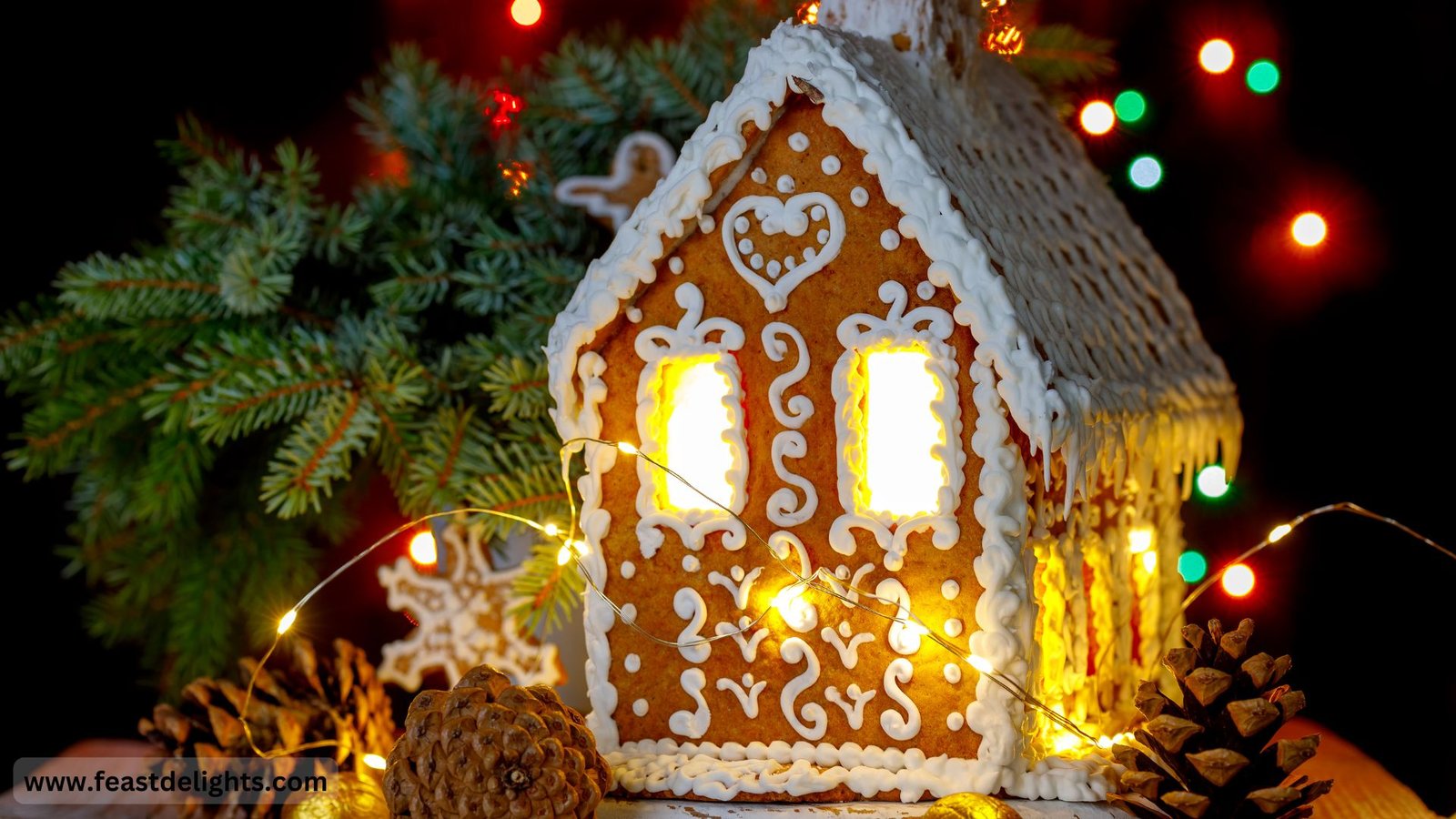
This homemade gingerbread house uses a firm honey-and-spice dough cut into six panels and joined with thick royal icing. Cinnamon, ginger and cloves give the baked pieces a warm festive flavour. Make one small house using the suggested wall and roof dimensions, then decorate with sweets if desired. Allow about 12 hours 15 minutes, mostly for chilling, cooling and drying the icing joints; assembling over two days is often easier. The suggested template and exact dough yield require kitchen confirmation.
A homemade gingerbread house is a festive construction of six firm spiced gingerbread panels joined with royal icing. This recipe keeps the original honey dough and makes one small house, with suggested dimensions for a simple pitched roof. Plan approximately 12 hours 15 minutes including chilling and structural drying, or spread the work over two days. The dimensions and drying schedule are estimates that need kitchen confirmation.
Plan the six panels before mixing
Draw the following on clean paper using a ruler: two side rectangles measuring 15 x 9 cm; two end walls 10 cm wide and 9 cm tall, topped with a centred triangular gable 5 cm high; and two roof rectangles 17 x 9 cm. The roof dimensions allow some overhang. Cut each template and compare matching pieces before using them. The gable sides should be symmetrical so the roof meets at the ridge. Because dough spread and thickness affect the final fit, test the baked pieces together before icing. These measurements are a proposed starting design rather than a tested template.
Work on a sturdy, flat food-safe board larger than the footprint of the house. Have a few clean jars or cans available to support walls temporarily. If adding doors or windows, cut them before baking and leave enough uninterrupted dough around each opening for strength.
Recipe card
Homemade Gingerbread House with Royal Icing
Includes 60 minutes chilling dough, approximately 45 minutes cooling panels, at least 60 minutes setting walls and an estimated 8 hours drying roof joints. Bake in two batches of up to 15 minutes each. Additional drying or decoration time may be needed. Timing and template are planning estimates, not tested results.
Equipment: Kitchen scale, saucepan, mixing bowl, whisk, rolling pin, ruler, clean paper templates, sharp knife, parchment, two flat baking trays, cooling rack, piping bag, sturdy food-safe board, clean jars or cans for temporary supports
Ingredients
Honey gingerbread dough
Assembly and decoration
Instructions
Make the honey gingerbread dough
Warm honey, brown sugar and butter gently in a saucepan, stirring until smooth. Remove from heat and cool until lukewarm before whisking in the egg. Separately whisk flour, baking soda, cinnamon, ginger, cloves and salt. Mix wet and dry ingredients until a cohesive dough forms; do not taste raw dough.
Chill dough and prepare templates
Flatten the dough into two discs, wrap and refrigerate for 1 hour. Preheat conventional oven to 180°C (350°F, rounded). Draw two rectangular side walls 15 x 9 cm, two end walls 10 cm wide and 9 cm high with a centred 5 cm triangular gable above, and two roof rectangles 17 x 9 cm. Cut clean paper templates. These dimensions allow a small roof overhang but are untested; check the fit against the baked pieces.
Roll and cut the six panels
Roll a portion of chilled dough between parchment to an even 5 mm thickness. Cut along the templates with a sharp knife. Lift away offcuts and transfer the parchment and panels onto a flat tray without stretching. Reroll remaining dough as needed, chilling if soft. Cut optional door or window openings before baking; leave a strong border around them.
Bake firm and cool flat
Bake similarly sized panels together for 10–15 minutes per batch until firm and lightly browned at the edges, with no wet dough in the centre. If needed, trim slight spread against the templates while the panels are warm and firm enough to handle safely. Cool completely flat before moving or icing. Bake spare dough as small cookies, adjusting the baking time for their size.
Join the walls with stiff royal icing
Prepare the measured royal icing with pasteurised egg white, meringue powder or a suitable ready-made product. It should hold stiff peaks. Pipe a thick line along the base and vertical edges of the walls, join on a sturdy food-safe board and support with clean cans or jars. Check that the corners are square. Let the walls set at least 1 hour, or longer until stable, before removing supports.
Attach the roof and decorate
Pipe thick icing along the gable slopes and upper side-wall edges. Fit both roof panels, pipe along the ridge and support carefully until stable. Allow the roof joints to dry at least 8 hours or overnight, protected from dust, following the icing product's storage requirements. Only decorate once the structure can support its weight. Use lightweight sweets and allow fresh icing to dry before handling.
Make a firm honey dough
Honey, brown sugar and butter give the gingerbread its colour and flavour. Warm gently until the mixture is smooth, then cool to lukewarm before adding egg. Whisk the dry ingredients separately to distribute baking soda and spices. Mix until cohesive, flatten into discs and chill; cold dough is easier to cut accurately. Do not add large amounts of extra flour if the dough is sticky. A short refrigerator rest is preferable because additional flour can make the pieces brittle. The original formula is retained pending a construction test.
Cut and bake panels evenly
Roll between sheets of parchment to an even 5 mm thickness. Thin spots may break under the roof weight, while thick spots take longer to bake. Cut along the templates with a sharp knife and remove the surrounding scraps, leaving the cut pieces on the parchment. Transfer them to a flat tray without stretching. Bake pieces of similar size together and check early. The panels should be firm and lightly browned, not soft and underbaked. If a panel spreads slightly, carefully trim its edges against the template while warm, before it becomes brittle. Let the baked pieces cool completely flat before attempting assembly.
Use icing that can support the structure
Royal icing acts as the adhesive. Make it stiff enough to hold a peak, using a pasteurised egg white or meringue powder product, or use ready-made icing suitable for construction. Our gingerbread icing recipe uses pasteurised liquid egg white and gives guidance on stiff icing consistency; scale as needed to provide the measured 400 g. Do not use ordinary raw egg whites for uncooked icing. Avoid molten caramel, which is not necessary for this method and can cause severe burns.
Pipe icing along the bottom edges and vertical seams, then hold the walls square with clean temporary supports. Allow them to set until they can stand without movement. Check the fit of each roof panel before piping more icing. Run thick lines along the sloping gables and upper side walls, then add roof pieces and pipe the ridge seam. Allow the house to dry fully, preferably overnight, before decorating.
Troubleshooting the construction
Warped panels: Bake on flat trays and cool without moving them. Gaps at seams: Check the panel fit and fill small gaps with stiff icing. Walls leaning: Use supports and allow more drying time. Sliding roof: Let the walls harden before adding the roof, and use thicker icing. Broken wall: Bake a spare or repair the crack on a flat surface and allow it to set before assembly. Soft icing: Follow product instructions and avoid humid conditions. Do not add heavy decorations to unstable joints.
Decoration, make-ahead and food safety
Pipe windows, roof tiles or snow patterns, and attach small sweets only after the structural joins are stable. For more gingerbread ideas, see honey gingerbread cookies and soft honey gingerbread cookies; their texture may differ from structural house panels. Bake the house pieces one day and assemble the next. Keep spare edible cookies in a separate clean container. Store icing and decorations according to their labels. A house left uncovered as a display for an extended period should not be treated as food to serve. The recipe contains wheat, milk and eggs; sweets may contain additional allergens. Nutrition is omitted because panel yield, leftover dough and decoration quantities vary.
Frequently asked questions
What size house does this recipe make?
The suggested footprint uses 15 cm side walls and 10 cm end walls, with 9 cm wall height plus a 5 cm gable. The dough quantity and panel dimensions need kitchen confirmation; spare dough can be baked as cookies.
Why do my panels spread or warp?
Warm dough, uneven thickness and moving pieces before they cool can distort them. Chill the dough, roll evenly and bake on flat trays. Check the edges against the templates while still warm.
Can I use ordinary cookie icing to assemble the house?
Only if it dries hard enough to support the panels. Stiff royal icing made with pasteurised egg white or meringue powder is the intended adhesive; loose glaze is not suitable.
What if the roof slides off?
Wait until the walls are rigid. Use thicker icing, support the roof panels temporarily and let the joins harden overnight before adding decorations.
Can I bake the pieces the day before?
Yes. Cool completely and keep dry panels airtight until assembly.
How do I repair a cracked panel?
Pipe stiff icing into the crack and let it dry completely on a flat surface. If a structural piece is badly broken, bake a replacement using spare dough.
Can I eat a house that has been displayed for several weeks?
Do not assume it is safe to eat. Long, uncovered display exposes food to dust and repeated handling. Reserve separately stored edible pieces if you intend to serve gingerbread later.
Is hot caramel a better adhesive?
No hot caramel is required. Stiff royal icing avoids the severe burn risk associated with handling molten sugar.
More recipes to try






Spotted a detail that needs correcting? Contact the FeastDelights editors.