Filo Baklava with Mixed Nuts and Lemon-Honey Syrup
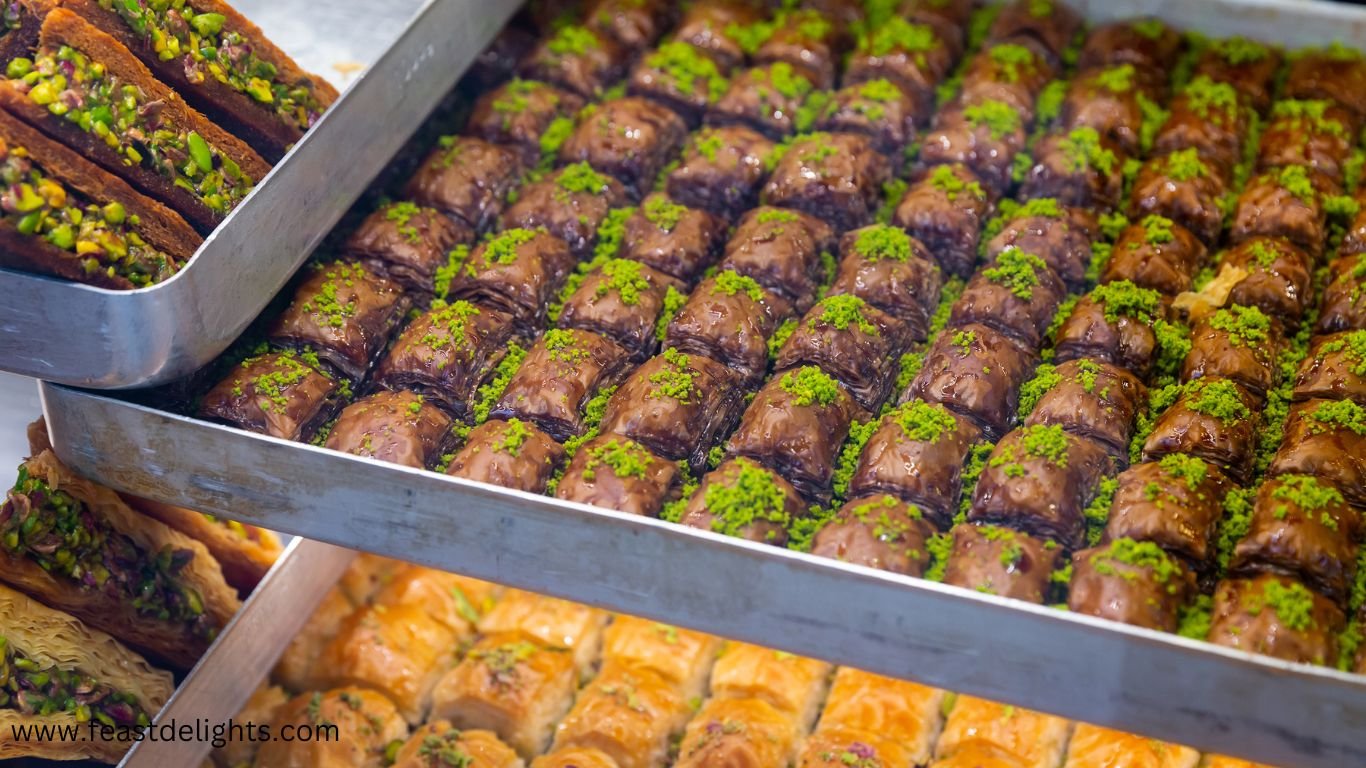
This filo baklava layers thin, buttery pastry with chopped walnuts, pistachios or almonds, cinnamon and a fragrant lemon-honey syrup. The finished pieces have crisp golden tops and a sweet, nutty interior. Keep the unused pastry covered, brush each sheet lightly with butter and cut the diamonds before baking. The batch makes about 24 pieces, with a two- to three-hour rest for the syrup to distribute. Serve at room temperature in small portions with unsweetened coffee or tea.
Filo baklava is a layered pastry filled with chopped nuts and sweetened with syrup after baking. This version uses 500 g ready-made filo, 300 g nuts, melted butter and a lemon-honey syrup. Expect about 24 small pieces, with crisp, golden upper layers and a moist, nutty interior. Allow about 4 hours 15 minutes including the full three-hour resting allowance. The actual baking time depends on the pan and the thickness of the pastry.
Baklava has many forms across the eastern Mediterranean and neighbouring regions. This version uses a flexible mixed-nut filling rather than claiming to represent a single traditional regional formula. For distinct variations, see our pistachio baklava with cardamom and honey walnut baklava.
Ingredients and equipment
Filo (also called phyllo) consists of very thin pastry sheets. Buy a 500 g package and check how many sheets it contains; thickness and dimensions differ by brand. Frozen sheets should thaw according to the package before unrolling. Melt the butter gently and brush thinly so each layer is coated without soaking it. Finely chop the nuts into small pieces with some texture remaining. Grinding them into paste reduces the contrast between nut filling and crisp pastry.
Cinnamon and salt season the nuts. Divide the 200 g sugar into two equal portions before starting, so the filling and syrup each receive 100 g. Honey adds aroma and sweetness, while lemon juice balances the syrup. Use a pastry brush, sharp knife, saucepan, bowl and a shallow rectangular baking dish. A 23 × 33 cm dish is a starting estimate; trim the sheets or choose a compatible dish. Pan dimensions and yield require kitchen confirmation.
Recipe card
Filo Baklava with Mixed Nuts and Lemon-Honey Syrup
Syrup cooks while pastry bakes. Rest 2–3 hours; total includes the longer rest. Thawing frozen filo is additional.
Equipment: 23 × 33 cm baking dish (approximate), scale, pastry brush, knife, bowl, saucepan and parchment.
Ingredients
Pastry
Nut filling
Filling and syrup
Nut filling
Syrup
Nut filling
Instructions
Prepare the filo and nut filling
Thaw filo according to the package. Preheat a conventional oven to 180°C (350°F). Mix the chopped nuts, cinnamon, salt and 100 g sugar. Unroll filo onto a clean surface and cover with parchment and a barely damp towel. Melt butter gently.
Layer buttered pastry and nuts
Brush a roughly 23 × 33 cm (9 × 13 inch) baking dish with a little measured butter. Trim sheets to fit if necessary. Lay five or six sheets in the base, brushing each lightly with butter. Divide the filling into two or three thin layers, separating each with several buttered sheets; reserve several sheets for the top. Brush the final sheet with butter. Adjust the number of layers to the actual sheet count.
Cut and bake until deeply golden
Cut through the assembled pastry into about 24 diamonds or squares with a sharp knife. Bake 30–35 minutes, or longer if needed, until the top is deeply golden and the edges and lower layers appear crisp. If the top colours too early, loosely shield it with foil and continue baking.
Simmer the lemon-honey syrup
While the pastry bakes, combine the water, honey, remaining 100 g sugar and lemon juice in a saucepan. Bring to a gentle simmer, stirring until dissolved, then simmer about 10 minutes. Remove from heat and allow to become warm rather than boiling hot.
Syrup the pastry and let it settle
Spoon the warm syrup gradually over the freshly baked baklava, focusing on the cut lines and distributing it evenly. Let it absorb before adding more. Rest uncovered in a clean, cool place for 2–3 hours until completely cooled and settled. Separate along the cut lines and serve.
How to layer filo without drying it out
Work with one sheet at a time. Keep the stack covered with parchment and a barely damp cloth; a wet towel directly on filo can make sheets stick together. Butter the dish, then build the base with five or six sheets, brushing each lightly. Reserve enough pastry to cover the top, then divide the nut filling into two or three thin layers separated by several buttered sheets. Adjust to the actual sheet count, rather than forcing the same number of sheets in every package.
Small tears in interior sheets are not a problem. Patch them with scraps, stagger seams, and use the best intact sheets for the visible top. If you would like to make pastry from scratch, see our homemade filo pastry; sheet thickness may differ from commercial pastry.
Cutting, baking and adding syrup
Use a sharp knife to divide the raw pastry into diamonds or squares before baking. Press straight down rather than dragging the top sheets. Bake on the middle rack at 180°C (350°F) until the pastry is deeply golden, not merely pale on the surface. Check the edges and lower layers before adding syrup. If the top browns too quickly, shield it loosely and continue until the base is baked.
Make the syrup while the baklava bakes. Dissolve the remaining sugar in water with honey and lemon juice, and simmer for about ten minutes. Preserve the original warm-syrup method but avoid pouring vigorously boiling liquid onto the pastry. Add it slowly along the cut lines. Rest for two to three hours to let the syrup distribute. If syrup pools in the dish, wait for absorption before adding the remainder.
Troubleshooting and serving
Dry, crumbling sheets usually mean they were left uncovered. Excess butter can make pastry greasy, while insufficient baking can leave the middle doughy. Keep the filling in thin layers and judge the bake by colour and crispness rather than time alone. If the syrup becomes unusually thick, warm it gently until pourable; do not boil it down into caramel. Serve small pieces with unsweetened coffee or tea. For another sweet filo dessert, see our cinnamon apple and walnut strudel.
Make ahead, storage and allergens
Chop the nuts ahead and keep them sealed. Bake the pastry on the day before serving if convenient. Cool completely before covering so condensation does not soften the top. Keep in a cool dry place for up to two days for best texture or refrigerate up to four days. Freeze portions for up to two months for best quality and thaw in the refrigerator. Contains wheat, milk and tree nuts; check package labels and cross-contact. Do not serve to children under 12 months because it contains honey, in line with CDC guidance.
Frequently asked questions
Can I use frozen filo?
Yes. Thaw in its unopened packaging according to the manufacturer's directions. Unrolling while still frozen can cause cracks.
Why do my filo sheets tear?
They may be too dry or still cold. Cover unused sheets and handle gently; patch small tears in interior layers.
Why cut baklava before baking?
Raw filo is easier to cut cleanly. Cutting before baking also lets syrup travel between portions.
Can I use only walnuts?
Yes. The original recipe permits walnuts, pistachios or almonds. Use 300 g total.
Why is the baklava soggy?
Underbaked pastry, excessive butter in individual layers or pooled syrup can soften the layers. Bake until deeply golden and add syrup gradually.
Why is the sugar divided?
The 200 g total is divided equally: 100 g in the nut mixture and 100 g in the syrup.
Can I make it a day ahead?
Yes. The pastry needs time to absorb syrup. Cool fully and store covered in a cool dry place; avoid condensation.
More recipes to try






Spotted a detail that needs correcting? Contact the FeastDelights editors.